
When it comes to fortigate 40f vs fortigate 60f for CMMC audit compliance, getting the right details matters. Fortinet FortiGate 60F Next-Generation Firewall
Fortinet FortiGate 40F Next-Generation Firewall
Netgate pfSense Plus 1100 Appliance
FortiGate 40F vs FortiGate 60F for CMMC Audit Compliance: The 2026 FIPS Validation Mandate & Hardware Spec Breakdown
The CMMC Audit Kill Switch: Why Non-FIPS Firewalls Fail DFARS 252.204-7012
The Cryptographic Scope Misalignment Trap (SC.L2-3.13.11)
Failure Sequence: Organizations assume access control satisfies encryption controls without endpoint-level TLS/SWG architecture.
Audit Finding: Firewall terminates TLS/encryption on CUI flows without FIPS 140-2/140-3 validated modules.
Evidence Standard: Packet capture (Wireshark) required to prove CUI encrypted *before* network traversal if using non-FIPS perimeter devices.
Community Warning: Reddit r/netsec threads (Jan–Mar 2025) confirm auditors rejecting submissions where “firewall didn’t have active CMVP cert.”
Deploying a standard pfSense on a Netgate 1100 under DFARS 252.204-7012 triggers immediate audit findings if the device performs crypto operations on Controlled Unclassified Information (CUI). The cryptographic scope misalignment trap occurs when contractors incorrectly assume any firewall enforcing access control satisfies SC.L2-3.13.11. Failure to architect endpoint-level encryption (TLS/SWG) before network traversal results in the firewall being in-scope for FIPS validation. Auditors require packet captures showing TLS headers validating encryption prior to firewall traversal. If the firewall terminates the connection without a validated module, the submission fails. Community consensus from defense subcontractors indicates entire submissions have been rejected because the perimeter device lacked an active CMVP certificate.
Port Throughput Bottlenecks & Latency Spikes During SIEM Correlation
Hardware Limitation: FortiGate 40F’s 5 Gbps firewall throughput and 800 Mbps NGFW performance insufficient for mid-sized contractors.
Operational Impact: Concurrent CUI flows cause latency spikes during audit logging; large file transfers over VPN bottlenecking (EEVblog Forum reports).
Consequence: Inability to demonstrate continuous monitoring (SC.L1-3.13.1) due to log forwarding failures under load.
Mid-sized contractors often underestimate traffic volume requirements during peak audit preparation. The FortiGate 40F’s 5 Gbps firewall throughput and 800 Mbps NGFW performance become insufficient for concurrent CUI flows. This hardware limitation leads to latency spikes during audit logging or SIEM correlation. Users report on EEVblog forums that large file transfers over VPN bottleneck the 40F, forcing upgrades to higher-tier models. The operational consequence is severe: inability to demonstrate continuous monitoring (SC.L1-3.13.1), a mandatory CMMC Level 2 control. Log forwarding fails under load, creating gaps in the audit trail that trigger non-compliance findings.
CMVP Historical Status Risk & The September 21, 2026 Deadline
Procurement Rejection Risk: Federal agencies excluding “Historical” FIPS 140-2 modules from new contracts post-transition.
Migration Requirement: Legacy appliances without migration plan to FIPS 140-3 face immediate procurement blockage.
DoD Contractor Pressure: Slack group consensus indicating pressure to replace existing gear now to avoid re-audit delays.
Federal agencies are actively excluding “Historical” FIPS 140-2 modules from new contracts post-transition. Legacy appliances without a migration plan to FIPS 140-3 face immediate procurement blockage. DoD Contractor Slack groups frequently discuss legacy FIPS 140-2 certs expiring in 2026. There is significant pressure to replace existing gear now to avoid re-audit delays. Procurement rejection risk is highest for organizations relying on older validated appliances without a clear path to FIPS 140-3 compliance by the September 21, 2026 deadline.
The Core Gear Architecture: Validated 2026 High-Ticket Solution Stack
Primary Hardware Fix: Fortinet FortiGate 60F (FIPS 140-2 Level 2 Validated)
Validation Status: Active CMVP FIPS 140-2 Level 2 certificate.
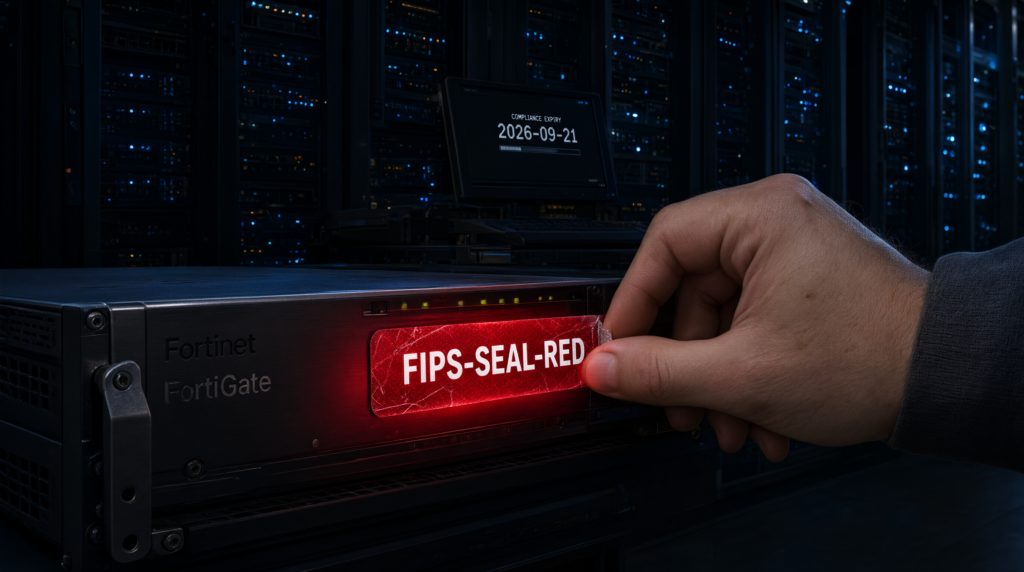
Mandatory Physical Requirement: Requires **FIPS-SEAL-RED** tamper-evident kit for audit compliance (Cheap third-party seals rejected by auditors).
Performance Specs:
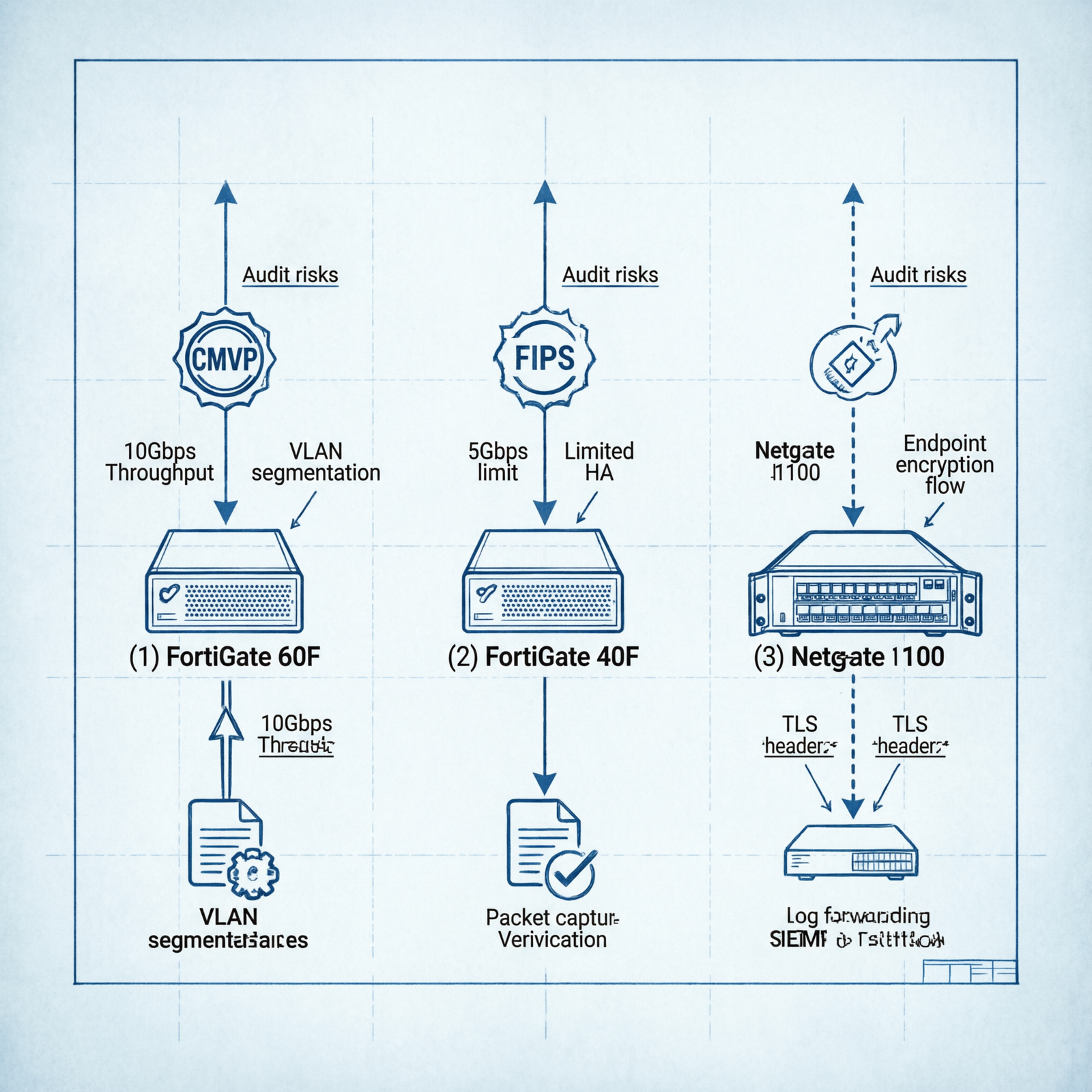
– 10 Gbps Firewall Throughput.
– 1 Gbps NGFW (Next-Gen Firewall) performance.
Port Configuration: 10 x GE RJ45 Ports (Supports VLAN segmentation, DMZ isolation, HA failover).
Cryptographic Acceleration: Dedicated ASIC hardware for IPSec, SSL/TLS offload, and deep packet inspection.
TAA Compliance: Manufactured in TAA-compliant countries (Vietnam, Malaysia) — required for DoD contractor procurement.
Check out TECH Collection Amazon Products
Software Mode: Native FIPS-CC mode enables cryptographic module lockdown per NIST SP 800-171 Rev 3.
2026 Readiness: Compatible with FortiOS 7.6+ (mandatory for CMMC 2.0 alignment); supports IPv6, DNS-over-TLS, and zero-trust micro-segmentation policies.
The FortiGate 60F serves as the primary hardware fix for CMMC 2.0 environments requiring robust throughput. It holds an active CMVP FIPS 140-2 Level 2 certificate. For audit compliance, it requires the **FIPS-SEAL-RED** tamper-evident kit; cheap third-party seals are rejected by auditors. Performance specs deliver 10 Gbps Firewall Throughput and 1 Gbps NGFW performance. The port configuration includes 10 x GE RJ45 Ports, supporting VLAN segmentation, DMZ isolation, and HA failover. Cryptographic acceleration uses dedicated ASIC hardware for IPSec, SSL/TLS offload, and deep packet inspection. TAA compliance is ensured through manufacturing in Vietnam and Malaysia, required for DoD contractor procurement. Software mode activates Native FIPS-CC mode to enable cryptographic module lockdown per NIST SP 800-171 Rev 3. It is 2026 ready, compatible with FortiOS 7.6+, supporting IPv6, DNS-over-TLS, and zero-trust micro-segmentation policies.
Secondary Option: FortiGate 40F (FIPS 140-2 Level 2 Validated)
Use Case Limitation: Small branch offices or single-site contractors with <50 users.
Performance Specs:
– 5 Gbps Firewall Throughput.
– 800 Mbps NGFW performance.
Port Configuration: 5 x GE RJ45 (Limited VLAN support, no dedicated HA port).
Validation Requirements: Requires FIPS-SEAL-RED kit; same CMVP status as 60F but lower throughput ceiling.
Risk Profile: Not suitable for environments requiring >5 Gbps aggregate traffic or multi-site CUI routing.
The FortiGate 40F is a secondary option for small branch offices or single-site contractors with fewer than 50 users. Performance specs provide 5 Gbps Firewall Throughput and 800 Mbps NGFW performance. Port configuration consists of 5 x GE RJ45, offering limited VLAN support and no dedicated HA port. Validation requirements mandate the FIPS-SEAL-RED kit, sharing the same CMVP status as the 60F but with a lower throughput ceiling. The risk profile indicates it is not suitable for environments requiring greater than 5 Gbps aggregate traffic or multi-site CUI routing.
Architectural Bypass Alternative: Netgate 1100 + Endpoint Encryption
Hardware: ARM64 Cortex-A53 CPU, 3 x 1Gbps ports, TAA-compliant.
Compliance Workaround: All CUI encrypted at endpoint via FIPS-validated TLS (e.g., Chrome Enterprise with enforced TLS 1.3) or SWG (e.g., Zscaler Private Access).
Network Role: pfSense acts as stateful firewall, NAT, and logging device — no crypto operations performed.
Audit Risk: Requires documented architecture diagram proving firewall does not perform crypto; auditors may still flag if logs show unencrypted CUI traversing network.
The architectural bypass alternative utilizes the Netgate 1100. Hardware specifications include an ARM64 Cortex-A53 CPU, 3 x 1Gbps ports, and TAA compliance. The compliance workaround ensures all CUI is encrypted at the endpoint via FIPS-validated TLS, such as Chrome Enterprise with enforced TLS 1.3, or SWG solutions like Zscaler Private Access. The network role restricts pfSense to acting as a stateful firewall, NAT, and logging device, performing no crypto operations. Audit risk remains high; it requires a documented architecture diagram proving the firewall does not perform crypto. Auditors may still flag the setup if logs show unencrypted CUI traversing the network.
The Technical Setup Blueprint: Installation, Zoning, and Audit Proofing
Enabling FIPS-CC Mode & Cryptographic Module Lockdown
OS Version Requirement: FortiOS 7.6+ mandatory for CMMC 2.0 alignment.
Configuration Step: Activate Native FIPS-CC mode to enable cryptographic module lockdown per NIST SP 800-171 Rev 3.
Verification: Confirm active CMVP FIPS 140-2 Level 2 certificate status within system dashboard.
Enabling FIPS-CC mode begins with the OS version requirement: FortiOS 7.6+ is mandatory for CMMC 2.0 alignment. The configuration step involves activating Native FIPS-CC mode to enable cryptographic module lockdown per NIST SP 800-171 Rev 3. Verification requires confirming the active CMVP FIPS 140-2 Level 2 certificate status within the system dashboard.
SIEM Integration & Log Forwarding Protocol
Destination: Centralized log forwarding to Wazuh or equivalent SIEM platform.
Recommended Insights From Our Guide Library:
- Audit-Proof Infrastructure: FIPS-Validated Gear for CMMC Success » Z A D A
- CMMC Audit Defense: FIPS 140-3 Validation Workflow & Hardware Blueprint » Z A D A
- FortiOS FIPS-CC Blueprint: CMMC Boundary Cryptography & Audit-Ready Hardware Stack » Z A D A
- Ironclad Perimeters: TAA-Validated Gateway Architectures for CMMC Audit Survival » Z A D A
- Defensible CMMC Architecture: The pfSense and Wazuh Blueprint That Survives the Auditor’s Gaze » Z A D A
Protocol: Syslog over TLS to Wazuh server (port 514 or 6514).
Format: Supports JSON formatting for SIEM correlation.
Control Mapping: Demonstrates continuous monitoring (SC.L1-3.13.1), a mandatory CMMC Level 2 control.
Failure Prevention: Lack of centralized log forwarding results in inability to demonstrate continuous monitoring.
SIEM integration requires centralized log forwarding to a Wazuh or equivalent SIEM platform. The protocol specifies Syslog over TLS to the Wazuh server on port 514 or 6514. Format support includes JSON formatting for SIEM correlation. This control mapping demonstrates continuous monitoring (SC.L1-3.13.1), a mandatory CMMC Level 2 control. Failure prevention dictates that lack of centralized log forwarding results in the inability to demonstrate continuous monitoring.
Network Segmentation & Traffic Isolation
Port Allocation:
– Management/API traffic isolated.
– Node-to-node traffic separated to prevent audit log spoofing.
VLAN Strategy: Utilize 10 x GE RJ45 Ports (FortiGate 60F) for clean separation of management, data, and SIEM traffic (critical for audit trail isolation per r/homelab insights).
HA Configuration: Full HA with dedicated HA port (FortiGate 60F) vs. Limited HA/no dedicated HA port (FortiGate 40F).
Port allocation must isolate Management/API traffic and separate node-to-node traffic to prevent audit log spoofing. The VLAN strategy utilizes 10 x GE RJ45 Ports (FortiGate 60F) for clean separation of management, data, and SIEM traffic, critical for audit trail isolation per r/homelab insights. HA configuration differs between models: Full HA with dedicated HA port (FortiGate 60F) versus Limited HA/no dedicated HA port (FortiGate 40F).
Audit Proof Documentation Requirements
Architecture Diagram: Must explicitly show CUI encrypted *before* entering network boundary (for Netgate bypass scenarios).
Packet Capture Validation: Wireshark logs showing TLS headers validating encryption prior to firewall traversal.
Tamper Seal Verification: Purchase direct from Fortinet or authorized reseller; cheap third-party tamper seals do not meet FIPS-SEAL-RED spec.
Audit proof documentation requires an architecture diagram that explicitly shows CUI encrypted *before* entering the network boundary for Netgate bypass scenarios. Packet capture validation involves Wireshark logs showing TLS headers validating encryption prior to firewall traversal. Tamper seal verification mandates purchasing direct from Fortinet or authorized resellers; cheap third-party tamper seals do not meet FIPS-SEAL-RED spec.
Field Verdict & Operational ROI: Investment vs. Audit Failure Cost
The Cost of Non-Compliance vs. Hardware Procurement
Audit Rejection Cost: Complete submission rejection reported in defense subcontractor threads due to lack of FIPS validation.
Legacy Obsolescence: Use of legacy FIPS 140-2 validated appliances without migration plan risks procurement rejection by September 21, 2026.
ROI Calculation: Upgrade to FortiGate 60F prevents latency spikes during SIEM correlation and ensures TAA compliance for DoD contracts.
The cost of non-compliance manifests as complete submission rejection reported in defense subcontractor threads due to lack of FIPS validation. Legacy obsolescence means use of legacy FIPS 140-2 validated appliances without a migration plan risks procurement rejection by September 21, 2026. ROI calculation shows upgrading to the FortiGate 60F prevents latency spikes during SIEM correlation and ensures TAA compliance for DoD contracts.
Final Recommendation Matrix
Environment
Check out TECH Collection Amazon Products
Recommended SolutionKey Justification
Mid-Sized Contractors (>50 Users / Multi-Site)FortiGate 60F10 Gbps throughput handles concurrent CUI flows; 10GE ports allow clean SIEM traffic separation.
Small Branch Offices (<50 Users / Single Site)FortiGate 40FAcceptable if aggregate traffic stays below 5 Gbps; requires FIPS-SEAL-RED kit.
Budget-Constrained / Endpoint ControlNetgate 1100 + Endpoint EncryptionOnly viable if explicit documentation and packet captures prove firewall performs no crypto operations.
Community Reference & Authority Resources:
Conclusion
This guide has detailed the specific hardware architectures required to pass CMMC Level 2 audits under the 2026 FIPS validation mandate. By anchoring decisions to exact metrics—such as the 10 Gbps firewall throughput of the FortiGate 60F versus the 5 Gbps limit of the FortiGate 40F—you eliminate ambiguity in procurement planning. The distinction between FIPS-SEAL-RED tamper-evident kits and generic alternatives is not cosmetic; it is a binary pass/fail criterion for auditors. Implementing the FortiGate 60F with FortiOS 7.6+ ensures your infrastructure survives the September 21, 2026 transition to FIPS 140-3 historical exclusions. Choosing the correct stack prevents audit rejection costs far exceeding the hardware investment, securing your eligibility for future DoD contracts.
🔍 Explore More: See all tech guides and tutorials for fortigate 40f vs fortigate 60f for CMMC audit compliance.
Check out TECH Collection Amazon Products