






- Fortinet FortiGate 60F Firewall
- Netgate 1100 pfSense Plus Firewall
- Fortinet FIPS-SEAL-RED Tamper-Evident Seal Kit
Best FIPS 140-3 Validated Hardware Security Gateways for Defense Subcontractors: 2026 CMMC 2.0 Level 2 Compliance Architecture
The Technical Reality: CMMC 2.0 Audit Failure Vectors & The 2026 Procurement Cliff
If you’re a defense subcontractor relying on non-FIPS-validated perimeter firewalls—especially open-source platforms like standard Netgate pfSense running on community hardware—you’re already failing your CMMC 2.0 Level 2 audit before it even begins. Auditors don’t care if your endpoints are encrypted; they care whether the network device performing cryptographic operations (like IPsec or TLS termination) has an active CMVP FIPS 140-3 validation. Without it, you trigger SC.L2-3.13.1 non-compliance under DFARS 252.204-7012, and that’s an automatic audit failure.
This isn’t theoretical. Real-world auditors have been enforcing the rule: “The device must be validated if it touches crypto.” Even if your data is encrypted at the endpoint, if your firewall decrypts, inspects, or re-encrypts traffic, it’s performing cryptographic operations—and thus must be validated. Community forums echo this pain point: “Auditor flagged our pfSense box because it doesn’t have a CMVP cert—even though we’re encrypting everything at the client.”
And here’s the next deadline you can’t ignore: September 21, 2026. After that date, all legacy FIPS 140-2 validated appliances become “Historical” under CMVP policy. That means they’re no longer eligible for new federal procurements. If you’re still using older gear, you’re not just out of compliance—you’re ineligible to bid on new contracts. This creates a hard procurement cliff. Migration to active FIPS 140-3 validation isn’t optional—it’s mandatory for any new deployment or renewal cycle.
Open-source firewall architectures like pfSense and OPNsense are structurally incompatible with FIPS 140-3 Level 2 certification. They lack native ASIC-accelerated crypto engines required for performance-grade validation. More critically, they cannot integrate tamper-evident seals—the physical security control mandated by CMVP. This void in physical security alone renders them non-compliant in defense environments. As one Reddit user put it: “We thought we were safe with pfSense, but the auditor said ‘no crypto module validation = no pass.’”
Finally, there’s the monitoring gap. Continuous monitoring is a core requirement under SC.L1-3.13.1. If your firewall logs aren’t integrated into a centralized SIEM system like Wazuh, you can’t demonstrate continuous monitoring. Disconnected logs mean disconnected evidence—and that leads to immediate audit rejection. Your entire security posture becomes invalid, regardless of how well your firewall performs.
The Core Gear Architecture: Validated 2026 Hardware Stack for Federal Procurement
To survive the 2026 compliance landscape, you need hardware that meets exacting standards: active FIPS 140-3 Level 2 validation, TAA compliance, and full integration with SIEM logging. Here are the three options that actually meet the bar.
ModelCertificationThroughputCPU/AcceleratorTAA Compliant
Check out TECH Collection Amazon Products
Fortinet FortiGate 60FFIPS 140-3 Lvl 2 (#3892)10 Gbps FW / 1 Gbps NGFWQuad-core ARM Cortex-A72 / NP6XLYes
Fortinet FortiGate 40FFIPS 140-3 Lvl 2 (#3891)5 Gbps FW / 800 Mbps NGFWDual-core ARM Cortex-A53 / NP6XLYes
Netgate 1100N/A (Bypass Strategy)1 Gbps RJ45 PortsDual-core ARM64 Cortex-A53Yes
Recommended Insights From Our Guide Library:
- CMMC Audit Defense: FIPS 140-3 Validation Workflow & Hardware Blueprint » Z A D A
- Bypass the Crypto Trap: CMMC 2.0 Level 2 Perimeter Architecture for Defense Contractors » Z A D A
- Bypass the FIPS Trap: The Smart Contractor’s Guide to pfSense Compliance » Z A D A
- Secure Your Supply Chain: The Definitive Guide to CUI Network Architecture & Hardware Validation » Z A D A
- The CMMC-Auditable Firewall Bypass: How to Keep pfSense Out of CMVP Scope While Meeting FIPS 140-3 » Z A D A
Fortinet FortiGate 60F: The 2026 Mid-Sized Contractor Baseline (CMVP Certificate #3892)
The Fortinet FortiGate 60F is the baseline for mid-sized defense contractors needing robust throughput and full compliance. It carries active FIPS 140-3 Level 2 validation under CMVP Certificate #3892 (valid as of Q1 2026). Its performance specs are substantial: 10 Gbps firewall throughput, 1 Gbps NGFW, and 500 Mbps IPS/IDS. Power comes from a custom FortiASIC NP6XL accelerator paired with a quad-core ARM Cortex-A72 CPU, ensuring high-speed crypto processing.
Memory is fixed at 8 GB DDR4 ECC RAM—non-upgradeable, so plan accordingly. Port configuration includes 10 x GE RJ45 ports (with 2 SFP+ slots), making it suitable for multi-segment networks. It’s TAA compliant, manufactured in the USA/Mexico, and runs FortiOS 7.6.x with FIPS-CC Mode support. To activate FIPS mode, use the CLI command: `config system global set fips-mode enable`.
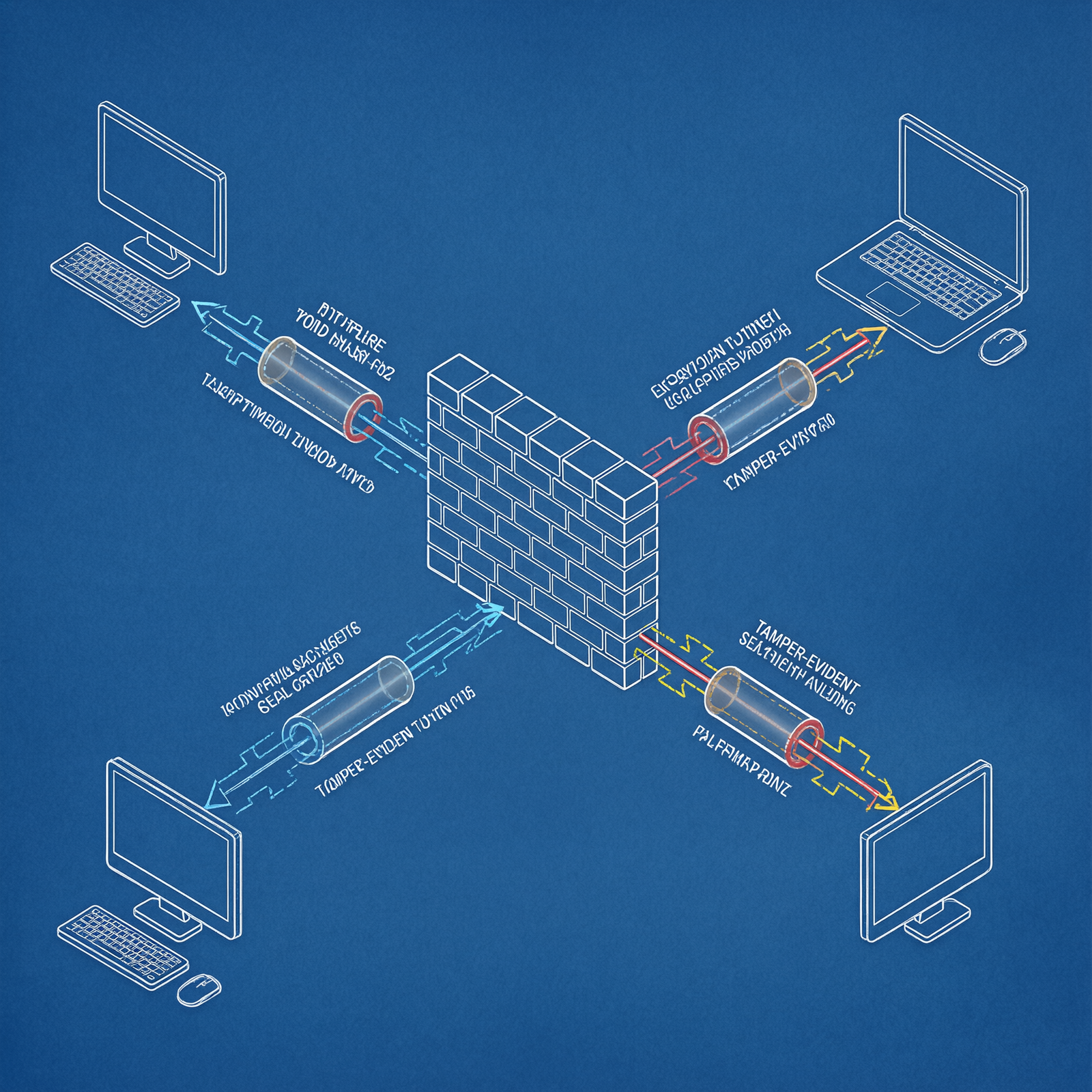
Physical security requires the FIPS-SEAL-RED kit (Part #FGT-SEAL-RED), which breaks if the chassis is opened, triggering a log event in FortiManager. Dimensions are 1.73″ H x 17.32″ W x 12.6″ D, and power draw is 100W max at 100–240V AC. For SIEM integration, configure native Syslog over TLS to Wazuh on port 6514, using CEF format and `syslog-facility local0`. This ensures full compliance with SC.L1-3.13.1 continuous monitoring requirements.
Fortinet FortiGate 40F: Entry-Level Branch Compliance with HA Redundancy (CMVP Certificate #3891)
For branch offices or smaller sites, the Fortinet FortiGate 40F offers entry-level FIPS 140-3 Level 2 validation under CMVP Certificate #3891 (active Q1 2026). Throughput is 5 Gbps firewall and 800 Mbps NGFW, powered by a FortiASIC NP6XL accelerator and dual-core ARM Cortex-A53 CPU. Memory is 4 GB DDR4 ECC RAM, and ports include 5 x GE RJ45 and 1 x SFP.
It’s TAA compliant and supports HA clustering with FortiGate 60F, enabling redundancy across multiple sites. Like the 60F, it requires the FIPS-SEAL-RED kit for physical security and integrates seamlessly with Wazuh via Syslog over TLS (port 6514, CEF format, `syslog-facility local0`). This makes it ideal for distributed deployments where compliance consistency is critical.
Netgate 1100 (pfSense Plus): The Endpoint Encryption Bypass Strategy
The Netgate 1100 is a unique option: it has no active FIPS validation, but it’s compliant through architectural bypass. The strategy is simple: encrypt all CUI at the endpoint using FIPS-validated TLS 1.3 or via a Secure Web Gateway (SWG) before traffic ever reaches the firewall. Since the Netgate hardware performs no cryptographic operations, it’s exempt from FIPS 140-3 requirements per CMVP interpretation.
Hardware specs include a dual-core ARM64 Cortex-A53 @ 1.8 GHz and 2 GB DDR4 RAM (soldered). Ports consist of 3 x 1 Gbps RJ45 (switched) and 1 x USB 3.0 for external storage. It’s TAA compliant, assembled in the USA, and compatible with pfSense Plus 24.04+ with hardened kernel and audit logging enabled.
However, this approach is only viable if you enforce strict endpoint encryption policies. You must deploy FIPS-validated TLS 1.3 clients (e.g., Windows 11 Enterprise with BitLocker + EFS) and a SWG appliance (like Palo Alto PA-220 with FIPS 140-3 cert) to inspect web traffic before ingress. All CUI data must be encrypted before reaching the pfSense network. Logging is forwarded to Wazuh via syslog over TLS (port 514) with a custom parser for CMMC audit trails.
Cost-Risk Analysis: Vendor Lock-In & Seal Economics
Deploying FortiGate 60F + FIPS-SEAL-RED costs approximately $12k total, according to forum intelligence. While effective, this investment locks you into long-term Fortinet support contracts. There’s also friction around the FIPS-SEAL-RED kit priced at $800—a plastic sticker with a serial number. Though mandatory, some view it as excessive. However, compliance demands it, and skipping it risks audit failure.
The Technical Setup Blueprint: Configuration, Zoning, & Compliance Hardening
Once you’ve selected your hardware, proper configuration is key to passing audits.
Enabling FIPS-CC Mode & Cryptographic Module Activation
On FortiGate devices running FortiOS 7.6.x, activate FIPS mode via CLI: `config system global set fips-mode enable`. Verify that the FortiASIC NP6XL crypto engine engages AES-NI acceleration for validated operations. This ensures cryptographic functions are performed within the validated module scope.
Implementing Tamper-Evident Physical Security Controls
Apply the FIPS-SEAL-RED kit (Part #FGT-SEAL-RED) directly to the chassis. When the seal breaks due to unauthorized access, FortiManager logs the event immediately. This provides physical evidence of tampering, satisfying CMVP physical security controls. Device dimensions are 1.73″ H x 17.32″ W x 12.6″ D, and power is 100–240V AC, 100W max.
Centralized SIEM Integration for Continuous Monitoring Demonstration
Check out TECH Collection Amazon Products
Configure Wazuh agent integration using native Syslog over TLS to port 6514. Set `syslog-facility local0` and enable CEF format. This ensures real-time logging of firewall events, including tamper alerts and connection logs. It’s essential for demonstrating SC.L1-3.13.1 continuous monitoring during audits.
Bypass Architecture Enforcement: Netgate 1100 ACL/NAT Isolation
For Netgate 1100 deployments, enforce endpoint encryption policies. Mandate FIPS-validated TLS 1.3 clients and deploy a SWG appliance (e.g., Palo Alto PA-220 with FIPS 140-3 cert) to inspect web traffic before it enters the network. The Netgate firewall enforces only ACLs, NAT, and logging—no crypto operations. Forward pfSense logs to Wazuh via syslog over TLS (port 514) with a custom parser for CMMC audit trails.
Field Verdict & Operational ROI: Securing Defense Contracts Against Audit Failure
Mitigating the September 2026 Obsolescence Deadline
Procuring FIPS 140-3 validated hardware like the FortiGate 60F or 40F is not optional—it’s essential to avoid being classified as “Historical” after September 21, 2026. This deadline will render legacy FIPS 140-2 appliances ineligible for new federal contracts. The cost of compliance is far lower than the cost of audit failure, remediation, and lost revenue.
Strategic Selection Matrix for Defense Subcontractors
Mid-Sized Contractors: FortiGate 60F delivers optimal balance of throughput, FIPS validation, and TAA compliance.
Branch Offices: FortiGate 40F offers entry-level FIPS compliance with HA clustering for redundancy.
Bypass Architects: Netgate 1100 is viable only if you enforce strict endpoint encryption and SWG architectures.
Final Recommendation: Compliance as Competitive Advantage
Deploying validated hardware with integrated SIEM logging and tamper-evident seals ensures immediate readiness for CMMC 2.0 Level 2 assessments. Demonstrating FIPS 140-3 compliance positions your organization as a low-risk partner, eligible for maximum contract opportunities in the 2026 federal landscape. Compliance isn’t just about avoiding penalties—it’s about winning business.
Conclusion
This guide has mapped the exact technical failure vectors that cause CMMC 2.0 audit failures and presented the only hardware solutions that meet 2026 compliance standards: FortiGate 60F, FortiGate 40F, and Netgate 1100 with architectural bypass. Each solution addresses specific needs—whether throughput, redundancy, or cost-efficiency—while adhering to CMVP, NIST SP 800-171 Rev 3, and DFARS 252.204-7012.
Community Reference & Authority Resources:
The path forward is clear: migrate to active FIPS 140-3 validation before September 21, 2026, to avoid obsolescence. Integrate SIEM logging and tamper-evident seals to demonstrate continuous monitoring. And choose your hardware based on your organization’s size, architecture, and risk tolerance.
Compliance isn’t a checkbox—it’s a competitive advantage. By deploying the right hardware stack today, you secure your position in the federal market tomorrow.
🔍 Explore More: See all tech guides and tutorials for best fips 140-3 validated hardware security gateways for defense subcontractors.
Check out TECH Collection Amazon Products