




When it comes to how to meet NIST 800-171 CUI firewall requirements, getting the right details matters. Fortinet FortiGate 40F Next-Gen Firewall
Fortinet FortiGate 60F Next-Gen Firewall
FIPS-SEAL-RED Tamper-Evident Security Seal Kit
Why Open-Source Platforms Trigger Immediate Audit Failures Under Current Regulations
Network boundary devices processing Controlled Unclassified Information (CUI) without active Cryptographic Module Validation Program validation trigger immediate non-compliance flags. This failure occurs when open-source platforms perform cryptographic operations on CUI without active validation, causing auditors to reject the architecture during assessments. The situation intensifies after the upcoming transition date when legacy certificates move to historical status for new procurements.
The Cryptographic Scope Violation Explained
The primary failure mechanism involves network boundary devices processing CUI without active CMVP validation. When a firewall sits within the cryptographic scope of the environment, it must validate the encryption algorithms used to protect data in transit. If the device lacks active validation, it triggers a non-compliance flag under current revision controls.
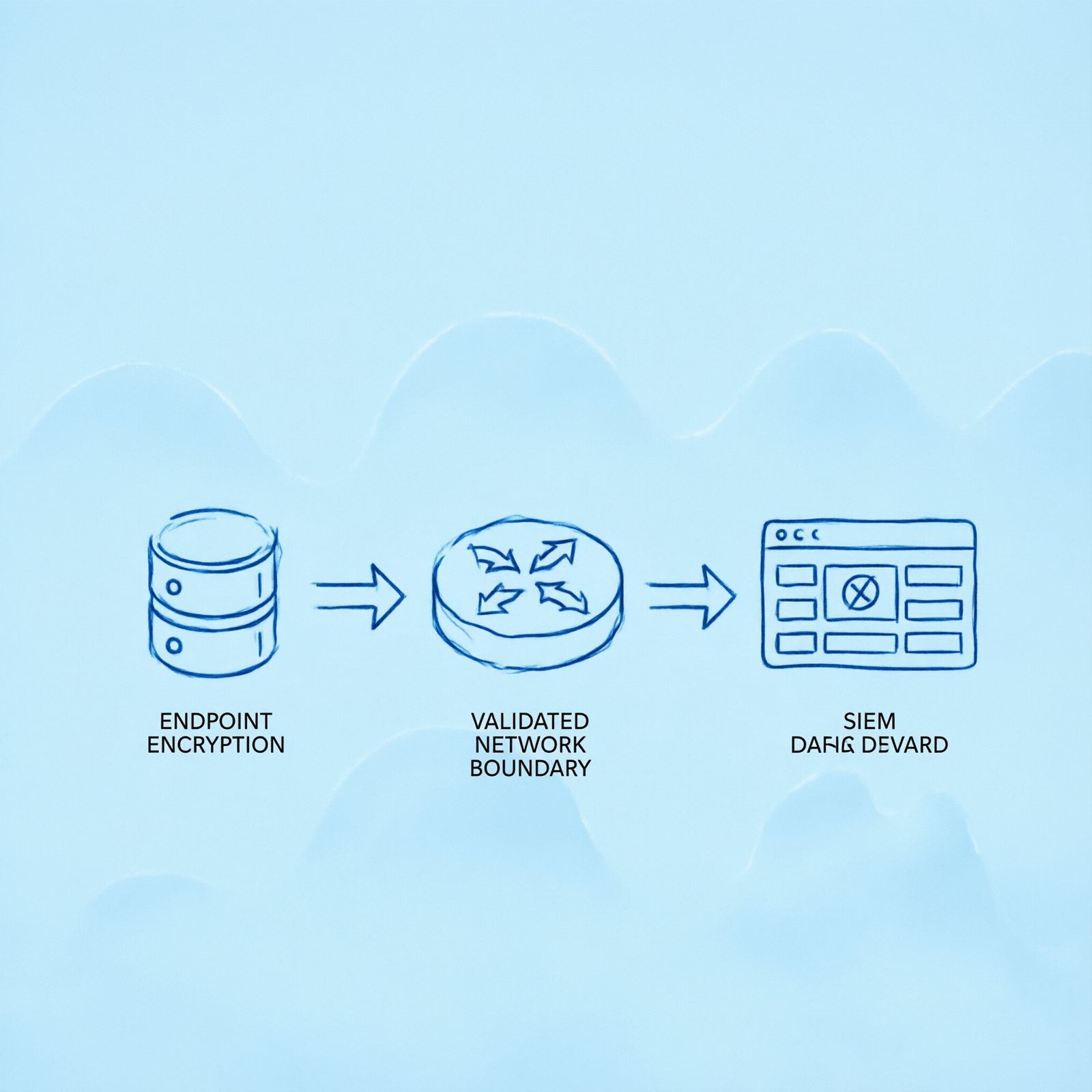
Auditors explicitly reject endpoint encryption workarounds as insufficient when the firewall remains within the cryptographic scope. Even if endpoints encrypt data, the firewall itself must possess a validated module to handle the decryption and inspection processes legally. This means you cannot simply rely on software patches; the hardware module itself must hold current certification.
The Open-Source Trap Regarding Validation Gaps
Open-source platforms running on generic hardware lack active CMVP validation for their cryptographic modules. While these systems function effectively for general networking, they fail the specific cryptographic assurance required for CUI environments. During assessments, auditors flag open-source firmware due to the inability to verify compliance status through official government registries.
This creates a critical vulnerability where technically capable hardware becomes a liability. A system may pass functional connectivity tests but fail the regulatory compliance layer entirely because the underlying crypto engine cannot produce the required validation certificate chain. Relying on community forums for validation status instead of official listings results in automatic assessment failure.
Validated Solution Stack Specifications and TAA Compliance
| Model | Port Configuration | Firewall Throughput | NGFW Throughput | Validation Level |
|---|---|---|---|---|
| Fortinet FortiGate 40F | 5 x GE RJ45 (1 WAN, 4 LAN) | 5 Gbps | 800 Mbps | FIPS 140-3 Level 2 |
| Fortinet FortiGate 60F | 10 x GE RJ45 (1 WAN, 9 LAN) | 10 Gbps | 1 Gbps | FIPS 140-3 Level 2 |
Architecture for CUI Perimeter Defense
Recommended Insights From Our Guide Library:
- Secure Your Supply Chain: The Definitive Guide to CUI Network Architecture & Hardware Validation » Z A D A
- Understanding System and Network Configuration Requirements for Controlled Unclassified Information (CUI)
- The Silent Audit Killer: Why Your Firewall Logs Are Failing CMMC and How to Fix It » Z A D A
- The CMMC-Auditable Firewall Bypass: How to Keep pfSense Out of CMVP Scope While Meeting FIPS 140-3 » Z A D A
- Mastering Log Integrity: The Hardware Blueprint for Unbreakable SIEM and Firewall Compliance » Z A D A
The Fortinet FortiGate 40F serves as the baseline for validated models with native operating modes. It features a port configuration of 5 x GE RJ45 Ports total allocation. This layout provides dedicated ingress and egress points while maintaining segment isolation for internal networks.
Performance metrics include 5 Gbps Firewall Throughput and 800 Mbps NGFW Throughput. This ensures your perimeter defense handles high-volume traffic without latency bottlenecks during peak operational windows. Infrastructure features include dual 2.5G LAN interfaces integrated into the base architecture, allowing for high-speed uplinks to core switches without requiring additional expansion cards.
High-Density Environment Scaling
For larger deployments, the Fortinet FortiGate 60F offers a validated model with native operating modes. Its port configuration includes 10 x GE RJ45 Ports total allocation. This higher density supports complex network segmentation required for multi-departmental handling.
Performance metrics scale to 10 Gbps Firewall Throughput and 1 Gbps NGFW Throughput. This capacity prevents throughput degradation when enabling deep packet inspection and intrusion prevention systems simultaneously. Like the 40F, it includes dual 2.5G LAN interfaces integrated into the base architecture, ensuring future-proof connectivity for expanding bandwidth demands.
TAA Compliance and Manufacturing Verification
Both models feature TAA-compliant manufacturing, which is essential for federal contracting. You must confirm this via product documentation prior to deployment to satisfy federal procurement requirements. Non-compliant hardware fails acquisition workflows immediately upon submission of deliverables.
Verification is not optional; it is a contractual mandate. Ensure your vendor provides the specific TAA compliance statement linked to the serial number of the unit. Failure to document this provenance results in payment delays or contract termination, regardless of the technical performance of the device.
Deployment Protocol and Physical Security Implementation
Physical Tamper Evidence Requirements
Physical security is as critical as cryptographic validation. The FIPS-SEAL-RED Tamper-Evident Security Seal Kit is mandatory for physical tamper evidence per validation requirements. Without these seals applied correctly, the cryptographic validation of the module is considered void during an audit.
Crucially, seal kits are not included in the base hardware purchase; they must be acquired separately. Seals must be installed exactly per validation requirements to maintain validation integrity during audits. Technicians must apply these seals to chassis access points immediately upon installation to prevent unauthorized physical access to the cryptographic module.
Continuous Monitoring Integration
Continuous monitoring is required to satisfy specific control requirements. Tool specification mandates Wazuh SIEM integration for continuous monitoring. This enables centralized log aggregation from FortiGate 40F or 60F units to generate audit-ready reporting for assessors.
Operational function relies on forwarding logs in real-time to the SIEM. This allows security teams to detect anomalies instantly rather than waiting for periodic manual reviews. Centralized logging proves to auditors that you are actively managing the security posture of the network boundary device, not just deploying it and ignoring it.
Cryptographic Scope Logic
End-to-end TLS/SWG cryptographic bypass is only applicable if the firewall is excluded from cryptographic scope via endpoint encryption. This bypass is not required for validated firewalls; utilizing FortiGate 40F or 60F keeps the device within scope but fully compliant.
Check out TECH Collection Amazon Products
Attempting scope exclusion workarounds adds unnecessary complexity and risk. Auditors frequently reject these exclusions if endpoint encryption cannot be proven on every single device traversing the network. The strategic recommendation is to maintain the firewall in cryptographic scope using validation rather than attempting rejected endpoint encryption exclusions. This simplifies the architecture and removes a major point of contention during assessment.
Assessment Readiness and Long-Term Asset Protection
Mitigating Obsolescence Risks
Deploying FortiGate 40F or 60F ensures compliance beyond the upcoming transition, avoiding the obsolescence of older assets. Positioning validation as the only viable path for long-term adherence protects your organization from sudden regulatory shifts.
Investing in legacy hardware now is a financial loss once the transition date passes. The cost of replacing hardware in two years outweighs the upfront premium of purchasing validated equipment today. Secure your infrastructure for the long term by selecting the correct standard initially.
Resolving Community Pain Points
Fragmented forum threads regarding audit failures often stem from ambiguous advice on hardware selection. Providing a single, validated solution stack eliminates ambiguity and reduces implementation time. Confirm resolution of procurement failures and auditor rejections associated with open-source or non-sealed hardware by adhering strictly to the validated stack.
This approach stops the cycle of trial and error. Instead of spending weeks configuring unverified systems, you deploy a pre-validated architecture that meets the regulatory baseline out of the box. This clarity saves engineering hours and reduces the stress associated with upcoming compliance deadlines.
Operational ROI and Unified Compliance
Calculate the cost of re-procurement versus the upfront investment in validated hardware with necessary kits. Meeting CUI firewall requirements now requires a holistic approach: Validated Crypto Module + TAA Compliance + Physical Tamper Evidence + Continuous Monitoring.
Neglecting any single component invalidates the entire compliance posture. A validated firewall without physical seals fails the audit. A compliant firewall without TAA documentation fails the contract. A compliant stack without SIEM integration fails the monitoring control. Treat this as a unified system where every part contributes to the final authorization to operate.
Conclusion
Community Reference & Authority Resources:
Meeting CUI firewall requirements has shifted from a theoretical exercise to a concrete hardware mandate driven by the upcoming transition. The failure modes identified in open-source and legacy environments are no longer manageable through software configurations alone. You require validated hardware that satisfies cryptographic, physical, and procurement standards simultaneously.
By deploying the FortiGate 40F or 60F with FIPS-SEAL-RED kits and Wazuh SIEM integration, you eliminate the risk of audit flags and secure your eligibility for federal contracts. This architecture provides the stability needed to protect CUI while ensuring your infrastructure remains compliant well into the future. Do not wait for the transition deadline to validate your hardware choices; the path to compliance is clear, and the technology is ready for deployment today.
🔍 Explore More: See all tech guides and tutorials for how to meet NIST 800-171 CUI firewall requirements.
Check out TECH Collection Amazon Products