
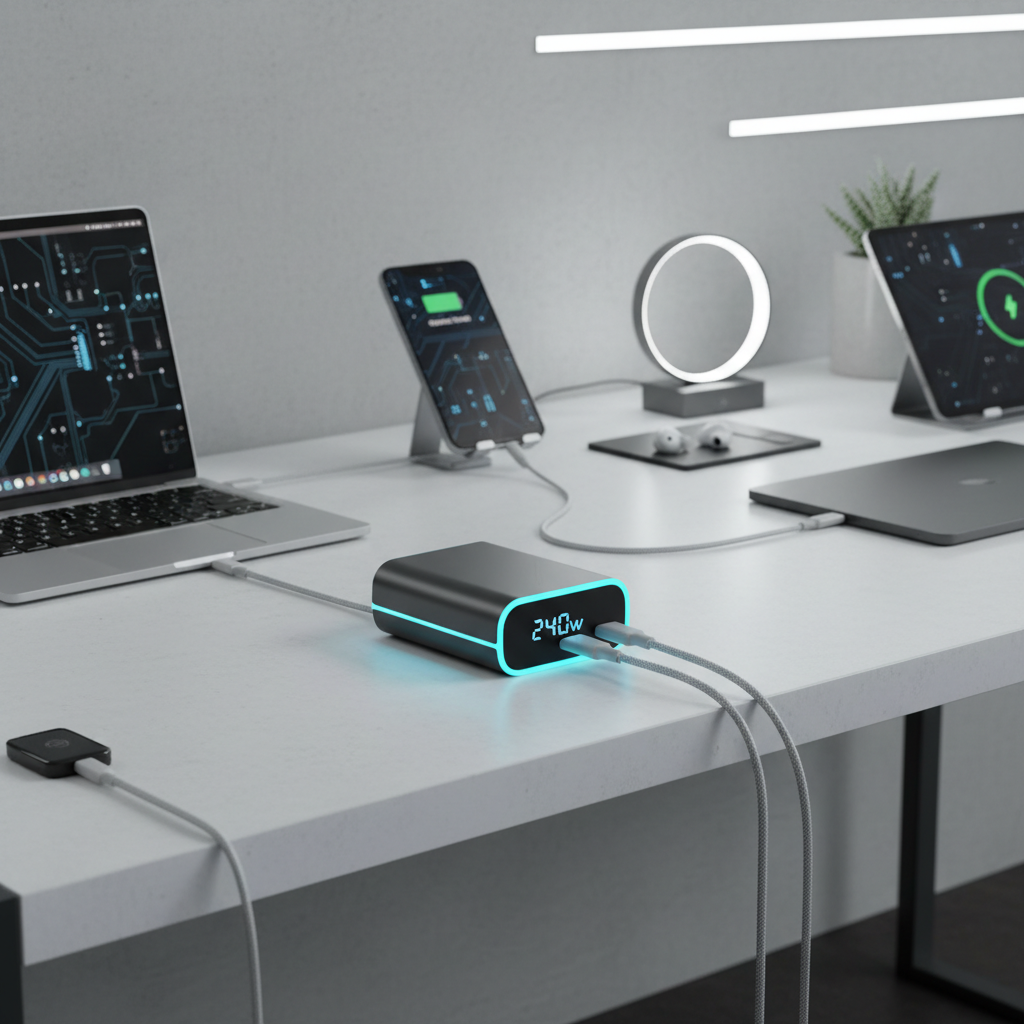

In our hyper-connected world, keeping all your essential gear powered up is no longer a luxury, but a necessity. 🚀 From powerful laptops fueling our productivity to smartphones keeping us in touch, the demand for efficient and fast charging solutions has never been higher.
The days of carrying a bulky, proprietary power brick for every device are rapidly becoming a distant memory, thanks to the revolutionary evolution of USB-C Power Delivery (PD) technology. 💡 This universal standard has streamlined our charging experience, promising a future where a single, intelligent brick can power everything you own, from your earbuds to your high-performance laptop. But what exactly makes a “Fast charging USB-C laptop power delivery brick” so vital in 2026, and how do you choose the best one?
The Power Revolution: Understanding USB-C Power Delivery 🔋
USB-C Power Delivery (USB PD) isn’t just about a reversible connector; it’s a sophisticated communication protocol that allows your charger and device to negotiate the optimal power transfer. 💬 This intelligent handshake ensures your gadgets receive the right amount of power safely and efficiently, preventing overcharging or damage. Older charging ports often delivered fixed voltages, limiting their flexibility and speed. USB-C PD, however, dynamically adjusts voltage and amperage in real-time based on your device’s needs, offering smart charging technology and overvoltage protection.
“USB-C is no longer the future of laptop charging—it’s the standard.”
The journey of USB PD has seen significant advancements:
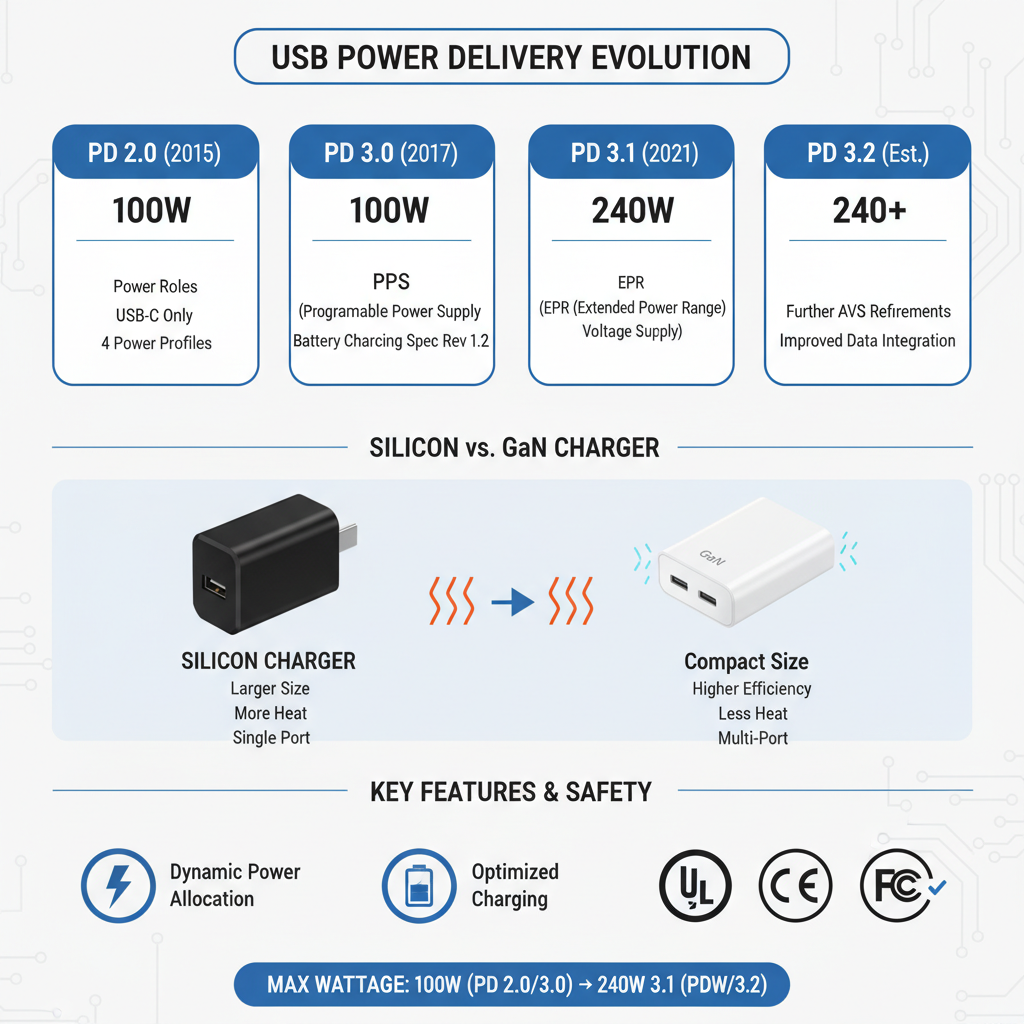
- PD 2.0/3.0: These earlier iterations significantly increased power capabilities beyond basic USB charging, commonly supporting up to 100W.
- PD 3.1: Announced in March 2021, this was a game-changer, introducing the Extended Power Range (EPR) which boosted the maximum power output from 100W to a staggering 240W! This means USB-C can now power most gaming and workstation laptops, eliminating the need for bulky proprietary adapters. 🎮
- PD 3.2: Emerging in 2025, PD 3.2 is making Adjustable Voltage Supply (AVS) mandatory in lower power ranges. Previously, AVS was primarily for 100W+ devices, but now it brings more reliable and consistent charging protocols to a wider array of devices, including smartphones. This ensures that devices like the latest Google Pixel or Samsung Galaxy phones can achieve their maximum charging potential.
https://www.youtube.com/watch?v=kYvMv-H2Kio
The GaN Game Changer: Smaller, Cooler, Faster 🧊
A major driving force behind the compact yet powerful USB-C power bricks we see today is Gallium Nitride (GaN) technology. Unlike traditional silicon-based chargers, GaN chargers are significantly smaller, lighter, and more energy-efficient.
“GaN technology allows smaller, cooler, and more efficient chargers, fundamentally transforming the design of high-wattage power adapters.”
Here’s why GaN is superior:
- Compact Size: GaN components can handle higher voltages and switch faster than silicon, allowing for much smaller transformers and heat sinks. This is why a 100W GaN charger can be nearly half the size of an older 100W silicon brick. 📏
- Improved Efficiency & Less Heat: Faster switching speeds mean less energy is lost as heat. This not only makes the chargers more efficient but also allows them to run cooler, enhancing longevity and safety.
- Multi-Port Mastery: The thermal efficiency of GaN is crucial for multi-port chargers. It enables a single compact brick to intelligently distribute high power across multiple devices simultaneously, without excessive heat buildup. 🔥
https://www.youtube.com/watch?v=k_n74n6oI0s
In 2026, GaN technology is a standard feature in high-performance USB-C chargers, enabling compact designs from 20W to 240W.
Choosing Your Ideal Fast Charging USB-C Laptop Power Delivery Brick 🎯
With so many options, selecting the perfect fast charging USB-C laptop power delivery brick can feel overwhelming. Here’s what tech enthusiasts should consider:
Wattage Requirements: Powering Your World ⚡
The most crucial factor is matching the charger’s wattage to your device’s needs. While a low-wattage charger won’t harm your laptop, it will charge agonizingly slowly, or might not even keep up with power consumption if the laptop is in use. Conversely, a higher-wattage charger will only deliver what your device can safely accept, so there’s no risk of damage.
“For laptops, aim for chargers that provide at least the wattage of your original charger, typically ranging from 45W for ultrabooks to 100W-240W for gaming or workstation machines.”
Here’s a general guide for 2025-2026:
| Power Range | Typical Devices | Key Benefit |
|---|---|---|
| 20W–45W | Smartphones, TWS earbuds, small tablets | High volume, compact, cost-efficient fast charging |
| 65W–100W | Tablets, ultrabooks, mid-range laptops | Strong demand, single or dual-port power for everyday productivity |
| 140W–240W | Gaming laptops, high-performance workstations | Premium margin, PD 3.1/3.2 ready, ultimate multi-device support |
Multi-Port Magic and Intelligent Power Distribution 🔌
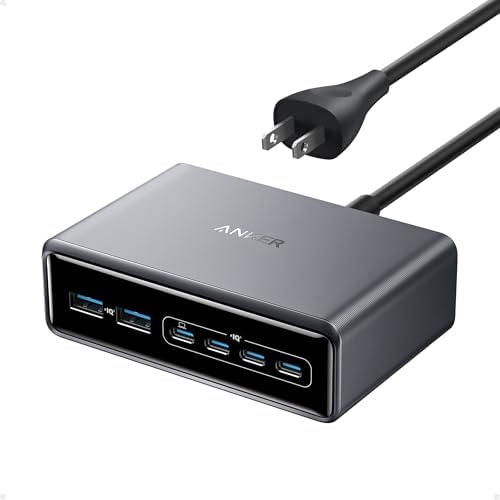
Many modern USB-C power bricks feature multiple ports (USB-C and often USB-A) to charge several devices simultaneously. Look for chargers with “intelligent power distribution” or “PowerIQ” technology. These features ensure that the total wattage is dynamically allocated across connected devices, prioritizing power-hungry laptops while still efficiently charging your phone or tablet.
“A charger with intelligent power distribution can be a game-changer for desk setups or travel, consolidating multiple charging needs into one sleek unit.”
Portability vs. Desktop Stations ✈️
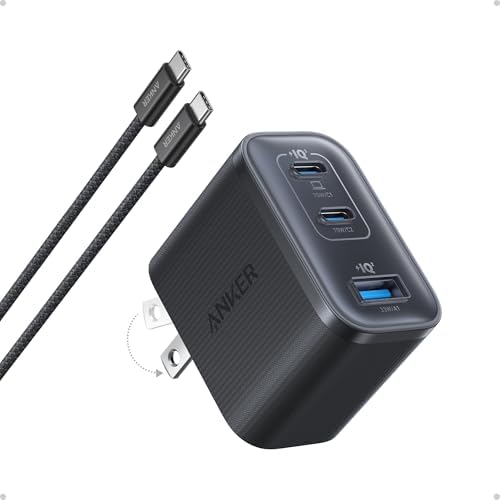
Consider your primary use case. For travel, a compact, foldable-prong GaN charger (like Anker Nano series or RAVPower 61W PD 3.0) is ideal. For a home office or workstation, a desktop charging station with higher wattage (e.g., UGREEN Nexode 500W) and multiple ports can be more practical, reducing cable clutter. 🏠
Safety First: Certifications and Protections 🛡️
Always prioritize safety. Look for chargers that are certified by reputable organizations like USB-IF, UL, CE, or FCC. These certifications ensure the product meets stringent safety and performance standards, offering protections against overvoltage, overcurrent, overheating, and short-circuits. Counterfeit chargers, unfortunately, are a real risk, with studies indicating they can be a significant cause of device fires.
https://www.youtube.com/watch?v=Jc7hW05R1yA
The Right Cable Matters 🔗
For high-wattage charging, especially above 60W, you need specialized USB-C to USB-C cables. Look for “EPR” (Extended Power Range) cables rated for 240W or “5A” cables rated for 100W. Using an inadequately rated cable can limit charging speed or even pose a safety risk.
“The conversion of high-power devices (100 W – 240 W) to USB-C charging requires not only compliant devices and chargers, but also specialized cables.”
Latest Trends and Future Outlook (2024-2026) 🔮
The landscape of fast charging is continually evolving, with key developments shaping the future:
- EU Legislation: Europe’s Common Charger Directive mandates USB-C as the universal charging port for most portable electronic devices by the end of 2024, with laptops following by early 2026. This global push for standardization will further accelerate USB-C adoption. 🇪🇺
- Higher Wattages and EPR: The widespread availability of 140W and 240W USB PD 3.1/3.2 chargers and EPR cables signifies a shift towards truly universal laptop charging, even for power-hungry gaming rigs.
- Adaptive Charging with AVS: As PD 3.2 becomes more prevalent, the mandatory Adjustable Voltage Supply (AVS) feature will make charging even more efficient and tailored to the device’s exact needs, enhancing battery health and charging speed.
- Leading Brands: Brands like Anker, UGREEN, RAVPower, Baseus, and mFish continue to innovate, offering a wide range of GaN-powered, multi-port, and high-wattage USB-C PD solutions.
https://www.youtube.com/watch?v=q6t8r_x_bBw
The market in 2026 is seeing an influx of compact GaN designs with PD 3.1 readiness and comprehensive safety systems, emphasizing intelligent power control and thermal stability.
Maximizing Your Charging Experience and Avoiding Pitfalls 🧐
To get the most out of your fast charging USB-C laptop power delivery brick, keep these tips in mind:
- Verify Compatibility: While USB-C is universal, always check your laptop’s specifications to ensure it supports USB PD charging. Some older or specific models might not, even with a USB-C port.
- Keep it Cool: While GaN chargers run cooler, avoid placing them in enclosed spaces or under blankets while charging to prevent heat buildup, which can affect efficiency and longevity.
- Maintain Cables: Inspect your USB-C cables regularly for any signs of wear and tear. Damaged cables can be inefficient or dangerous.
- Software Updates: Keep your device’s operating system and firmware updated, as manufacturers often release updates to improve charging protocols and battery management.
“Investing in a high-quality, certified USB-C PD brick with GaN technology is a smart move for future-proofing your charging setup.”
The market is saturated with options, but a little informed decision-making can ensure you choose a charger that’s not just fast, but also safe, efficient, and versatile enough for all your tech needs. 🤔
https://www.youtube.com/watch?v=gS6tHh7R5y4
“Fast charging is no longer only about wattage; it is about intelligent power control, thermal stability, and long-term reliability.”
Conclusion: Power Up Your Productivity 🚀
The fast charging USB-C laptop power delivery brick has evolved into a sophisticated piece of technology, essential for anyone navigating the modern digital landscape. With advancements in USB PD standards and the revolutionary impact of GaN technology, these compact powerhouses offer unparalleled speed, efficiency, and versatility. By understanding your wattage needs, prioritizing safety certifications, and choosing smart features like multi-port intelligent power distribution, you can transform your charging experience. Embrace the future of universal charging and keep your devices powered, productive, and always ready for action!
🔍 Explore More: See all Related Blog Posts for Fast charging USB-C laptop power delivery brick.