
Starting a business is an exciting journey, filled with innovative ideas and boundless energy. 🚀
However, many startups, despite their brilliant concepts, struggle to gain traction in the market.
Why?
Often, it’s because they haven’t truly understood who they are trying to serve. 💡
This is where a customer avatar worksheet becomes an indispensable tool.

A customer avatar, also known as a buyer persona, is a detailed profile of your ideal customer.
It goes beyond basic demographics to delve into psychographics, motivations, challenges, and aspirations.
For startups operating with limited resources, this understanding is not just helpful—it’s critical.
It helps you focus your efforts, refine your product, and craft marketing messages that truly resonate.
What Exactly Is a Customer Avatar? 🤔
Imagine you’re designing a product or service.
Are you building it for everyone?
If so, you’re likely building it for no one.
A customer avatar is a semi-fictional representation of your ideal customer, based on market research and real data about your existing customers.
It’s more than just a demographic profile (age, gender, location).
It includes behavioral patterns, motivations, goals, pain points, and even personal background.
Think of it as giving a face and a story to your target audience.
“Know your customer better than they know themselves.”
Why is a Customer Avatar Crucial for Startups? 📌
Startups often operate in a lean environment, where every decision, every dollar, and every hour counts.
Without a clear understanding of their ideal customer, they risk wasting precious resources on misdirected efforts.
| Benefit for Startups | Explanation |
|---|---|
| Focused Marketing | Tailor your messaging, channels, and content to attract the right people, reducing ad spend waste. |
| Product Development | Build features and solutions that directly address your customer’s pain points and desires. |
| Enhanced Sales | Sales teams can personalize their pitches and understand customer objections better. |
| Content Creation | Create relevant blog posts, videos, and social media content that resonates deeply. |
| Business Strategy | Inform strategic decisions, from pricing to partnerships, with a customer-centric view. |
It’s like having a detailed map before embarking on a treasure hunt. 🗺️
You know exactly where to dig!
Components of a Comprehensive Customer Avatar 📝
To build a truly effective customer avatar, you need to gather information across several key areas.
This isn’t about guesswork; it’s about informed assumptions and data collection.
Demographic Information
These are the basic facts that paint a broad picture.
- Age: What is their age range? (e.g., 25-35)
- Gender: What gender do they identify with? (or non-specific if irrelevant)
- Location: Where do they live? (e.g., urban, suburban, specific country/region)
- Income Level: What is their estimated household or personal income?
- Occupation/Industry: What do they do for a living?
- Education Level: What is their highest level of education?
- Marital Status/Family Size: Are they single, married, have children?
Psychographic Information
This is where the real depth comes in, focusing on their inner world.
- Personality Traits: Are they introverted, extroverted, analytical, creative?
- Values & Beliefs: What principles guide their decisions and actions?
- Interests & Hobbies: What do they do in their free time?
- Lifestyle: What kind of lifestyle do they lead? (e.g., health-conscious, tech-savvy, busy parent)
- Attitudes: How do they feel about specific issues or industries related to your product?
Goals and Aspirations
What do they want to achieve, both personally and professionally?
- Personal Goals: What are their life ambitions?
- Professional Goals: What do they aim for in their career?
- Aspirations related to your product/service: How can your offering help them reach these goals?
Pain Points and Challenges
What problems are they facing that your startup can solve?
- Frustrations: What makes them feel stressed or annoyed?
- Obstacles: What prevents them from achieving their goals?
- Unmet Needs: What are they looking for that isn’t currently available or working well?
Information Sources and Media Consumption
Where do they get their information?
- Social Media Platforms: Which platforms do they frequent? (e.g., LinkedIn, Instagram, TikTok)
- Blogs/Websites: What online content do they consume?
- Publications: What magazines, newspapers, or industry journals do they read?
- Influencers: Who do they follow and trust online?
- Events: What conferences or meetups do they attend?
How to Create Your Customer Avatar Using a Free Worksheet 🛠️
The good news is you don’t need an expensive consultant to create robust customer avatars.
Many free resources, like our free customer avatar worksheet for startups, can guide you through the process step-by-step.
Here’s a general approach:
Step 1: Research, Research, Research! 📈
This isn’t just about filling in blanks; it’s about informed decision-making.
- Analyze Existing Data: Look at your website analytics, social media insights, and any past customer surveys. Who is already engaging with you?
- Conduct Customer Interviews: Talk to your current customers (if you have any). Ask open-ended questions about their experiences, challenges, and goals. HubSpot offers great tips on conducting effective customer interviews.
- Competitor Analysis: Who are your competitors targeting? What kind of audience engages with their content?
- Online Forums and Social Media: Observe discussions in relevant online communities. What questions are people asking? What problems are they complaining about?
Step 2: Give Your Avatar a Name and a Face 👤
This helps to make them feel real and relatable.
Give your avatar a name (e.g., “Tech-Savvy Tina,” “Small Business Owner Sam”).
Find a stock photo that represents them – this helps to visualize who you’re talking to.
The more tangible your avatar is, the easier it will be for your team to understand and remember them.
Step 3: Fill Out the Worksheet Sections
Systematically go through each section of your free customer avatar worksheet.
Be as detailed as possible, using the insights you gained from your research.
Don’t be afraid to create multiple avatars if your startup targets distinct segments.
However, for early-stage startups, it’s often best to start with 1-3 primary avatars.
Step 4: Craft a Story and a Quote
To bring your avatar to life, write a short narrative about their day or their journey related to your product.
Also, create a quote that summarizes their primary goal or pain point.
For example: “I wish there was an easier way to manage my social media without spending hours every day!”
This helps internalize their perspective.
Infographic: The Power of a Customer Avatar 📊
Where to Find a Free Customer Avatar Worksheet for Your Startup 🆓
You don’t need to break the bank to get started with customer avatars.
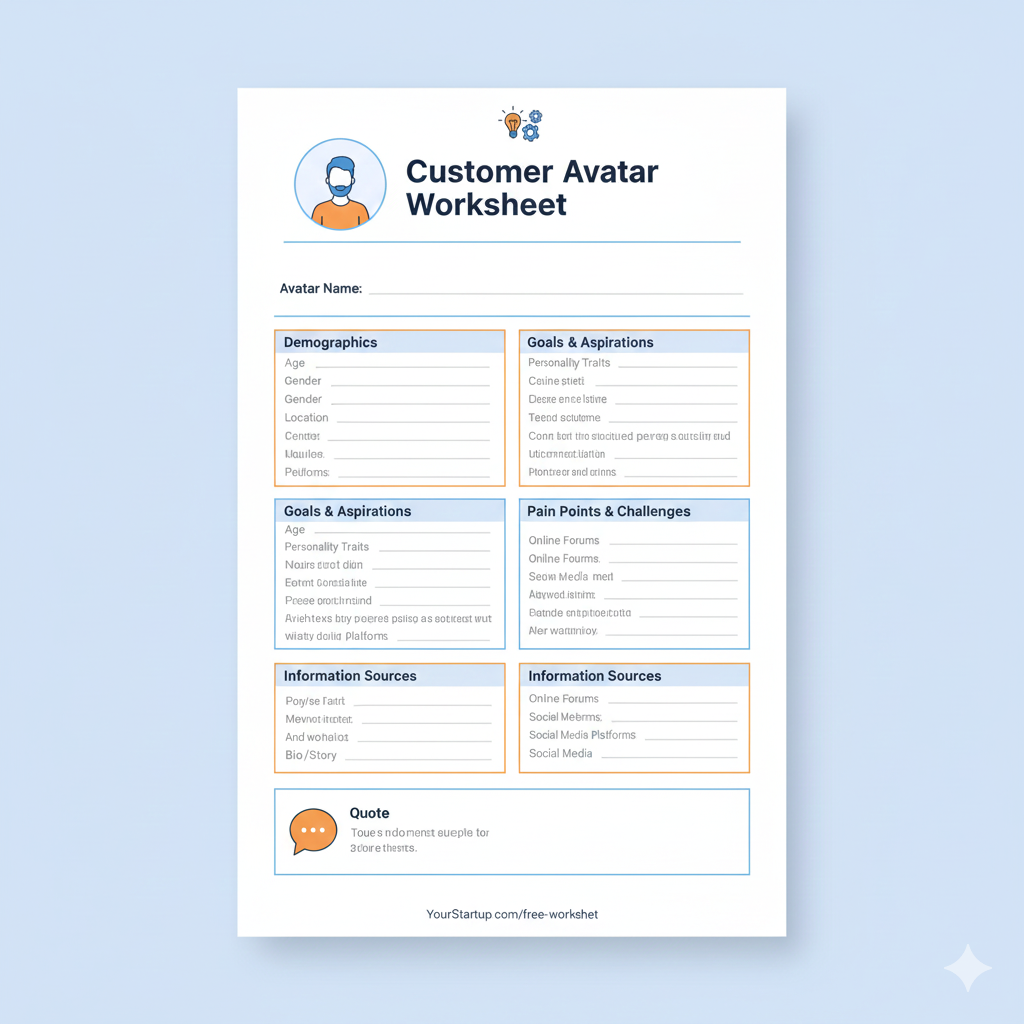
Many reputable marketing and business resources offer free templates and worksheets.
Here are some excellent places to start:
- HubSpot’s Buyer Persona Templates: HubSpot is a leader in inbound marketing and offers comprehensive, free templates to help you build detailed buyer personas.
- DigitalMarketer’s Customer Avatar Worksheet: DigitalMarketer provides an in-depth worksheet that guides you through demographic, psychographic, and behavioral aspects of your ideal customer.
- Canva (Search for “Customer Persona Template”): While not a dedicated marketing site, Canva offers numerous visually appealing and customizable templates that you can adapt for your customer avatars.
- Forbes Advisor on Customer Personas: While not a direct worksheet, Forbes often provides valuable insights into the importance and creation of customer personas, which can guide your worksheet completion.
Remember to download, print, and fill out these worksheets collaboratively with your team.
The best avatars are often born from diverse perspectives.
Putting Your Customer Avatar into Action 🚀
Creating a customer avatar isn’t just an exercise; it’s a living document that should guide all your startup’s decisions.
“The best way to predict the future is to create it, and the best way to create it is to understand who you’re creating it for.”
Marketing & Sales
Use your avatar to refine your marketing messages, choose the right channels, and tailor your sales pitches.
Speak directly to their pain points and aspirations.
Imagine you are having a conversation with your avatar every time you write copy or design an ad.
Product Development
Ensure new features or product iterations directly address a need or solve a problem for your avatar.
Before building anything, ask: “Would [Avatar Name] care about this?”
Content Strategy
Create blog posts, videos, and social media content that educates, entertains, or inspires your avatar.
What questions do they have?
What topics are they interested in?
Customer Service
Train your customer service team to understand the avatar’s typical frustrations and communication style.
This leads to more empathetic and effective support.
Common Mistakes to Avoid 🚫
While creating customer avatars is beneficial, some common pitfalls can dilute their effectiveness.
- Making Assumptions Without Data: Don’t just guess. Base your avatar on research and insights, even if anecdotal initially.
- Creating Too Many Avatars: For a startup, focus on 1-3 primary avatars. Spreading yourself too thin can lead to confusion.
- Forgetting to Update: Customer needs and market dynamics change. Revisit and refine your avatars periodically (e.g., annually or after significant product changes).
- Not Sharing Internally: Ensure everyone in your company, from marketing to sales to product development, understands and uses the avatars.
Conclusion: Your Blueprint for Startup Success 🌟
For any startup aiming for sustainable growth, understanding your customer is paramount.
A free customer avatar worksheet provides the foundational tool to achieve this deep understanding.
It shifts your focus from what you think your customers want to what they actually need and desire.
By taking the time to complete this crucial exercise, you’re not just filling out a form; you’re crafting a blueprint for your startup’s marketing, product development, and overall success.
So, go ahead, download a free worksheet today, and start building your ideal customer profiles.
Your future successful startup will thank you for it!