
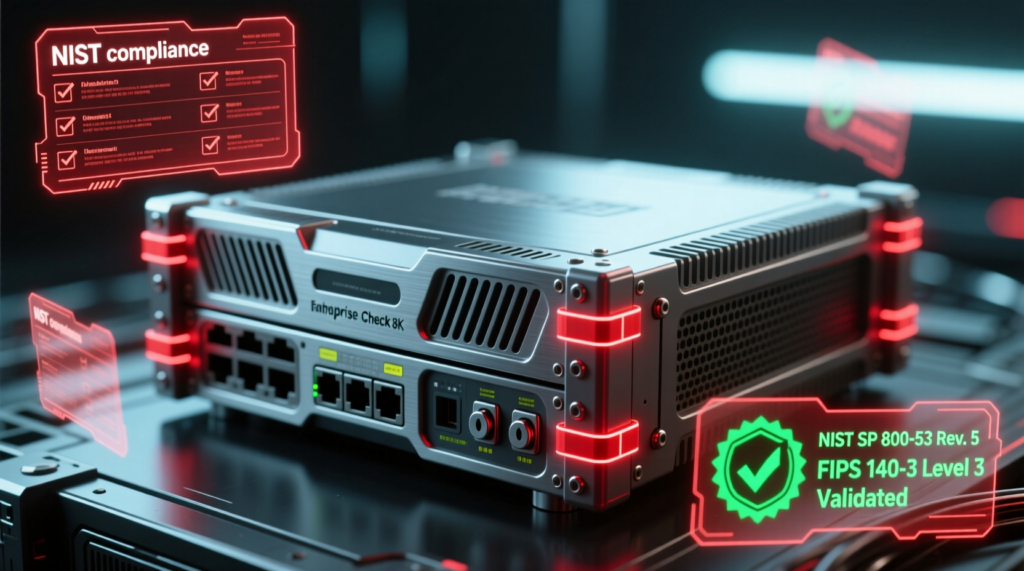


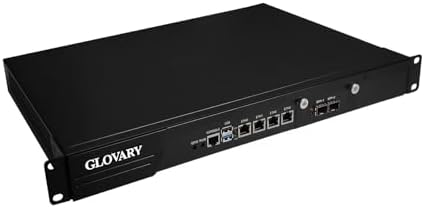
When it comes to how to satisfy nist 800-171 sc.l2-3.13.11 cryptographic validation controls, getting the right details matters. Fortinet FortiGate 60F Enterprise Firewall with FIPS 140-3 Validation
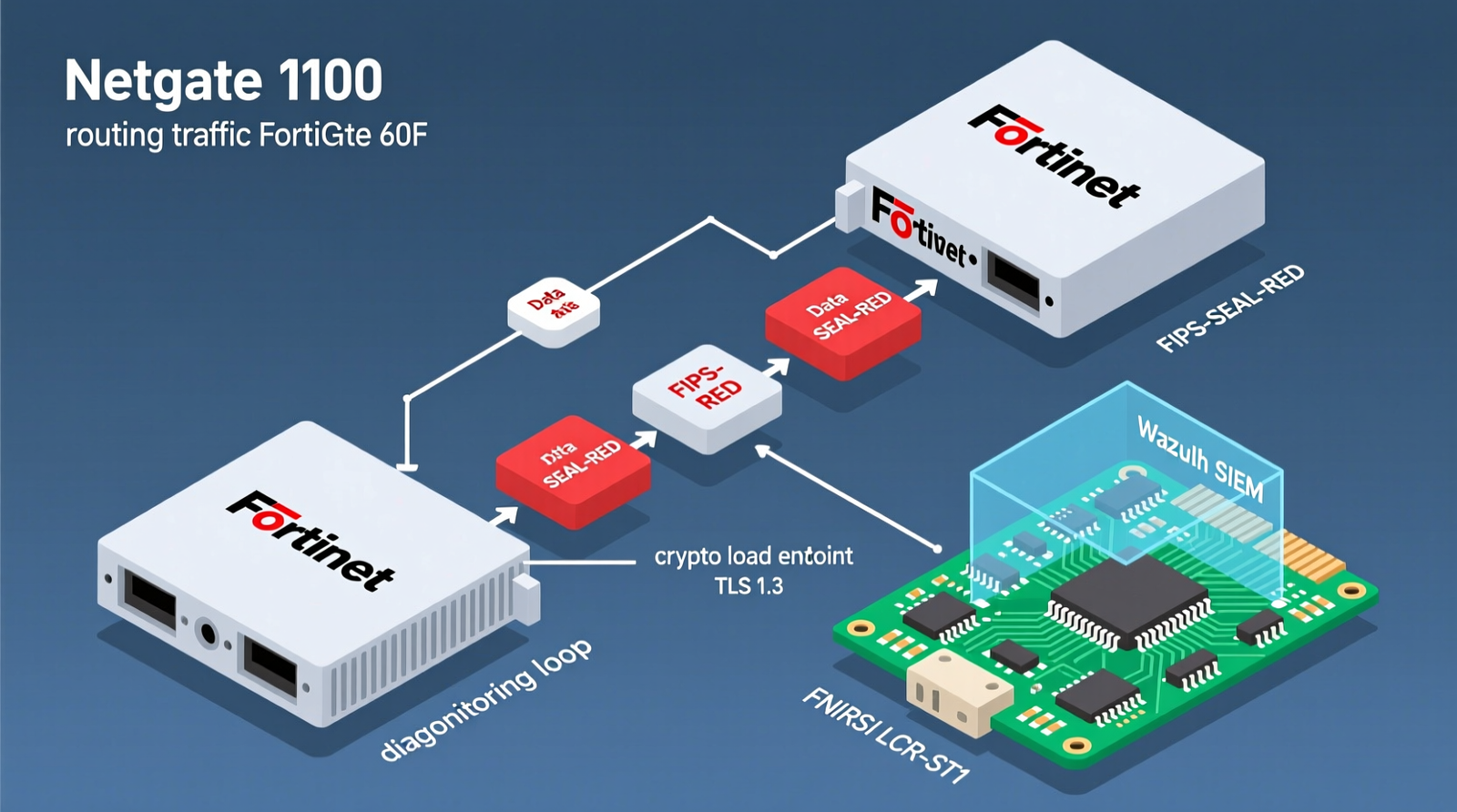
Netgate 1100 pfSense Plus Router with TAA/NDAA Compliance
FNIRSI LCR-ST1 Smart LCR Tweezers for SMD Diagnostics
How to Satisfy NIST 800-171 SC.L2-3.13.11 Cryptographic Validation Controls: The CMMC Hardware & Bypass Blueprint
If you’re reading this, you’ve already failed a C3PAO audit or seen one coming. The exact failure point? NIST SP 800-171 control SC.L2-3.13.11 — and it’s not about encryption strength. It’s about validation status.
Let’s cut through the noise. If your perimeter device processes CUI with AES-256, it must have an active Cryptographic Module Validation Program (CMVP) certificate. That means no default pfSense, OPNsense, or even most commercial firewalls unless they’re FIPS-certified.
This isn’t a debate about “enterprise-grade” vs. “open-source.” It’s about compliance-grade hardware. And if you don’t get it right now, you’ll lose contracts by 2026.
The Technical Reality / The Failure Point
The Open-Source Cryptographic Trap: Why pfSense and OPNsense Fail C3PAO Audits
Default Netgate pfSense or OPNsense deployments use robust AES-256 encryption. But they aren’t validated. No active CMVP certificate. No FIPS 140-2 or 140-3 validation. C3PAOs don’t care how good your cipher is — they care about certification.
You’ll see 15-page forum threads where sysadmins try to force these appliances into compliance. They’ll show you screenshots of “custom builds,” “modified kernels,” or “hand-compiled modules.” But C3PAOs don’t accept that. They want officially validated crypto modules.
And yes — even the most experienced engineers are failing audits because they assume “enterprise-grade” = “FIPS-grade.”
The September 21, 2026 CMVP Sunset: FIPS 140-2 Historical Reclassification
Here’s the kicker: All active FIPS 140-2 certificates will become Historical by September 21, 2026.
That means:
Your legacy Fortinet, Cisco, or Palo Alto firewalls with FIPS 140-2 certs won’t count anymore. New procurements cannot include Historical modules. Any bid submitted after that date using old FIPS hardware is automatically disqualified.
So you’re not just fixing a compliance gap — you’re future-proofing your entire infrastructure.
The Physical Tamper-Evidence Friction: Voiding Level 2 Validation at the Chassis Level
Procurement agents buy FIPS-certified firewalls. Then they forget to order the FIPS-SEAL-RED tamper-evident seal kit.
Without it, the physical validation is void. C3PAOs inspect the chassis, find no seals, and fail the audit.
It’s not a software issue — it’s a hardware procurement oversight.
The Core Gear Architecture
Perimeter Crypto-Validation Stack: Fortinet FortiGate 60F & 40F with SPU Acceleration
Fortinet FortiGate 60F (Mid-Sized Contractors)
| Specification | Details |
|---|---|
| Ports | 10 x GE RJ45 |
| Firewall Throughput | 10 Gbps |
| NGFW Throughput | 1 Gbps |
| Acceleration | Dedicated Security Processing Units (SPUs) |
| Compliance Target | FIPS 140-3 transition compliance |
Crucially: Must include the FIPS-SEAL-RED tamper-evident seal kit for Level 2 physical validation.
Fortinet FortiGate 40F (Branch Offices)
| Specification | Details |
|---|---|
| Ports | 5 x GE RJ45 |
| Firewall Throughput | 5 Gbps |
| NGFW Throughput | 800 Mbps |
| Physical Validation | Requires FIPS-SEAL-RED kit |
Both models are designed to meet the strictest cryptographic and physical security requirements under NIST SP 800-171 SC.L2-3.13.11.
The Cryptographic Scope Bypass: Netgate 1100 (pfSense Plus) Endpoint Architecture
The Netgate 1100 doesn’t validate crypto — it routes and inspects traffic.
| Specification | Details |
|---|---|
| Ports | 3 x 1 Gbps switched ports |
| CPU | Dual-Core ARM64 Cortex-A53 |
| Compliance | Full TAA and NDAA compliance |
Because it lacks active CMVP validation, it must be used strictly for routing/access control, not crypto processing.
Shift the cryptographic burden to the endpoint using FIPS 140-3 validated TLS 1.3 or a compliant Secure Web Gateway (SWG).
This removes the firewall from the SC.L2-3.13.11 scope entirely.
Continuous Monitoring & SIEM Integration: Wazuh for SC.L1-3.13.1 Compliance
Use Wazuh to correlate firewall syslog and network traffic logs with endpoint File Integrity Monitoring (FIM).
Wazuh detects unauthorized configuration changes and generates audit-ready reports for SC.L1-3.13.1.
Hardware Maintenance & PCB Diagnostic Stack: FNIRSI LCR-ST1 & Andonstar AD246S-M
These tools are essential for maintaining CMMC enclaves.
FNIRSI LCR-ST1 Smart LCR Tweezers
| Specification | Details |
|---|---|
| Display | 1.14-inch color display |
| Weight | 41g |
| Battery | 250mAh |
| Test Frequencies | 100 Hz, 1 kHz, 10 kHz |
| Test Voltages | 0.3V and 0.6V |
Use 0.3V / 1 kHz to test SMD components without forward-biasing adjacent semiconductors.
This prevents false readings during diagnostics.
Recommended Insights From Our Guide Library:
- The CMMC-Auditable Firewall Bypass: How to Keep pfSense Out of CMVP Scope While Meeting FIPS 140-3 » Z A D A
- Architecting Immune Networks: Navigating the Friction of Modern Security Frameworks » Z A D A
- Securing the Horizon: Architecting Quantum-Resilient Infrastructure for Mid-Market Enterprises » Z A D A
Andonstar AD246S-M Digital Microscope
| Specification | Details |
|---|---|
| Screen | 7-inch LCD |
| Video | 2160P video |
| Output | Dual-screen HDMI zero-latency |
| Bracket | 30cm high for thermal clearance |
Ideal for inspecting and repairing crypto-accelerator chips on firewall motherboards.
DevOps Homelab & Compute Cluster Baseline: GEEKOM A9 Max & Proxmox VE/OpenZFS
GEEKOM A9 Max
| Specification | Details |
|---|---|
| Processor | AMD Ryzen AI 9 HX 370 (12 cores, 24 threads) |
| RAM | Up to 128 GB DDR5 SODIMM |
| Network | Dual 2.5G RJ45 LAN ports |
| Storage | 2 x M.2 PCIe Gen 4×4 NVMe slots |
Proxmox VE / OpenZFS Allocation
KVM/LXC virtualization host.
OpenZFS Adaptive Replacement Cache (ARC) requires strict DDR5 memory baselines to avoid I/O bottlenecks during centralized storage operations.
The Technical Setup Blueprint
Executing the Fortinet FIPS-SEAL-RED Physical Security Protocol
Open the FortiGate chassis.
Apply the FIPS-SEAL-RED tamper-evident seals over all internal screws and console port covers.
Ensure the seals are visible and intact during C3PAO inspection.
This satisfies FIPS 140-2 Level 2 physical validation requirements.
Architecting the Netgate 1100 Endpoint TLS 1.3 / SWG Cryptographic Bypass
Configure the Netgate 1100 for stateful packet inspection and routing only.
Deploy FIPS 140-3 validated TLS 1.3 or a compliant SWG at the endpoint.
Document the bypass architecture clearly for C3PAO review.
This ensures no cryptographic operations occur on CUI within the firewall, fully removing it from SC.L2-3.13.11 scope.
Configuring Wazuh SIEM for Perimeter Syslog and Endpoint FIM Correlation
Check out TECH Collection Amazon Products
Forward firewall logs from Fortinet/Netgate to Wazuh server.
Set up FIM rules for firewall config files and access control lists.
Trigger alerts for unauthorized changes to ensure continuous monitoring for SC.L1-3.13.1.
Micro-Soldering and PCB Rework Procedures for Firewall Hardware Maintenance
Use FNIRSI LCR-ST1 at 0.3V / 1 kHz to test SMD components without damaging nearby silicon.
This protects sensitive circuitry during diagnostic phases.
Use Andonstar AD246S-M with 30cm high bracket for hot-air rework.
Maintain thermal clearance to prevent damage during capacitor or crypto-chip replacement.
Provisioning the Proxmox VE / OpenZFS Hypervisor for Segmented Control Plane Routing
Enable IOMMU in BIOS/UEFI for PCIe passthrough of dual 2.5G LAN ports.
Create OpenZFS pool with tuned ARC parameters for 128 GB DDR5 baseline.
Prevent I/O latency during heavy SIEM log ingestion.
Field Verdict & Operational ROI
Avoiding the “Rip and Replace” Penalty of the 2026 CMVP Transition
Don’t wait until September 2026 to realize your hardware is obsolete. That’s not just a compliance risk — it’s a contract killer.
The cost of a single failed bid or audit failure far exceeds the price of this stack. You’re not buying hardware — you’re buying insurance against losing work.
Final Procurement Checklist for C3PAO-Ready Infrastructure
Verify active CMVP certificate on all perimeter devices.
Add FIPS-SEAL-RED kit to every PO for Fortinet gear.
Confirm TAA/NDAA compliance on routing gear.
Validate DDR5 baseline for underlying compute clusters.
Document all cryptographic scope bypasses for audit readiness.
Final Thought
This isn’t just about passing an audit. It’s about future-proofing your CMMC Level 2 infrastructure.
Community Reference & Authority Resources:
If you’re building or maintaining a defense contractor network today, this blueprint is your roadmap to avoiding audit failure, contract loss, and expensive rework.
Start now. Build smart. Stay compliant.
🔍 Explore More: See all tech guides and tutorials for how to satisfy nist 800-171 sc.l2-3.13.11 cryptographic validation controls.
Check out TECH Collection Amazon Products