





When it comes to step by step guide wazuh siem log aggregation for dfars compliance audits, getting the right details matters. Recommended Infrastructure Stack:
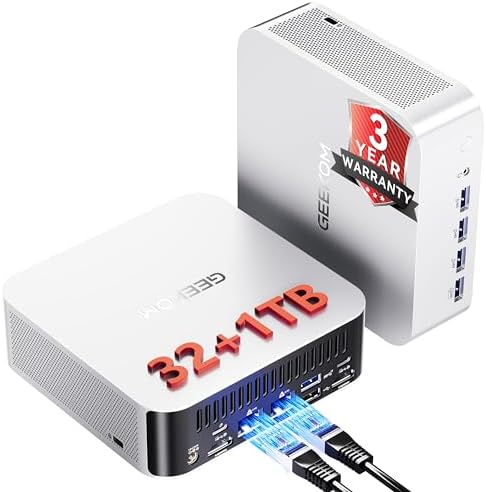
GEEKOM A9 Max Mini PC (AMD Ryzen AI 9 HX 370, 128GB DDR5)
Fortinet FortiGate 60F Next-Generation Firewall
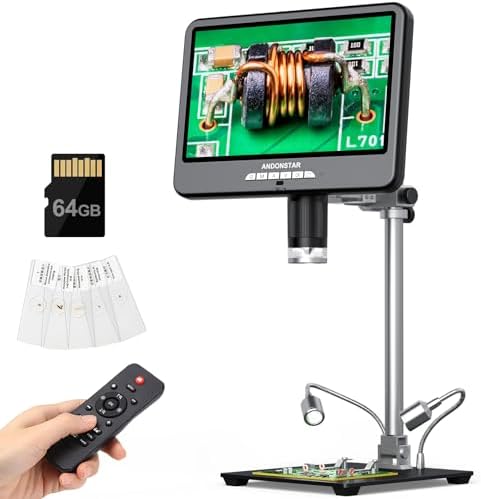
Andonstar AD246S-M Digital Microscope
Defense subcontractors face automatic disqualification when Wazuh deployments fail under NIST SP 800-171 scrutiny. The root causes are rarely software bugs; they are architectural fragmentation, non-compliant TLS transit, and hardware bottlenecks that trigger Out-Of-Memory crashes during ingestion spikes. This guide bypasses theory and delivers the exact infrastructure blueprint, cryptographic evasion tactics, and hardware specifications required to survive a C3PAO audit in the 2026 compliance landscape.
You will learn how to configure Proxmox VE zoning, tune OpenSearch JVM heap allocation, enforce FIPS-validated endpoint encryption, and deploy TAA-compliant gear that eliminates audit blind spots. Every recommendation anchors directly to a known failure mode, ensuring your deployment functions as an operational shield rather than a liability.
The Technical Reality: Infrastructure Failure Modes & The C3PAO Audit Trap
Fragmented Event Tracking & The SC.L2-3.13.1 Continuous Monitoring Failure
The primary failure mode in DFARS 252.204-7012 audits stems from isolated logging mechanisms. Contractors frequently deploy local Windows Event Logs and standalone firewall syslog outputs without a centralized correlation engine. This architectural fragmentation creates silos that blind auditors to real-time unauthorized configuration alterations and Controlled Unclassified Information (CUI) access anomalies.
When event data remains distributed across disparate systems, the continuous monitoring requirements of NIST SP 800-171 control SC.L2-3.13.1 cannot be verified.
Auditors require a unified view to detect anomalies instantly. Without a centralized SIEM like Wazuh correlating these streams, the organization fails AU.L2-3.3.1 (audit logging) due to the inability to produce comprehensive, correlated evidence, resulting in immediate findings that jeopardize contract eligibility. The fix requires a single ingestion point that aggregates all telemetry into a searchable, time-synchronized repository.
The Cryptographic Transit Failure & The CMVP “Crypto-Scope” Trap
A secondary, critical failure occurs during log transit. When Wazuh agents forward security events to the central manager, the data traverses the network using standard, non-validated TLS implementations. Most default Linux distributions rely on standard OpenSSL libraries that lack active FIPS 140-2 or FIPS 140-3 validation from the Cryptographic Module Validation Program (CMVP).
This violation triggers a direct breach of SC.L2-3.13.11 (cryptographic protection), causing assessors to flag immediate non-compliance findings and forcing a costly infrastructure rebuild before the September 21, 2026, CMVP transition deadline. The “Crypto-Scope Trap” forces engineers to shift the cryptographic burden to FIPS-certified endpoints, removing non-compliant network devices from the audit scope.
Physical I/O Bottlenecks, Dropped Logs, & The OOM Crash Vector
Hardware provisioning errors create catastrophic audit gaps. Under-provisioned storage, such as standard SATA SSDs or HDDs, causes physical I/O bottlenecks during peak ingestion spikes. When the disk subsystem cannot sustain the write throughput, logs are dropped.
C3PAOs flag dropped logs as a fatal failure of AU.L2-3.3.1, interpreting the absence of records as a potential cover-up or system compromise that results in immediate audit disqualification. Simultaneously, forum-verified reports highlight Out-Of-Memory (OOM) crashes on Wazuh indexer nodes. Attempting to run the OpenSearch Java Virtual Machine (JVM) on standard 16GB or 32GB RAM configurations guarantees instability during high-volume event storms. When the JVM exhausts available memory, the indexer process terminates, halting log ingestion entirely. These crashes result in massive data gaps that auditors treat as evidence of inadequate monitoring controls.
TAA/NDAA Procurement Disqualifications & BOM Audit Failures
Procurement shortcuts often lead to contract disqualification. Contractors frequently purchase off-brand, non-compliant server hardware or consumer-grade NAS devices to host the SIEM backend to reduce upfront costs. However, purchasing agents routinely audit the Bill of Materials (BOM) for Trade Agreements Act (TAA) compliance.
If the SIEM backend hardware originates from a non-designated country or lacks proper certification, the entire deployment is disqualified, resulting in immediate loss of defense subcontracting privileges and significant revenue downtime. The solution requires procuring strictly TAA/NDAA-compliant hardware with verifiable supply chain documentation before deployment begins.
The Core Gear Architecture: 2026 Validated High-Density Compute & Perimeter Stack
High-Density SIEM Backend: GEEKOM A9 Max (TAA/NDAA Compliant)
To resolve ingestion bottlenecks and eradicate OOM crashes, the Wazuh backend requires high-density compute. The GEEKOM A9 Max provides the necessary specifications while maintaining full TAA and NDAA compliance.
| Component | Specification |
|---|---|
| Compute | AMD Ryzen AI 9 HX 370 processor (12 Cores / 24 Threads) |
| Memory | 128GB dual-channel DDR5 SODIMM capacity |
| Storage & I/O | Dual M.2 PCIe Gen 4×4 NVMe drives (up to 8TB total) |
| Network | Dual 2.5G RJ45 LAN ports |
The AMD Ryzen AI 9 HX 370 processor handles massive log indexing and correlation without CPU throttling, ensuring low-latency processing during event storms. The 128GB dual-channel DDR5 SODIMM capacity completely eliminates OpenSearch JVM OOM crashes, allowing for aggressive heap allocation and robust file system caching. Dual M.2 PCIe Gen 4×4 NVMe drives deliver the massive Input/Output Operations Per Second (IOPS) required to prevent log drops during peak ingestion. Dual 2.5G RJ45 LAN ports enable strict physical network segmentation, separating management traffic from high-throughput log ingestion.
FIPS-Validated Perimeter Gateway: Fortinet FortiGate 60F
For the network perimeter, the Fortinet FortiGate 60F serves as the compliant log-forwarding gateway, ready for CMMC L2 assessments.
| Feature | Detail |
|---|---|
| Compliance | Certified FIPS 140-2 Level 2 with Native FIPS-CC OS Mode |
| Physical Security | FIPS-SEAL-RED tamper-evident kit installation |
| Throughput | 10x GE RJ45 ports, 10 Gbps raw firewall throughput |
Certified FIPS 140-2 Level 2 with Native FIPS-CC OS Mode, the device meets current cryptographic standards while preparing for the 2026 transition. Installation of the FIPS-SEAL-RED tamper-evident kit is mandatory, satisfying physical security controls and triggering automatic zeroization of cryptographic keys if the chassis is breached. 10x GE RJ45 ports deliver 10 Gbps raw firewall throughput and 1 Gbps NGFW throughput, backed by Hardware ASIC Acceleration to offload cryptographic operations without impacting performance.
The Open-Source Perimeter Alternative: Netgate 1100 (pfSense Plus)
Organizations utilizing open-source firewalls must implement specific architectural workarounds to remain compliant. The Netgate 1100 offers TAA/NDAA compliance but lacks active FIPS validation.
| Spec | Detail |
|---|---|
| CPU | Dual-Core ARM64 Cortex-A53 |
| Memory | 1GB DDR4 |
| Ports | 3x 1 Gbps Switched Ports |
Since the Netgate appliance cannot handle FIPS-validated encryption, you must enforce an endpoint-level encryption bypass. Configure Wazuh agents to encrypt logs via FIPS-validated TLS before transmission. Then, configure the Netgate strictly for Layer 3/Layer 4 routing. This shifts the cryptographic burden to the endpoints, effectively removing the Netgate appliance from the CMVP audit scope.
Micro-Electronics & PCB Diagnostic Stack for Hardware Restoration
Physical hardware failures on SIEM nodes or gateways require precise restoration protocols that do not violate supply chain security.
| Tool | Application |
|---|---|
| Andonstar AD246S-M | 30cm bracket for hot-air clearance; dual-screen HDMI output |
| FNIRSI LCR-ST1 | 0.3V test voltage mode; 10 kHz test frequency for SMD components |
| 40 AWG Wire | Bypass severed traces on high-density nodes |
The Andonstar AD246S-M digital microscope features a 30cm high bracket for hot-air rework clearance and dual-screen HDMI output for zero-latency hand-eye coordination during trace repairs. The FNIRSI LCR-ST1 Smart LCR Tweezers perform in-circuit measurements on gateway mainboards. Setting the tweezers to 0.3V test voltage mode prevents forward-biasing adjacent semiconductor junctions, ensuring accurate readings. Using the 10 kHz test frequency allows precise measurement of low-value SMD capacitors and inductors on the firewall mainboard. 40 AWG micro-thin copper jumper wire is used to bypass severed motherboard traces on high-density server nodes, restoring functionality without replacing components that might break TAA compliance chains.
The Technical Setup Blueprint: Zoning, JVM Tuning, & Cryptographic Evasion
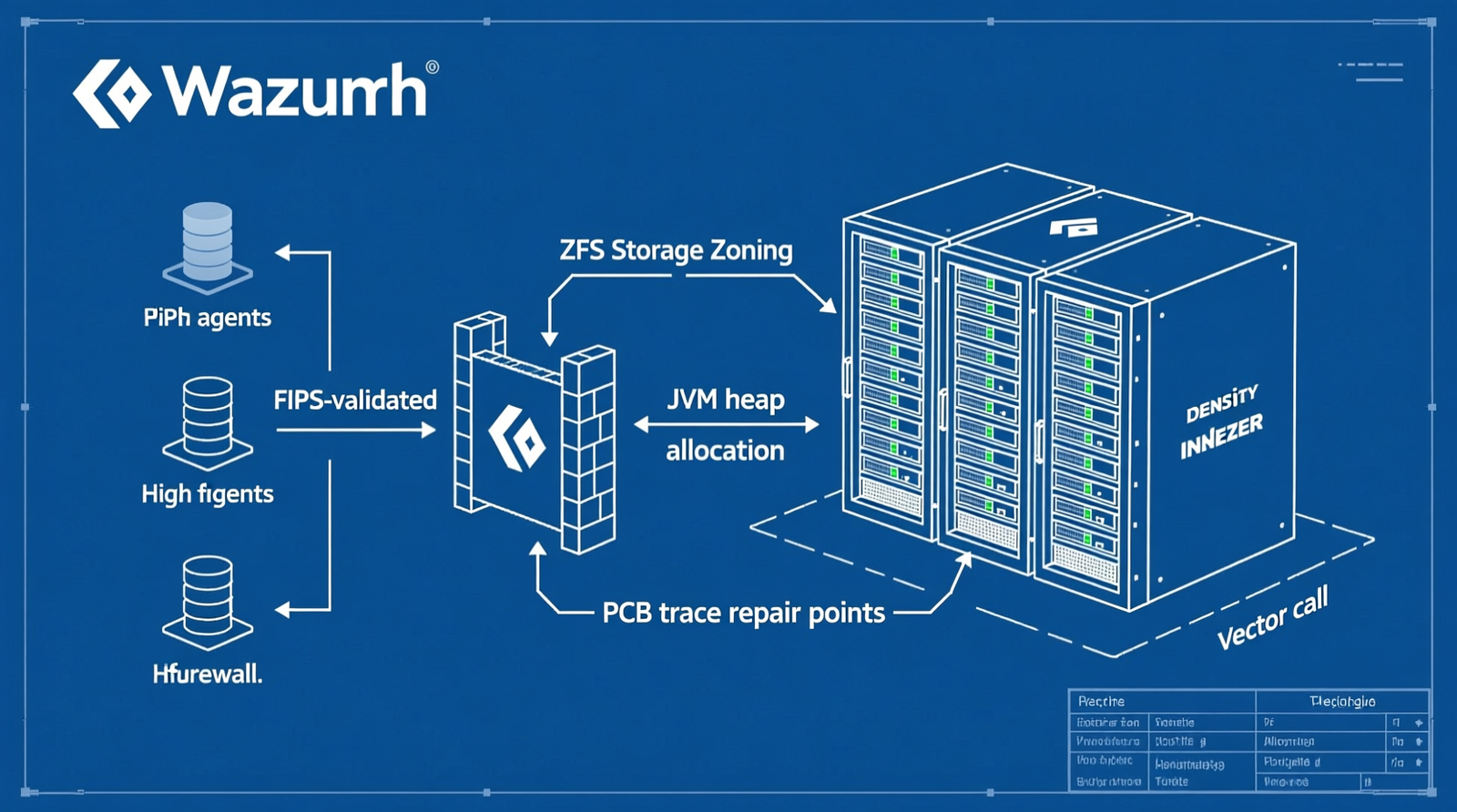
Proxmox VE Hypervisor Deployment & ZFS Storage Zoning
Deploy the Wazuh stack on the GEEKOM A9 Max using Proxmox VE to leverage enterprise-grade virtualization and storage reliability.
1. Install Proxmox VE on the GEEKOM A9 Max.
2. Configure the dual M.2 PCIe Gen 4×4 NVMe SSDs in a ZFS mirror (RAID 1). This ensures zero log loss during drive failures and maintains continuous audit coverage.
3. Leverage the OpenZFS Adaptive Replacement Cache (ARC) to accelerate read operations, significantly speeding up report generation during C3PAO audits.
4. Network Zoning: Dedicate Port 1 strictly for the management API and Proxmox cluster traffic. Dedicate Port 2 exclusively to high-throughput SIEM log ingestion from the network. This physical segregation prevents management latency from affecting log collection.
OpenSearch JVM Heap Tuning & Memory Allocation
Optimize the Wazuh Indexer (OpenSearch) to utilize the GEEKOM A9 Max‘s 128GB RAM effectively and prevent OOM crashes.
Configure the Wazuh Indexer JVM heap allocation to exactly 32GB per node. This provides sufficient memory for the JVM to manage indices without triggering garbage collection storms. Allocate the remaining 96GB of the 128GB DDR5 pool to the OS file system cache. This massive cache layer accelerates log searches and absorbs I/O spikes, preventing memory exhaustion during high-volume event storms.
Enforcing FIPS-Validated Endpoint TLS & Bypassing the Crypto-Scope
Check out TECH Collection Amazon Products
Eliminate cryptographic transit violations by rebuilding agent environments with validated libraries.
1. Abandon standard Ubuntu/Debian builds for Wazuh agents. Rebuild agent environments using FIPS-certified Red Hat or Ubuntu Pro images.
2. Edit the Wazuh agent configuration files (`ossec.conf`) to explicitly point the `
3. Enforce TLS 1.3 transit for all agent-to-manager communication. This ensures that log data is encrypted using validated cryptographic modules, satisfying SC.L2-3.13.11 and keeping the infrastructure within the approved crypto-scope.
Netgate pfSense Layer 3/4 Routing & SSL Inspection Bypass
For deployments using the Netgate 1100, strict routing configuration prevents FIPS validation failures.
Configure the firewall strictly for Layer 3/Layer 4 routing and access control. Completely disable and bypass SSL inspection and cryptographic termination on the pfSense device. By refusing to decrypt or terminate SSL sessions, the Netgate appliance never processes encrypted CUI metadata, thereby removing it from the CMVP audit scope. All encryption responsibilities rest solely on the Wazuh agents.
PCB Diagnostics & Hardware Trace Repair Protocols
Restore compromised hardware to factory specifications using precision diagnostics.
Trace Repair: Utilize the 40 AWG micro-thin copper jumper wire under the Andonstar AD246S-M microscope to bypass severed traces on SIEM compute nodes. This restores connectivity without introducing non-compliant replacement parts. Component Testing: Set the FNIRSI LCR-ST1 Smart LCR Tweezers to 0.3V test voltage mode to perform in-circuit measurements without damaging sensitive components. Use the 10 kHz test frequency to accurately measure low-value SMD capacitors and inductors on the firewall mainboard. Verify all values match datasheet specifications before re-entering the compliant network environment.
Field Verdict & Operational ROI: Securing the 2026 CMMC 2.0 Mandate
Eradicating C3PAO Audit Blind Spots
The GEEKOM A9 Max‘s combination of high IOPS and 128GB RAM directly addresses the hardware failure modes that trigger audit disqualifications. By eliminating dropped logs and preventing OpenSearch JVM OOM crashes, this stack ensures continuous compliance with AU.L2-3.3.1. Auditors can verify uninterrupted log availability, removing a common vector for non-compliance findings.
Navigating the September 2026 CMVP Transition
Deploying the Fortinet FortiGate 60F with the FIPS-SEAL-RED kit and enforcing endpoint-level FIPS TLS positions your infrastructure for the future. This approach ensures survival through the September 21, 2026, CMVP transition, avoiding the costly scramble to replace deprecated cryptographic modules. The ROI is clear: a one-time investment in validated hardware and hardened agent configurations prevents retroactive remediation expenses and audit delays.
The True Cost of Non-Compliance vs. Infrastructure Investment
Community Reference & Authority Resources:
The cost of this high-density, TAA-compliant stack is negligible compared to the financial impact of contract disqualification. A single BOM audit failure or crypto-transit finding can result in the loss of defense subcontracting privileges and significant revenue downtime. By implementing this rigorous architecture, you transform your Wazuh deployment into a defensible, audit-proof asset that safeguards your business continuity and competitive standing.
This guide has provided the exact steps to harden your Wazuh SIEM against DFARS and CMMC 2.0 scrutiny. From Proxmox zoning and JVM tuning to FIPS-validated encryption and precise PCB diagnostics, every action mitigates a specific audit risk. Deploy the recommended hardware, enforce the cryptographic protocols, and proceed with confidence. Your infrastructure is now built to withstand the hostile environment of a C3PAO assessment and secure your place in the 2026 compliance landscape.
🔍 Explore More: See all tech guides and tutorials for step by step guide wazuh siem log aggregation for dfars compliance audits.
Check out TECH Collection Amazon Products