




When it comes to how to log pfSense firewall events to wazuh siem for cmmc compliance, getting the right details matters. Fortinet FortiGate 60F Next-Generation Firewall
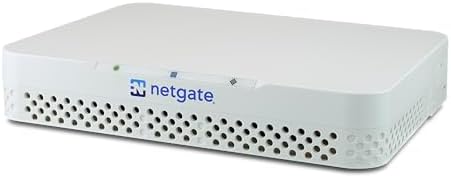
Netgate 1100 TAA/NDAA Compliant Router
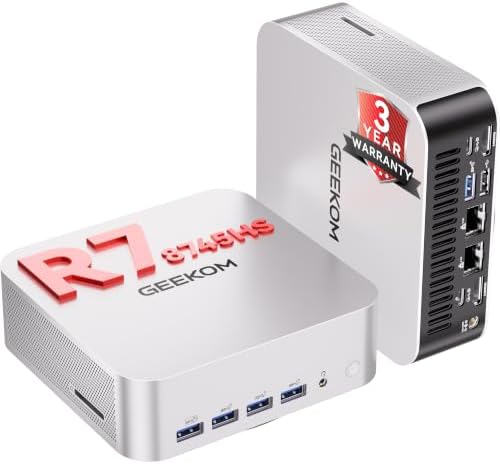
GEEKOM A9 Max Mini PC
The Technical Reality: Infrastructure Failure Modes & CMMC Audit Traps
The Auditor CMVP Shock: Cryptographic Boundary Failures & FIPS 140-3 Mandates
Standard pfSense deployments on community or non-validated Netgate hardware lack active Cryptographic Module Validation Program (CMVP) FIPS 140-2 or FIPS 140-3 certificates. If the pfSense firewall performs cryptographic operations like IPsec VPN or TLS inspection on Controlled Unclassified Information (CUI), it triggers an automatic compliance failure under DFARS 252.204-7012 and CMMC control SC.L2-3.13.11.
You fail the audit the moment the C3PAO reviewer checks the crypto boundary. The September 21, 2026 CMVP transition moves all remaining FIPS 140-2 certificates to the Historical list. Auditors will now demand FIPS 140-3 validated modules. Unprepared contractors face last-minute, expensive hardware replacements because their existing gear no longer meets federal validation standards.
UDP 514 Silent Packet Drops & Log Transport Fragmentation
Default pfSense syslog configurations utilize UDP port 514. Under high-throughput Suricata or Snort IDS alert spikes, UDP syslog experiences silent packet drops. You lose critical security events without any system warning.
This fragmented audit trail directly violates CMMC continuous monitoring and audit log generation requirements (AU.L2-3.3.1, SC.L1-3.13.1). Auditors flag missing log sequences as a failure to maintain continuous situational awareness. You cannot prove what you cannot log.
The Unsupported Agent Trap & FreeBSD Wipeouts
Sysadmins on r/homelab and r/netsec frequently attempt to install the Wazuh agent directly onto the pfSense FreeBSD OS to guarantee log delivery. This unsupported hack voids Netgate warranties and is routinely wiped during pfSense GUI updates.
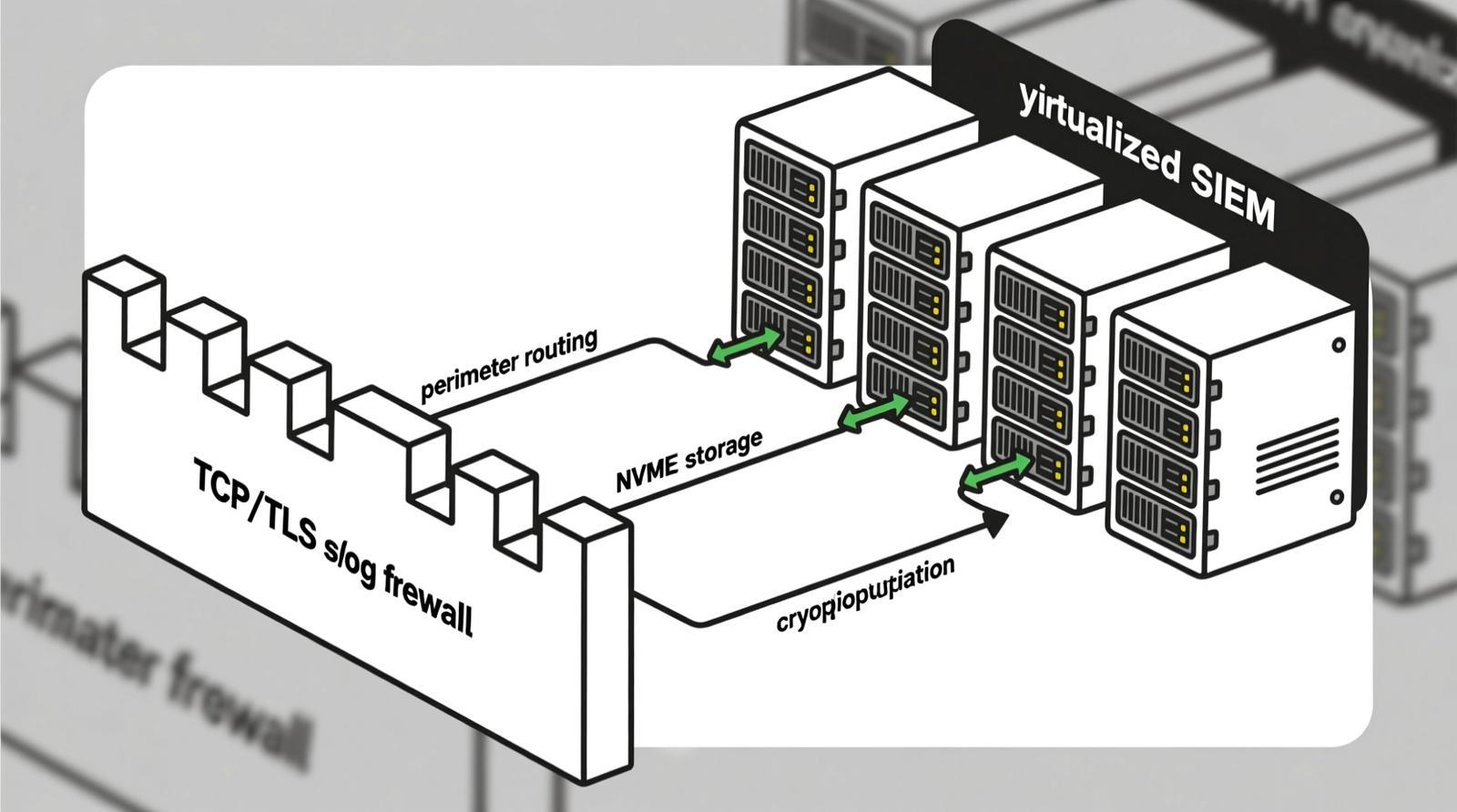
Your compliance monitoring vanishes silently. You create catastrophic audit gaps that go unnoticed until a breach occurs or an auditor requests log continuity. The engineering consensus mandates using remote syslog over TCP/TLS instead. Keep the firewall focused on routing and forwarding.
SIEM Compute Exhaustion, OOM Kills, & NTP Desynchronization
Wazuh relies on an OpenSearch/Elasticsearch backend for log indexing. Ingesting high-volume pfSense firewall and IDS logs generates massive random write I/O operations. Deploying the Wazuh indexer on standard SATA SSDs or under-provisioned homelab nodes like Raspberry Pis or older Intel NUCs causes Java heap space exhaustion (OOM kills) and severe dashboard latency.
Real-time threat detection fails when the indexer crashes. CMMC AU.L2-3.3.7 mandates strict time synchronization for audit records. If the pfSense firewall and the Wazuh SIEM manager rely on disparate NTP sources or experience NTP drift, log correlation engines fail to sequence events accurately. Forensic incident response becomes useless when timestamps do not align across your infrastructure.
Check out TECH Collection Amazon Products
The Core Gear Architecture: Validated 2026 High-Ticket Solution Stack
Turnkey FIPS Perimeter Gateway: Fortinet FortiGate 60F / Fortinet FortiGate 70F Series
The Fortinet FortiGate 60F delivers 10 x GE RJ45 ports, 10 Gbps Firewall Throughput, and 1 Gbps NGFW Throughput. This hardware provides the cryptographic validation your audit demands. It carries FIPS 140-2 Level 2 Validation and actively transitions to FIPS 140-3 post-September 2026.
You satisfy the crypto boundary requirement without architectural gymnastics. Physical security mandates the installation of the FIPS-SEAL-RED tamper-evident seal kit. Auditors verify the seal during site visits. The physical hardware now matches the digital compliance requirement.
pfSense Architectural Bypass Node: Netgate 1100 / Netgate 2100
The Netgate 1100 features 3 x 1 Gbps Switched Ports and a Dual-Core ARM64 Cortex-A53 CPU. The Netgate 2100 upgrades to an Intel Atom processor. Both platforms are TAA and NDAA compliant. You use this node strictly for routing, access control, and syslog forwarding.
The compliance strategy removes the pfSense box from CMVP audit scope entirely. You enforce FIPS-validated end-to-end TLS at the endpoint level. The firewall never touches CUI encryption. You bypass the cryptographic boundary trap while maintaining robust network segmentation.
High-I/O SIEM Compute Host: GEEKOM A9 Max Mini PC
The GEEKOM A9 Max Mini PC houses an AMD Ryzen AI 9 HX 370 processor with 12 cores, 24 threads, a 4nm TSMC process, and up to 55 NPU TOPS. It supports up to 128 GB dual-channel DDR5 SODIMM RAM. The system features Dual M.2 PCIe Gen 4×4 NVMe slots supporting up to 8 TB total storage.
This hardware directly solves the Wazuh indexer I/O bottleneck. High-endurance NVMe drives sustain continuous random write operations without thermal throttling. Dual 2.5G RJ45 LAN ports allow physical network segmentation. You isolate the SIEM management plane from the production CUI network. Log ingestion remains stable even during massive IDS alert storms.
The Technical Setup Blueprint: Zoning, Virtualization, & PCB Diagnostics
Proxmox VE Virtualization & Wazuh Cluster Allocations
Deploy Proxmox VE utilizing KVM for Wazuh virtual machines on the GEEKOM A9 Max Mini PC. Proper VM allocation prevents memory paging and indexing queues from backing up.
| Node | vCPU Allocation | RAM Allocation | Primary Function |
|---|---|---|---|
| Wazuh Manager Node | 4 vCPUs | 16 GB DDR5 RAM | Agent authentication, log analysis, rule evaluation |
| Wazuh Indexer Node (OpenSearch) | 8 vCPUs | 32 GB DDR5 RAM | Heavy log ingestion and indexing (Dedicated PCIe Gen4 NVMe pass-through) |
| Wazuh Dashboard Node | 2 vCPUs | 8 GB DDR5 RAM | Web UI and query rendering |
Dedicated resource pools eliminate Java OOM kills. The indexer receives raw disk speed and guaranteed memory. Your dashboard stays responsive during peak log volume.
Encrypted Log Transport & Wazuh ossec.conf Tuning
Configure pfSense to send logs via TCP Syslog on Port 1514 utilizing TLS encryption. This satisfies CMMC SC.L2-3.13.8 by protecting audit information in transit. Use RFC 5424 format for structured parsing. TCP guarantees delivery. TLS prevents log tampering or interception.
Tune the Wazuh ossec.conf remote listener to secure (TCP). Restrict allowed-ips strictly to the pfSense management IP. This configuration blocks unauthorized log injection attempts. Only your verified firewall can feed the SIEM.
Custom Decoder Engineering for pfSense filterlog & Suricata EVE JSON
pfSense default syslog outputs do not natively match Wazuh default decoders. You must engineer custom local_decoder.xml and local_rules.xml files. Focus on accurately parsing pfSense filterlog IPv4/IPv6 TCP/UDP/ICMP fields and Suricata EVE JSON.
Proper field mapping prevents misclassified severity levels in the SIEM dashboard. You eliminate false positives and ensure critical alerts trigger immediate response workflows. Custom decoders transform raw firewall text into actionable security intelligence.
Storage I/O Math & AI Compute Density Calculations
Calculate your local machine learning threat detection capacity using the system architecture: Total_TOPS = NPU_TOPS (55) + GPU_TOPS + CPU_TOPS. This yields up to 80 TOPS for local AI-assisted log correlation. You run threat models directly on the SIEM host. You eliminate cloud latency and keep CUI data on-premises.
Calculate your CMMC audit log retention capacity using this formula: Storage_Required = (Events_per_day x Average_Log_Size_bytes x Retention_Days) x Compression_Ratio. This math proves the absolute necessity of high-endurance PCIe Gen4 x4 NVMe drives. Standard storage fails under continuous write cycles. NVMe sustains the IOPS required for 90 to 365-day retention without degradation.
SIEM Node Hardware Diagnostics & PCB-Level Rework Protocols
Check out TECH Collection Amazon Products
Maintain the high-I/O GEEKOM A9 Max Mini PC and network tap hardware at the component level using precision diagnostic tools. Use the FNIRSI LCR-ST1 Smart LCR Tweezers for diagnostic probing. The tool features a 1.14-inch color display and weighs 41g. It offers selectable test frequencies of 100 Hz for electrolytic capacitors, 1 kHz for standard components, and 10 kHz for low-value SMD capacitors and inductors. Dual test voltage modes of 0.3V and 0.6V prevent forward-biasing adjacent semiconductors during in-circuit testing.
You get accurate component readings without damaging live motherboard traces. Use the Andonstar AD246S-M Digital HDMI Microscope for visual inspection and rework. It features a 7-inch LCD, 3 interchangeable lenses (A, D, L), and 2160P video resolution. The 30cm high bracket provides necessary vertical clearance for hot-air rework stations. Dual-screen HDMI output enables zero-latency hand-eye coordination. You rebuild 40 AWG micro-thin copper jumper wire traces on multi-layer SIEM motherboards with surgical precision. Hardware failures get resolved at the bench instead of triggering full system replacements.
Field Verdict & Operational ROI: Securing the CMMC Assessment
Bypassing the C3PAO Assessment Trap
Deploying the Fortinet FortiGate 60F FIPS-SEAL-RED perimeter and the GEEKOM A9 Max Mini PC high-I/O SIEM node delivers immediate operational ROI. You eliminate the Auditor CMVP Shock by presenting validated cryptographic hardware. You prevent Wazuh Indexer OOM kills by provisioning enterprise-grade compute and storage.
The upfront procurement cost is negligible compared to the catastrophic financial and operational ruin of failing a CMMC Level 2 assessment. Contract termination, remediation expenses, and lost bidding eligibility far outweigh the price of a validated hardware stack.
Final Procurement & Architecture Mandate
Standardize on TCP/TLS RFC 5424 transport for all firewall log forwarding. Abandon the FreeBSD Wazuh agent trap immediately. Procure the exact 2026 hardware stack outlined in this blueprint. You guarantee continuous monitoring, cryptographic compliance, and unassailable audit trails.
This architecture survives C3PAO scrutiny. It scales with your log volume. It keeps your defense contracts active and your infrastructure secure.
Conclusion
Community Reference & Authority Resources:
Logging pfSense firewall events to Wazuh SIEM for CMMC compliance requires more than default configurations and hobbyist hardware. It demands a validated cryptographic perimeter, encrypted transport protocols, and a high-I/O compute architecture engineered for continuous audit retention.
The Fortinet FortiGate 60F satisfies FIPS boundary requirements. The Netgate 1100 handles routing without entering the crypto scope. The GEEKOM A9 Max Mini PC delivers the NVMe throughput and AI compute density necessary to index millions of events without crashing. Custom decoders transform raw syslog into structured intelligence. Precision PCB diagnostics keep your SIEM host operational at the component level. Implement this blueprint exactly as specified. You will pass the audit, maintain uninterrupted monitoring, and deploy a security stack built for 2026 compliance standards.
🔍 Explore More: See all tech guides and tutorials for how to log pfSense firewall events to wazuh siem for cmmc compliance.
Check out TECH Collection Amazon Products