



Embarking on the entrepreneurial journey is exhilarating, filled with innovation, passion, and the promise of groundbreaking success. 🚀
However, the path to building a thriving startup is rarely linear, often riddled with unforeseen challenges and critical missteps that can quickly derail even the most promising ventures. 📉
Understanding these common pitfalls in founding a startup is not about fostering pessimism, but about equipping yourself with the foresight and strategies needed to navigate the turbulent waters of the business world. 💡
In this comprehensive guide, we’ll dive deep into the most prevalent obstacles faced by new businesses, drawing on recent data and expert insights to arm you with actionable advice for enduring success. 📌
The Quicksand of “No Market Need” 🌍
One of the most devastating—and unfortunately, most common—reasons startups falter is building a product or service that simply nobody wants or needs. 😔
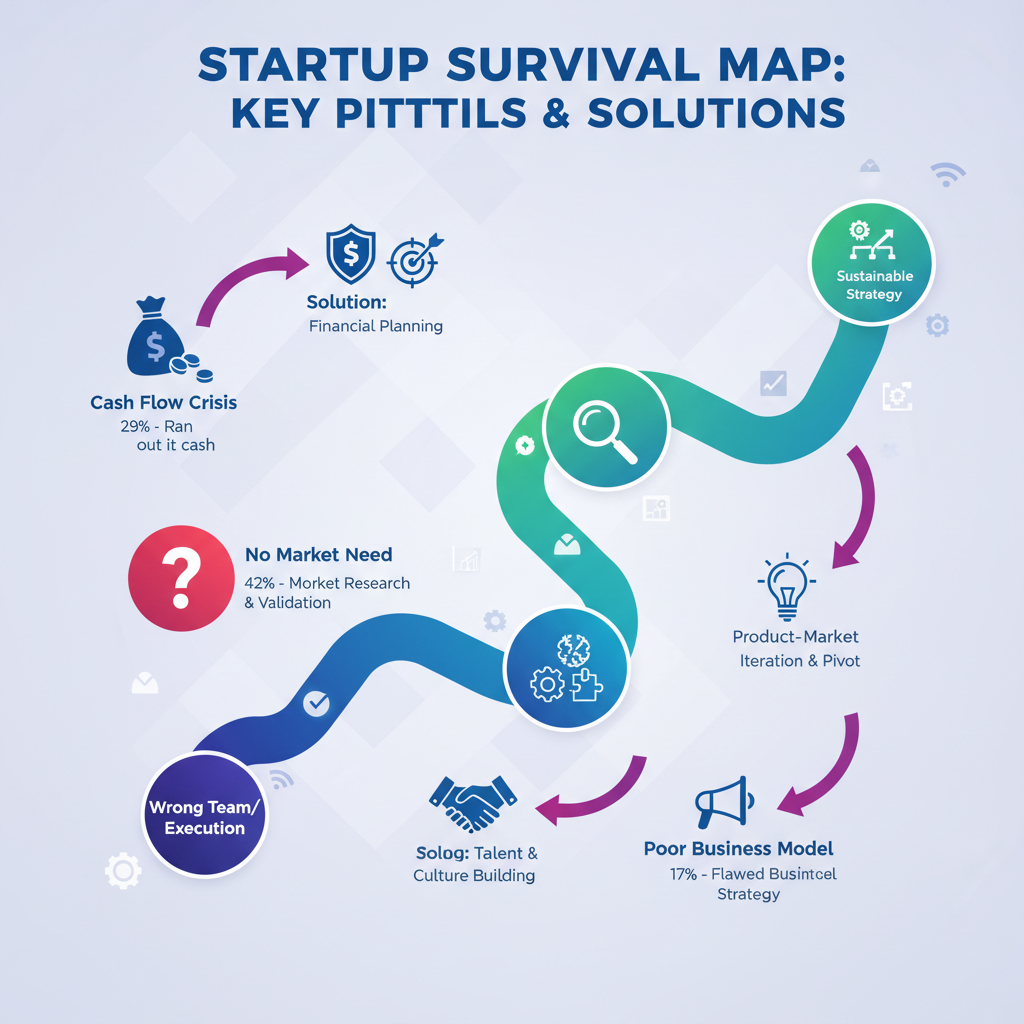
A staggering 42% of startups fail due to a lack of market need, making it the single biggest killer of new businesses. This statistic underscores a fundamental truth: enthusiasm for an idea doesn’t equate to market demand.
Many founders fall in love with their solution, their amazing technology, or their beautiful design, rather than obsessing over a customer’s painful, expensive problem. It’s akin to building a vitamin when the market is screaming for a painkiller. 💊
Effective market research is not a suggestion; it’s a mandatory foundational step. Before writing a single line of code or finalizing a product, engage with your target audience, validate the problem you’re solving, and test your assumptions rigorously.
The key is to ask: “What real pain does this solve, and would people actually pay for this?”
Cash Flow Catastrophes and Funding Follies 💸
Running out of money is the executioner for nearly a third of all startups, with 29% succumbing to cash flow problems. In 2023, a striking 82% of businesses that closed did so because they couldn’t manage their finances effectively.
Many entrepreneurs, especially in a tough economic climate, spend money faster than it comes in, failing to keep a vigilant eye on their burn rate. This can involve splurging on unnecessary office spaces, hiring too many employees too soon, or investing in expensive tools before proving product-market fit.
Discipline in financial management is paramount; treat every dollar like it’s your last breath of oxygen.
Founders must create a detailed budget, track spending weekly, and always know their runway—how many months they can operate before funds run out.
Raising capital, while crucial, doesn’t solve bad financial habits; discipline does.
https://www.youtube.com/watch?v=r0wI34Xb6v0
The Wrong Team: A Foundation of Sand 🤝
A startup’s success often hinges on the people behind it, and conversely, team issues contribute to 23% of startup failures. Conflicts between founders, skills gaps, or poor hiring decisions can quietly erode focus, finances, and confidence.
It’s tempting to wear all hats in the early stages, but “Solo Entrepreneurship Syndrome” can hinder progress and lead to burnout. Building a truly great, 100% committed team is more critical than ever in today’s competitive tech landscape.
Hire for quality, not just quantity; the right people add energy, expertise, and significantly multiply your capacity to achieve great things.
Clear roles, honest feedback, and mutual respect go a long way in fostering a robust team culture.
Marketing Misses and Customer Feedback Fails 📢
Even the most brilliant product won’t sell itself. Poor marketing strategies and ignoring customer feedback account for 14% of startup failures. Many founders focus entirely on building the product but forget to tell anyone about it.
Effective marketing involves a multichannel approach, understanding each channel’s role in the customer journey, and using data to drive growth.
Equally critical is listening to your customers. Ignoring feedback means missing crucial opportunities to improve offerings and adapt to market changes. As Tesla demonstrates with constant software updates based on user input, feedback is free gold.
Embrace every critique as an opportunity to improve, turning even angry tweets into actionable insights.
The market is dynamic, and customers will tell you what they like or hate; if you listen, you can adapt and thrive.
The Perils of Premature Scaling and Product Pitfalls 🚀
Growth feels good, until it crushes you. Some startups rush to expand before they’ve nailed the basics: product-market fit, user experience, or steady cash flow. Scaling too soon often leads to bloated costs, confused customers, and operational chaos.
In fact, over 70% of startups fail due to scaling before they’re ready. This includes overbuilding too early—investing heavily in tools, teams, or features before revenue stabilizes—leading to higher fixed costs and unnecessary complexity.
Key Insights on common pitfalls in founding a startup: Product and Pricing Missteps
Beyond scaling, product-related mistakes are also significant. Getting the pricing strategy wrong or miscalculating costs contribute to 18% of startup failures.
Pricing too low can limit your ability to pay off startup costs and grow, while pricing too high can deter customers. According to McKinsey, up to 90% of improper pricing issues are actually products priced too low.
Focus on stability before speed; get your product right, build repeatable systems, and ensure consistent delivery before accelerating growth.
Underestimated Risks: Legal, Burnout, and Lack of Focus 📌
Beyond the major hurdles, several other critical mistakes can silently undermine a startup’s potential.
Neglecting Legal and Regulatory Compliance
Treating legal and compliance issues as “later problems” can have severe consequences, including fines, lawsuits, or even closure. From GST and IP protection to employment laws, these aspects are frequently postponed but are foundational for long-term stability.
Investing in legal counsel to ensure compliance from the outset is crucial.
Founder Burnout
The relentless pace of startup life can take a significant toll. Working long hours, juggling numerous tasks, and facing financial uncertainties can lead to burnout. Entrepreneurs are 50% more likely to experience a mental health condition compared to the rest of the adult population. Taking care of mental health isn’t just good for the founder; it’s critical for the business’s success. 🧘♀️
Lack of Clear Differentiator and Business Plan
Many startups fail because they lack a clear differentiator. “Better service” is not a strategy; customers must be able to explain why you’re different in one sentence. Differentiation in the current climate often comes from speed, specialization, distribution advantage, or experience quality.
Additionally, skipping a robust business plan can lead to aimless direction and an inability to secure funding. A lean business plan acts as a living document, guiding decisions and evolving with your startup.
https://www.youtube.com/watch?v=J6E_6zW2Jd0
2026 Insights: The Shifting Landscape of Startup Failure 📊
The entrepreneurial ecosystem in 2026 is more dynamic and competitive than ever. Latest data indicates that the survival rate has never been more brutal, with 99% of startups statistically doomed to fail unless they master specific survival blueprints.
The “Top Killers” remain consistent: No Market Need (42%), Running Out of Cash (29%), and Wrong Team/Being Outcompeted (combining for significant failures).
However, the emphasis has shifted towards extreme discipline in cash management and fanatic obsession with solving a real customer problem.
Founders who succeed in 2026 aren’t just winging it; they are deliberately avoiding predictable patterns of failure, making fewer critical mistakes, and recovering faster when they happen.
“In the modern startup ecosystem, progress is rarely linear. Growth comes in phases, setbacks are common, and clarity often arrives later than expected.”
“The goal isn’t to avoid every mistake—it’s to make fewer critical ones and recover faster when they happen.”
| Common Startup Pitfall | Impact / Statistic (2024-2026) | Key Strategy to Overcome |
|---|---|---|
| No Market Need | 42% of startups fail for this reason. | Rigorous market validation and customer discovery. |
| Running Out of Funding | 29% of startups fail; 82% of 2023 failures due to cash flow mismanagement. | Disciplined cash flow management, lean budgeting, extended runway planning. |
| Wrong Team / Team Issues | 23% of startup failures linked to team problems. | Strategic hiring, clear roles, fostering strong team culture, mentorship. |
| Poor Marketing / Ignoring Customers | 14% of startups fail due to ineffective marketing. | Multi-channel marketing, early audience building, active customer feedback integration. |
| Scaling Too Early / Product Issues | Over 70% of startups fail due to premature scaling; 18% due to pricing/cost. | Achieve product-market fit first, stabilize operations, iterative product development, smart pricing. |
Strategies for Beating the Odds ✅
Understanding the pitfalls is the first step; implementing robust strategies is how you beat the odds. Here are actionable takeaways for today’s founders:
- Validate Everything: Do not write a single line of code or build extensive features until you’ve talked to at least 50-100 potential customers. Use tools like the Shaun Ellis test (if less than 40% say they’d be very disappointed if your product vanished, you don’t have a must-have product yet). 🗣️
- Master Financial Discipline: Implement strict budgeting and forecasting from day one. Understand your burn rate, extend your runway, and secure funding strategically, building relationships with investors long before you desperately need their money. 💰
- Build an A-Team: Surround yourself with collaborators who are smarter than you in their respective fields. Delegate effectively and lean on mentors and advisors who have navigated similar paths. A great hire adds energy, not just expertise. 🌟
- Prioritize Marketing and Feedback: Build your audience from day one. Even the perfect product needs to be known. Actively solicit and integrate customer feedback, iterating quickly based on what your users tell you. 👂
- Scale Smart, Not Fast: Resist the urge to expand before your core product is solid and your operations are stable. Focus on repeatable systems and consistent delivery. Recognize that growth comes in phases, and patience is a virtue. 📈
- Embrace Legal Foresight: Proactively address legal and regulatory requirements. This includes proper business structuring, IP protection, and contract drafting, which safeguard your venture from costly future complications. ⚖️
- Prioritize Well-being: The founder is the most critical asset. Avoid burnout by delegating, seeking support, and maintaining a healthy work-life balance. A strong mind leads to stronger decisions. 🧠
Remember, the journey of founding a startup is a marathon, not a sprint, and resilience is built on learning from every step. 💪
“You will initially get less efficient. The founder should accept that as you create a new subgroup.”
By consciously avoiding these common pitfalls and adopting a disciplined, customer-centric approach, entrepreneurs can significantly increase their chances of not just surviving, but truly thriving in the competitive startup landscape. Your innovation deserves a strong foundation. 🚀
External Links:
The Biggest Startup Mistakes Founders Must Avoid in 2026 – CO-OFFIZ
Launching a Successful Startup: Common Mistakes and Pitfalls – Stanford Online
The Top 10 Mistakes SaaS Startups Make: The 2025 Edition – SaaStr
The Ultimate Startup Guide With Statistics (2024–2025) – Founders Forum Group
10 Common Startup Mistakes to Avoid – HubSpot
🔍 Explore More: See all related guides for common pitfalls in founding a startup on Z-A-D-A.