
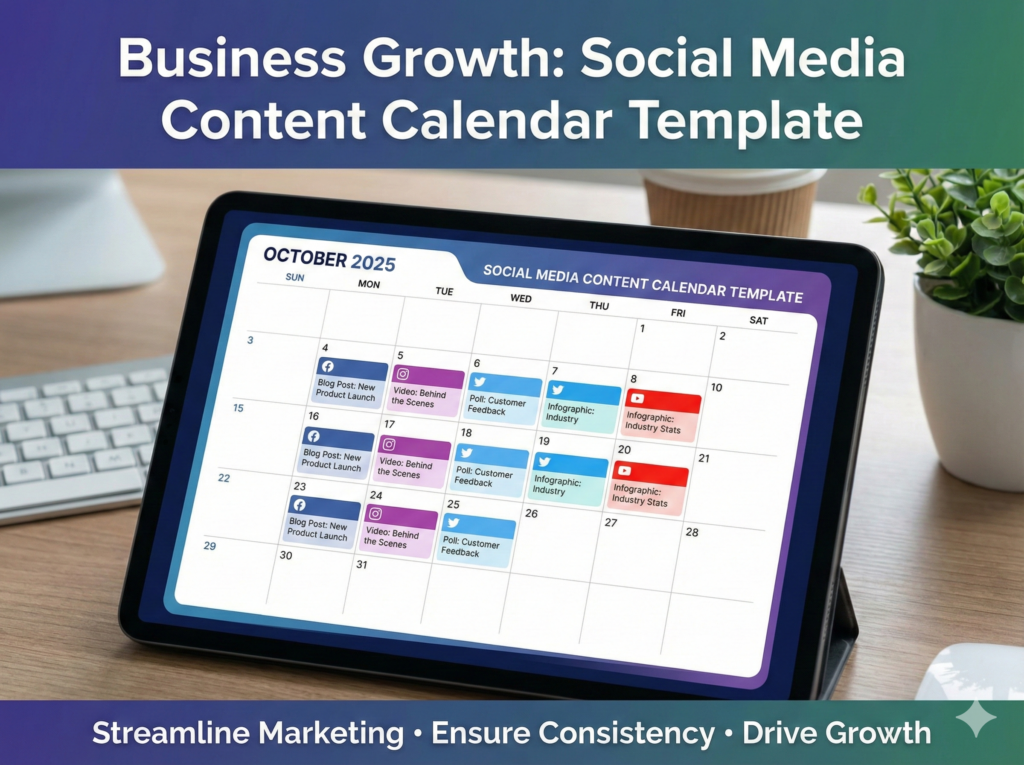



In the fast-paced world of digital marketing, consistency is the currency of success. 💡
For businesses aiming for sustainable growth, a haphazard approach to social media is simply not an option.
The key to transforming your social presence from a time sink into a growth engine lies in one powerful tool: the Social Media Content Calendar Template.
This template is more than just a schedule; it is the strategic blueprint that aligns your daily posts with your overarching business objectives. 📈
It eliminates the panic of last-minute content creation and ensures every piece of content serves a purpose.
This guide will walk you through the essential components of a content calendar, its profound impact on business growth, and a step-by-step process for creating your own effective template.
Why a Content Calendar is Essential for Business Growth 🚀
Many businesses underestimate the strategic value of a well-structured content calendar.
It moves social media from a reactive task to a proactive, measurable marketing discipline.
The benefits directly translate into improved audience engagement and, ultimately, business growth.
A calendar ensures that your brand narrative is consistent across all platforms and throughout the year.
According to Emplifi, a content calendar helps you identify high-performing themes and formats, allowing you to reuse or repurpose top content effectively. This strategic recycling maximizes your content investment.
Core Benefits of Strategic Content Planning 📌
Implementing a content calendar template provides a clear framework for your entire marketing team.
It is the single source of truth for all scheduled social activity.
- Time Efficiency: Batching content creation saves significant time compared to creating posts daily, freeing up resources for other growth activities.
- Consistency: Regular posting builds audience expectation and trust, which are vital for increasing reach and engagement.
- Error Reduction: Planning and reviewing content in advance drastically reduces the risk of typos, factual errors, or off-brand messaging.
- Campaign Alignment: It ensures that social media efforts are perfectly synchronized with product launches, sales promotions, and seasonal campaigns.
- Performance Tracking: A structured calendar makes it easier to correlate posting patterns with performance metrics, leading to data-driven adjustments.
These advantages collectively contribute to a more professional and impactful online presence.
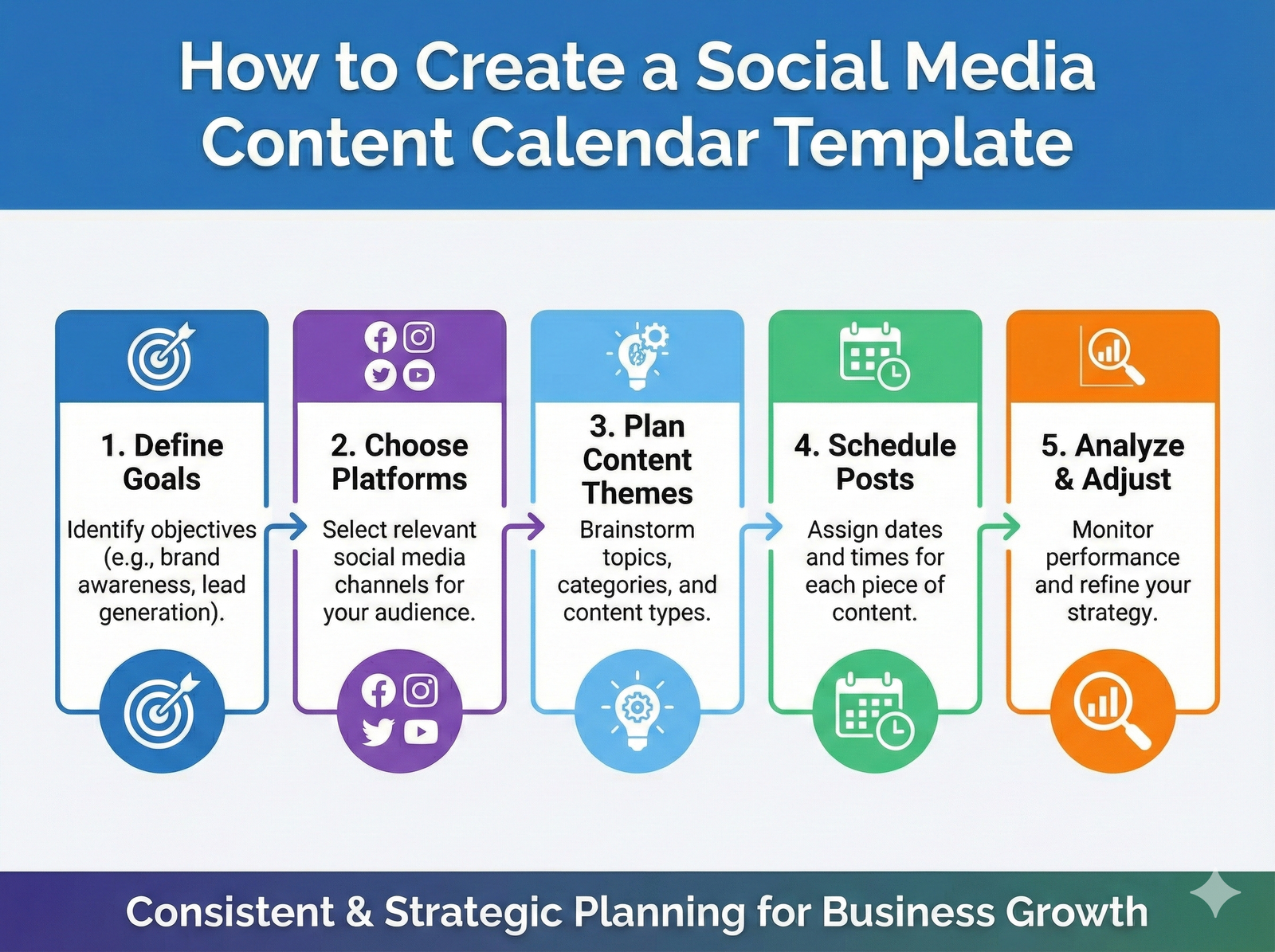
Step-by-Step: Creating Your Content Calendar Template 🛠️
The process of building a template is methodical and requires strategic foresight.
You can use a simple spreadsheet (Google Sheets or Excel) or a dedicated project management tool like Trello or Asana.
The format is less important than the information it contains.
Phase 1: Define Your Content Pillars
Content pillars are the 3–5 main themes or topics your brand will consistently cover.
These pillars should directly reflect your brand values and audience interests.
Examples include “Behind the Scenes,” “Customer Testimonials,” “Industry News,” and “Product Tutorials.”
Pillars prevent your content from becoming random and keep your messaging focused.
Phase 2: Establish Posting Frequency and Platforms
Determine how often you will post on each platform (e.g., three times a week on Instagram, daily on X, weekly on LinkedIn).
Your template must have a dedicated column for the platform, as content should be tailored for each one.
A post that performs well on TikTok may not resonate on Facebook.
Sprout Social emphasizes the need to tailor content to the specific platform and audience. This customization is key to maximizing engagement.
Phase 3: Essential Template Fields
Your template needs specific fields to ensure all necessary information is captured before publishing.
The table below outlines the critical columns your template should include.
| Field Name | Purpose | Example Data |
|---|---|---|
| Date & Time | When the post is scheduled to go live. | 2025-12-15, 10:00 AM EST |
| Platform | The specific social network (e.g., Instagram, LinkedIn). | |
| Content Pillar | The strategic theme the post belongs to. | Customer Education |
| Caption/Copy | The final text of the post. | “5 tips for better business planning…” |
| Visual Asset Link | Link to the image, video, or graphic file. | /assets/Q4/tip_graphic_5.png |
| Status | Draft, Review, Approved, Scheduled, Posted. | Approved |
A detailed template ensures smooth collaboration and accountability within your marketing team.
Advanced Strategies for Business Growth 🌟
Once you have the basic template in place, you can leverage it for more sophisticated growth strategies.
This involves using the calendar to map out campaigns and track performance metrics.

Strategy 1: Mapping the Customer Journey
Use your calendar to ensure you are creating content for every stage of the customer journey: Awareness, Consideration, and Decision.
For example, a post about “5 Common Industry Problems” targets the Awareness stage.
A post comparing your product to a competitor targets the Consideration stage.
This strategic distribution ensures a continuous flow of leads through your sales funnel.
Strategy 2: Incorporating Evergreen and Trending Content
A good calendar balances evergreen content (always relevant) with trending content (timely and topical).
Evergreen content can be scheduled far in advance, forming the backbone of your calendar.
Trending content requires flexibility but can provide massive short-term boosts in reach.
Allocate specific slots in your template for “Agile Content” to react quickly to news or viral trends.
Strategy 3: Performance-Driven Optimization
Add a column to your template to record key performance indicators (KPIs) for each post, such as engagement rate, reach, and click-through rate.
After a month, review the data directly in your calendar.
Which content pillars performed best? Which posting times were most effective?
Use these insights to refine your strategy for the next month’s calendar.
Backlinko provides a detailed guide on how to create a social media calendar that works, emphasizing the importance of this iterative optimization process. Continuous improvement is the engine of business growth.
Choosing the Right Tool for Your Template 💻
The best content calendar tool is the one your team will actually use.
While a simple spreadsheet is a great starting point, dedicated tools offer features that streamline the workflow even further.
| Tool Type | Pros | Cons |
|---|---|---|
| Spreadsheet (Google Sheets/Excel) | Free, highly customizable, easy to share. | No built-in scheduling, limited visual appeal. |
| Project Management (Asana/Trello) | Visual, excellent for team collaboration and workflow tracking. | Requires manual setup for calendar view, can be overkill for small teams. |
| Dedicated SMM Tools (Sprout Social/Buffer) | Built-in scheduling, analytics, and direct publishing. | Subscription cost, less flexible for non-social content planning. |
Jetpack offers practical advice on proven strategies and shortcuts for social media content calendar planning, regardless of the tool you choose. The methodology is more important than the software.
Start simple and upgrade your tool as your business and team grow.
Common Pitfalls to Avoid 🚧
Even with a perfect template, mistakes can derail your social media strategy.
Being aware of these common pitfalls will help you maintain momentum and focus on growth.
- Posting the Same Content Everywhere: Copy-pasting the same post across all platforms ignores the unique culture and format of each network. Always adapt your content.
- Neglecting Engagement: A calendar focuses on outbound content, but social media is a two-way street. Schedule time for responding to comments and messages.
- Being Too Rigid: While consistency is key, your calendar must be flexible enough to accommodate unexpected news, holidays, or viral moments. Leave some buffer time.
- Ignoring Analytics: The calendar is a planning tool, but the analytics are the feedback loop. If you don’t track performance, you can’t improve your strategy.
The American Marketing Association (AMA) stresses that a successful social media strategy must be built on clear objectives and continuous measurement. A calendar is the tool that makes this measurement possible.
Visual Guides to Content Calendar Planning 📚
To see these concepts in action, here are some helpful video resources.
Conclusion: Plan Your Way to Prosperity 👑
The Social Media Content Calendar Template is the cornerstone of a successful business growth strategy.
It transforms chaotic, reactive posting into a streamlined, proactive system.
By defining your pillars, establishing a clear template, and committing to performance-driven optimization, you gain control over your brand’s narrative and trajectory.
Stop scrambling for content ideas and start planning for predictable, measurable business growth today.
Embrace the template, and watch your social media efforts yield real results. 🥳