
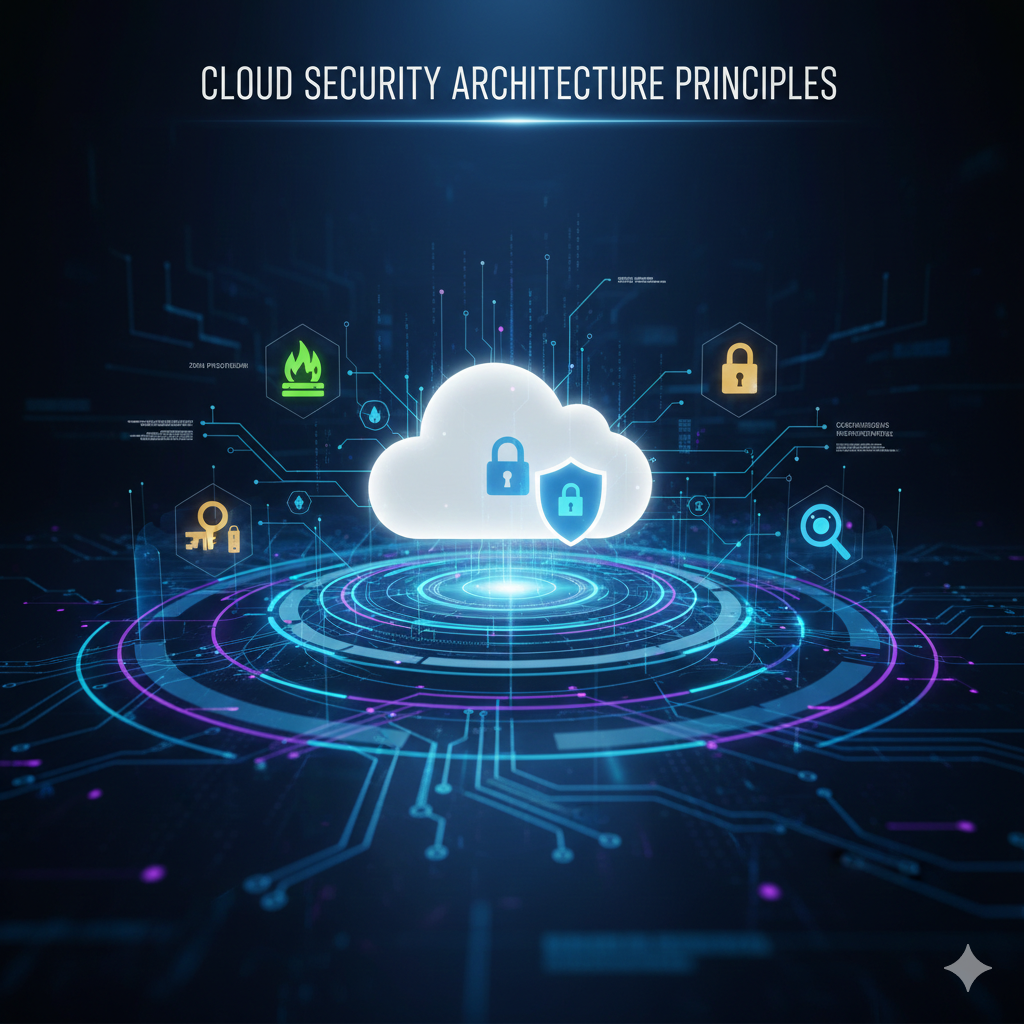

Welcome to the brave new world of cloud computing, where agility and innovation reign supreme! 🌍
However, with great power comes great responsibility, especially when it comes to securing your digital assets in the cloud. 💡
Network security and cloud security architecture principles are not just buzzwords; they are the bedrock upon which secure and resilient cloud environments are built. 🛡️
In an era where cyber threats are more sophisticated than ever, understanding and implementing these principles is paramount for any organization leveraging cloud technologies. 🤓
This comprehensive guide will delve deep into the essential elements of fortifying your cloud infrastructure, ensuring your data remains protected and your operations seamless. 🔒
The Evolving Landscape of Cloud Security
The rapid adoption of cloud services has transformed how businesses operate, offering unparalleled scalability, flexibility, and cost efficiency. 🚀
However, this shift also introduces new security challenges and complexities that traditional on-premise security models may not adequately address. 😟
The shared responsibility model, a cornerstone of cloud security, delineates the security obligations between the cloud service provider (CSP) and the customer. 🤝
While CSPs like AWS, Azure, and Google Cloud secure the underlying infrastructure (“security of the cloud”), customers are responsible for securing their data, applications, and configurations within the cloud (“security in the cloud”). This distinction is crucial for effective cloud security. 🎯
Core Network Security Principles in the Cloud
Effective network security in the cloud requires a multi-layered approach that integrates traditional network security concepts with cloud-native capabilities. 🌐
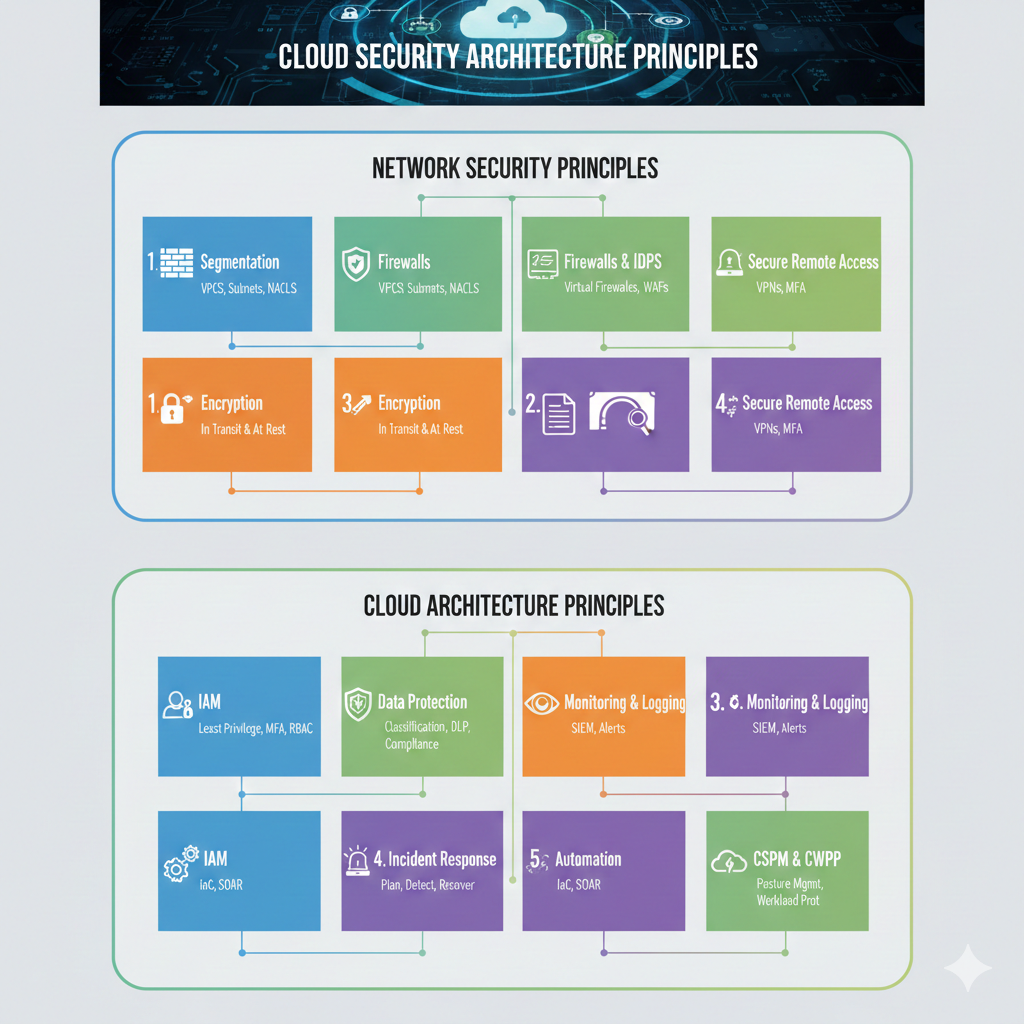
1. Network Segmentation and Isolation
Just as you wouldn’t keep all your valuables in one open room, network segmentation is about dividing your cloud network into isolated segments. 🧱
This practice limits the blast radius of a potential breach, preventing attackers from easily moving laterally across your network. 🚫
- Virtual Private Clouds (VPCs): Create logically isolated sections of the cloud where you can launch AWS resources in a virtual network that you define.
- Subnetting: Further divide VPCs into smaller subnets to group resources with similar security requirements.
- Network Access Control Lists (NACLs) and Security Groups: Act as virtual firewalls to control inbound and outbound traffic at the subnet and instance level, respectively.
2. Firewall Management and Intrusion Detection/Prevention Systems (IDPS)
Firewalls are your first line of defense, monitoring and controlling incoming and outgoing network traffic based on predetermined security rules. 🔥
In the cloud, these can be implemented through virtual firewalls, security groups, and web application firewalls (WAFs). 🛡️
IDPS solutions continuously monitor network traffic for suspicious activity and known attack patterns, alerting administrators or automatically blocking malicious traffic. 🚨
3. Encryption in Transit and at Rest
Encryption is non-negotiable for protecting data both when it’s moving across networks (in transit) and when it’s stored (at rest). 🔑
For data in transit, use protocols like TLS/SSL for secure communication between clients and cloud services, and within your cloud environment. 🔐
For data at rest, leverage cloud-native encryption services for storage, databases, and backups. Always ensure proper key management practices are in place. 🗝️
4. Secure Remote Access
Accessing cloud resources remotely should always be done securely. 🚪
Virtual Private Networks (VPNs) and Secure Shell (SSH) with strong authentication mechanisms are essential. 💻
Avoid direct exposure of management interfaces to the public internet.
Fundamental Cloud Security Architecture Principles
Beyond network specifics, a robust cloud security architecture relies on overarching principles that guide design and implementation across the entire cloud footprint. 🏗️
1. Identity and Access Management (IAM)
IAM is arguably the most critical component of cloud security. It controls who has access to what resources and under what conditions. 🧑💻
- Least Privilege: Users and services should only be granted the minimum permissions necessary to perform their tasks. NIST defines the principle of least privilege as essential for reducing the impact of compromised accounts.
- Multi-Factor Authentication (MFA): Implement MFA for all accounts, especially privileged ones, to add an extra layer of security.
- Role-Based Access Control (RBAC): Assign permissions based on job roles, simplifying management and enhancing security posture.
- Regular Auditing: Continuously review and audit user permissions and access logs to detect anomalies.
2. Data Protection and Privacy
Protecting data throughout its lifecycle in the cloud is paramount. This includes data classification, encryption, and data loss prevention (DLP). 📊
Understand regulatory requirements (GDPR, HIPAA, PCI DSS) and design your architecture to ensure compliance. ISO/IEC 27001 provides a framework for information security management systems.
“Data is a precious thing and will last longer than the systems themselves.” – Tim Berners-Lee This quote highlights the enduring value and need for data protection.
3. Security Monitoring and Logging
You can’t protect what you can’t see. Robust monitoring and logging are crucial for detecting and responding to security incidents. 👀
Collect logs from all cloud services, networks, and applications. Utilize Security Information and Event Management (SIEM) systems to analyze these logs for suspicious activities. 🔍
Implement alerts and automated responses for critical security events. 🔔
4. Incident Response and Disaster Recovery
Despite all preventive measures, incidents can happen. Having a well-defined incident response (IR) plan is essential. 🚨
- Preparation: Develop and test IR plans regularly.
- Detection and Analysis: Utilize monitoring tools to identify and analyze security incidents.
- Containment, Eradication, and Recovery: Act quickly to limit the damage, remove the threat, and restore affected systems.
- Post-Incident Activity: Learn from each incident to improve future security posture.
Disaster recovery (DR) planning ensures business continuity in the face of major outages or disasters. AWS provides extensive guidance on disaster recovery strategies in the cloud.
5. Automation and Orchestration
Leverage automation to enforce security policies, deploy secure configurations, and respond to threats at cloud speed. ⚡
Infrastructure as Code (IaC) tools like Terraform and CloudFormation allow you to define and manage your cloud infrastructure securely. ✍️
Security orchestration, automation, and response (SOAR) platforms can automate repetitive security tasks, freeing up security teams to focus on more complex issues. 🤖
6. Cloud Security Posture Management (CSPM) and Cloud Workload Protection Platforms (CWPP)
CSPM tools continuously monitor your cloud environment for misconfigurations, compliance violations, and security risks. 📏
CWPPs provide advanced threat protection for workloads running in the cloud, including virtual machines, containers, and serverless functions. Gartner defines CWPPs as solutions that protect diverse workloads in public and private clouds.
Advanced Cloud Security Concepts
As organizations mature in their cloud journey, they often adopt more advanced security concepts to further strengthen their defenses. 💪
Zero Trust Architecture
The Zero Trust model operates on the principle of “never trust, always verify.” 🚫
It assumes that no user or device, whether inside or outside the network perimeter, should be implicitly trusted. 🧐
Every access request is authenticated, authorized, and continuously validated. Microsoft provides a comprehensive overview of Zero Trust principles and implementation.
“Trust but verify.” – Ronald Reagan
DevSecOps Integration
Integrating security into every stage of the development pipeline (DevSecOps) ensures that security is a continuous process, not an afterthought. 🔄
This involves automating security checks, vulnerability scanning, and compliance validation throughout the CI/CD pipeline. 🛠️
Security by Design
Security by design advocates for building security into the architecture from the very beginning, rather than patching it on later. 📐
This proactive approach helps mitigate risks and ensures that security is an inherent quality of the cloud environment. ✨
Key Considerations for Implementation
Implementing these principles effectively requires careful planning and execution. 📝
| Consideration | Description |
|---|---|
| Cloud Provider Specifics | Each CSP has its unique set of security tools and services. Understand and leverage the native capabilities of your chosen provider. |
| Compliance and Governance | Map your security architecture to relevant industry regulations and internal governance policies. |
| Regular Audits and Penetration Testing | Periodically assess your cloud security posture through audits and penetration tests to identify vulnerabilities. |
| Training and Awareness | Educate your team on cloud security best practices and the shared responsibility model. Human error remains a leading cause of security breaches. |
| Cost Management | While security is paramount, it’s also important to manage costs effectively by optimizing your use of security services. |
Conclusion
Securing the cloud is an ongoing journey, not a destination. 🚀
By diligently applying the core network security and cloud security architecture principles discussed in this post, organizations can build robust and resilient cloud environments. 🏰
From strong IAM and data encryption to continuous monitoring and automated responses, each principle plays a vital role in safeguarding your digital assets. 🔑
Remember, security is a shared responsibility, and a proactive, layered approach is key to navigating the evolving threat landscape in the cloud. 🛡️
Embrace these principles, continuously adapt to new threats, and empower your team with the knowledge and tools to maintain a secure cloud posture. 🌟