





When it comes to C pointer safety vs Rust lifetime guarantees in low level system development, getting the right details matters. GEEKOM A9 Max
Freenove Ultimate Starter Kit for ESP32-S3
SanDisk 256 GB Extreme PRO USB 3.2 Solid State Flash Drive
Memory-safety bugs in C are not a niche academic concern. They are the dominant root cause of CVEs in operating-system kernels, device drivers, and embedded firmware. A single dangling pointer, use-after-free, or buffer overflow can crash a device, corrupt a kernel, or hand an attacker remote code execution. Rust eliminates entire classes of these defects at compile time through ownership, borrowing, and lifetime rules. The debate is no longer theoretical. In 2026, the right hardware lets you prove the difference on real silicon, in real time, with reproducible benchmarks.
This guide shows exactly why C pointer failures happen, how Rust’s borrow checker stops them, and how to build a workstation and embedded lab that turns the comparison from a philosophical argument into measured engineering. You will learn how to configure a high-core-count DDR5 build host, set up an ESP32-S3 target for side-by-side C and Rust testing, and harden the surrounding network perimeter for compliance with NIST SP 800-171 Rev. 3 and CMMC 2.0 Level 2.
The Technical Reality / The Failure Point
C’s Manual Pointer Model as the Dominant Root Cause of Memory-Safety CVEs
C gives the programmer direct control over memory addresses. That power is also the source of its most expensive and persistent bugs.
A dangling pointer appears when memory is freed but the pointer is not invalidated. After `free()`, any later read or write through that pointer is undefined behavior. Use-after-free and double-free errors on heap objects corrupt allocator metadata and can be exploited for arbitrary code execution. Buffer overflows on the stack and heap come from unchecked pointer arithmetic, especially when length checks are skipped for performance or forgotten during refactoring. Null-pointer dereferences and out-of-bounds reads or writes happen when validation logic fails or when integer-to-pointer casts produce invalid addresses. Type punning and strict-aliasing violations let the compiler reorder or elide memory operations in ways that look correct in source code but fail catastrophically under optimization.
Each of these failure modes shares a common root: the programmer, not the language, is responsible for proving that every pointer access is valid for the entire lifetime of the access.
Production Consequences in Kernels, Drivers, and Embedded Firmware
In production, these bugs become kernel panics, device crashes, and silent data corruption. Remote code execution and privilege escalation are routine outcomes when an attacker can shape input to trigger a use-after-free or overflow. The pattern is so consistent that memory-safety bugs in C remain the dominant root cause of CVEs in operating-system kernels, drivers, and embedded firmware.
The cost is not only security. Engineering hours spent chasing intermittent segfaults, reproducing race conditions, and bisecting release builds drain velocity. For teams shipping firmware or kernel modules, a single pointer bug can force a recall, a patch cycle, or a compliance finding.
Rust’s Compile-Time Lifetime Guarantee Mechanism
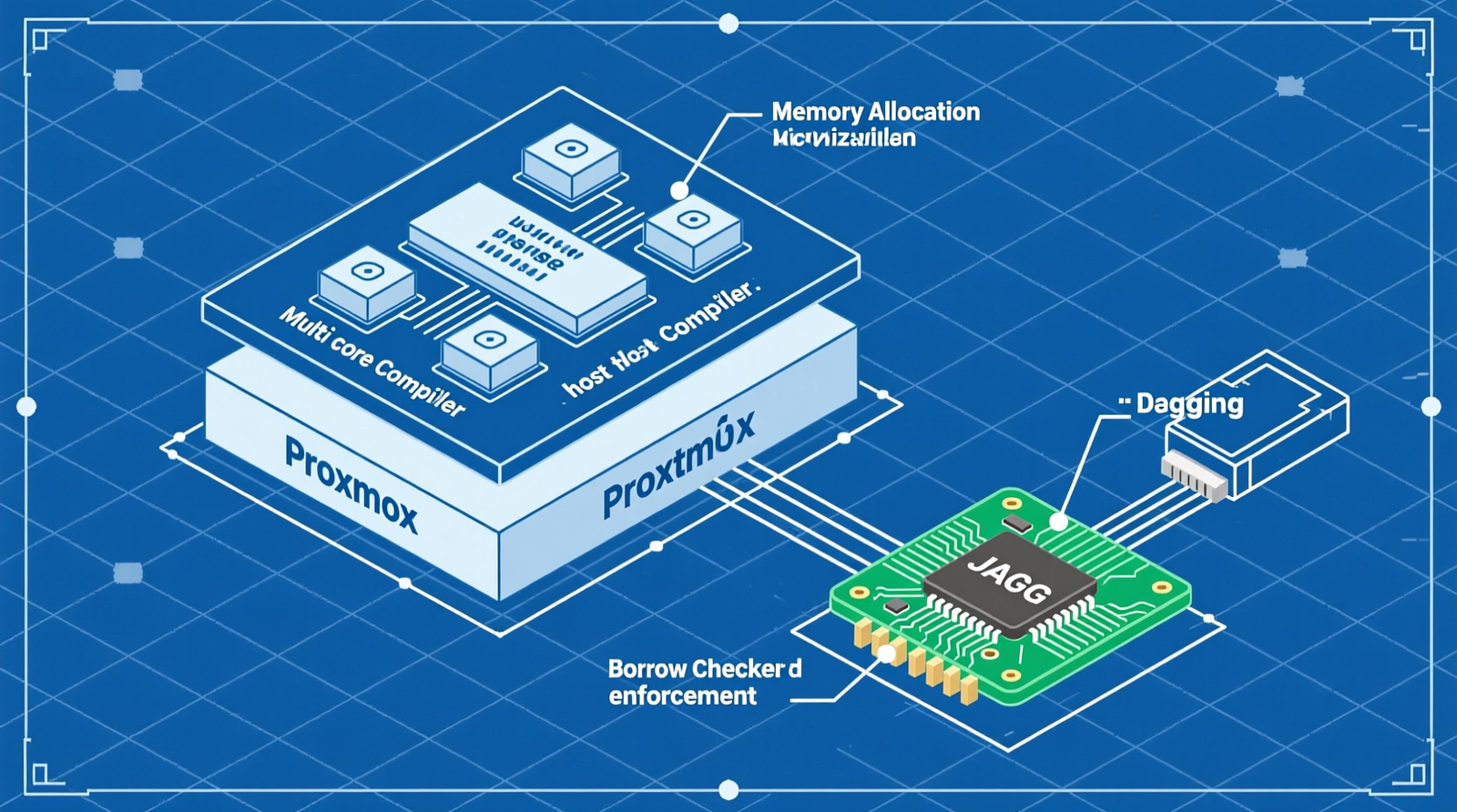
Rust replaces manual pointer bookkeeping with a compile-time borrow checker. Ownership, borrowing, and lifetime rules are enforced before the program is ever run. The compiler rejects code that would create a dangling reference, a data race, or a use-after-free. This happens without a garbage collector, so the runtime overhead remains suitable for kernels, drivers, and embedded targets.
The result is that many classes of memory-safety defects become compile errors rather than production CVEs. The programmer still reasons about lifetimes, but the compiler verifies the reasoning mechanically and exhaustively.
The Residual Risk Inside Rust’s `unsafe` Boundary
Rust’s guarantee is only as strong as the `unsafe` boundary. Inside an `unsafe` block, raw pointers are permitted, and the same errors that plague C are possible. Low-level system code such as drivers, hardware abstraction layers, and bootloaders still requires disciplined `unsafe` usage.
The difference is that `unsafe` is explicit, scoped, and reviewable. A well-written Rust system localizes the dangerous code and wraps it in safe abstractions. The residual risk is real, but it is smaller and more auditable than in a codebase where every pointer operation is unchecked.
Why This Matters for the Z-A-D-A Audience
Organic search traffic in this space clusters around questions like “c vs rust memory safety,” “is assembly faster than c,” and “application hang.” These queries come from developers and systems engineers who are tired of chasing pointer bugs or who want to benchmark a Rust replacement against an existing C component.
This article answers both needs. It explains the failure mode, then gives you the hardware to reproduce and measure the fix.
The Core Gear Architecture
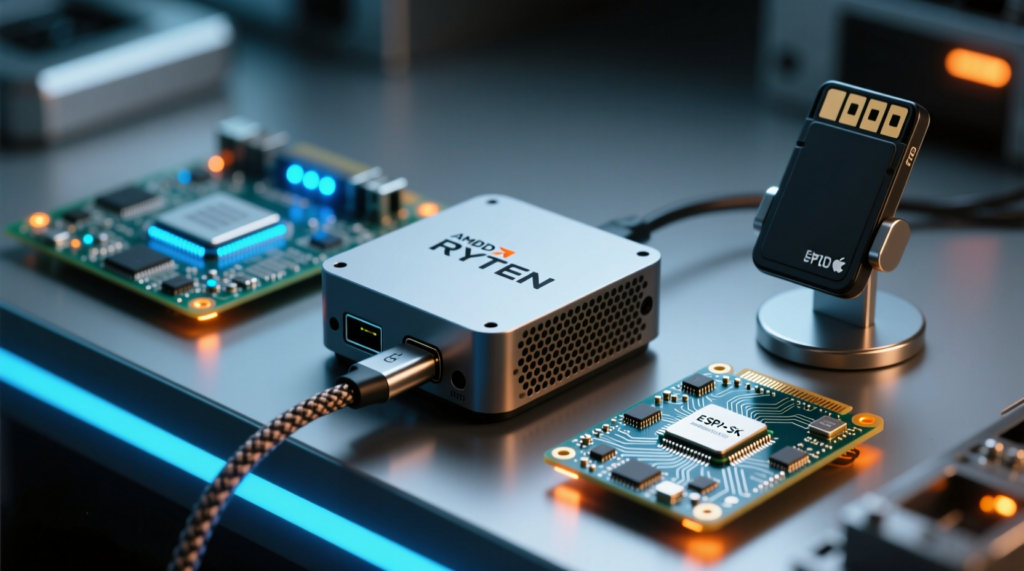
Primary Development Workstation — GEEKOM A9 Max
The GEEKOM A9 Max is the anchor of the 2026 stack. It is built around the AMD Ryzen AI 9 HX 370, a 12-core / 24-thread processor on TSMC 4 nm. That core count matters because `rustc` and `cargo` builds parallelize aggressively, and LLVM optimization passes consume every thread you give them.
The system supports up to 128 GB of DDR5 SODIMM in a dual-channel, socketed, non-soldered configuration. That is not future-proofing; it is the practical floor for running a Proxmox VE host, multiple build VMs, and a Rust IDE without paging. Dual 2.5 GbE RJ45 ports let you isolate control-plane API traffic on one interface and node/worker traffic on the other, mirroring enterprise Kubernetes segmentation. Wi-Fi 7 readiness keeps wireless transfer speeds competitive when you are not wired.
Storage comes from two M.2 2280/2242 PCIe Gen4 x4 NVMe slots, supporting up to 8 TB total. That capacity holds large build artifact caches, VM images, and symbol stores without resorting to slow external drives. The AMD XDNA 2 NPU delivers 55 TOPS on its own, with combined NPU/GPU/CPU throughput up to approximately 80 TOPS, useful for local AI-assisted code review or documentation generation.
Use the GEEKOM A9 Max for local `rustc`/`cargo` builds, QEMU/KVM emulation of target systems, and as a Proxmox VE host for multi-node test clusters.
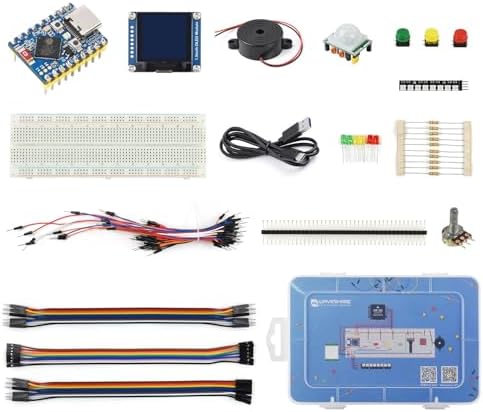
Embedded Benchmark Target — Freenove Ultimate Starter Kit for ESP32-S3
To compare C and Rust on identical silicon, you need a target that runs both toolchains cleanly. The Freenove Ultimate Starter Kit for ESP32-S3 is built around the ESP32-S3-WROOM-1 module. It uses a dual-core Xtensa LX7 processor running up to 240 MHz, with 2.4 GHz Wi-Fi and Bluetooth 5 Low Energy.
The module carries 8 MB of flash and 512 KB of SRAM. It exposes a USB-JTAG debug interface, which makes single-stepping and probe-based flashing straightforward. The kit includes a 368-page tutorial PDF and supports C through ESP-IDF/FreeRTOS, Python through MicroPython, and Rust through the `esp-rs` ecosystem.
That triple-toolchain support is the point. You can compile the same peripheral driver in C and in Rust, flash each to the same board, and compare binary size, stack usage, and runtime behavior directly.
Portable Toolchain Storage — SanDisk 256 GB Extreme PRO USB 3.2 Solid State Flash Drive
Check out TECH Collection Amazon Products
A portable build environment is non-negotiable when you are debugging a bricked board on a bench or demonstrating a toolchain on a colleague’s machine. The SanDisk 256 GB Extreme PRO USB 3.2 Solid State Flash Drive reads at up to 420 MB/s and writes at up to 380 MB/s. Those speeds are fast enough to host a bootable Linux environment with Rust and C cross-compilers, `probe-rs`, OpenOCD, and Sysinternals without the I/O stalls that ruin `cargo` build times.
The aluminum metal casing survives travel, and the secure encryption software protects source code and keys when the drive is outside the lab.
Productivity & Monitoring Peripherals
The Elgato Stream Deck MK.2 Studio Controller provides 15 customizable LCD keys over a USB 2.0 interface. With the HWiNFO plugin, you get one-touch CPU and memory monitoring and task-kill macros. That is useful when a runaway build or QEMU instance needs to die immediately.
The Wooting 60HE+ Analog Mechanical Keyboard uses Gateron Lekker analog switches with rapid trigger and customizable actuation points. For long debugging or coding sessions, the Ergert Dual Monitor Mount Arm supports dual screens up to 32 inches with gas-spring height adjustment, 360° rotation, and integrated cable management.
The Technical Setup Blueprint
Cybersecurity & Network Perimeter Architecture
Memory-safety defects in C are a leading cause of vulnerabilities audited under NIST SP 800-171 Rev. 3, specifically the secure development and system integrity controls, and under CMMC 2.0 Level 2 practices. Rust’s compile-time guarantees reduce the attack surface those controls must mitigate.
As of September 21, 2026, remaining active FIPS 140-2 certificates transition to Historical status. New procurements for defense-adjacent development environments should specify FIPS 140-3 validated modules.
If Controlled Unclassified Information is present, a FortiGate 60F with the FIPS-SEAL-RED tamper-evident seal kit is a defensible perimeter option. It provides 10× GE RJ45 ports, 10 Gbps firewall throughput, 1 Gbps NGFW throughput, and is FIPS 140-2 Level 2 validated with an upgrade path to FIPS 140-3 through the vendor firmware and certification cycle.
An alternative is to route all CUI-bound artifacts through FIPS-validated end-to-end TLS or a compliant Secure Web Gateway so the boundary device does not perform CUI cryptography itself.
Micro-Electronics & PCB Diagnostic Architecture
The target MCU is the ESP32-S3-WROOM-1. It runs a dual-core Xtensa LX7 at up to 240 MHz, with 2.4 GHz Wi-Fi and Bluetooth 5 LE, 8 MB flash, 512 KB SRAM, 45 GPIO, USB-JTAG, and a 5 V USB-C or external 5 V/3.3 V rail. Peak current is approximately 500 mA with Wi-Fi active, so budget your power supply accordingly.
For the C toolchain, use ESP-IDF v5.x, GCC for Xtensa, and FreeRTOS. For Rust, follow the `esp-rs` book, install `cargo-espflash` and `probe-rs`, and target `xtensa-esp32s3-espidf`. If you later want to compare Cortex-M or RISC-V targets, the equivalent triples are `thumbv7em-none-eabihf` and `riscv32imac-unknown-none-elf`.
DevOps Homelab & Compute Cluster Architecture
The GEEKOM A9 Max node is configured as follows:
– CPU: AMD Ryzen AI 9 HX 370 (12C/24T)
– RAM: up to 128 GB DDR5 SODIMM
– Storage: 2× M.2 PCIe Gen4 x4 NVMe (up to 8 TB)
– Networking: dual 2.5 GbE RJ45
– Wireless: Wi-Fi 7 ready
For a Proxmox VE build and test cluster, allocate:
– Control-plane VM: 4 vCPU, 16 GB DDR5
– Worker VM: 8 vCPU, 32 GB DDR5
– TrueNAS/OpenZFS VM: 32 GB DDR5 for ARC
Assign `eth0` to control-plane API traffic and `eth1` to node/worker traffic. This mirrors enterprise Kubernetes segmentation and prevents build traffic from starving the API.
Cap the OpenZFS ARC at 50% of physical RAM. On a 128 GB host, set `zfs_arc_max=64G`. This prevents I/O bottlenecks while still caching large build artifacts and VM images.
For Rust build optimization, use `sccache`, the `mold` linker, and `cargo –release` with `lto = “thin”`. The 128 GB RAM pool allows concurrent full LTO builds without swapping, which is where cheaper machines fall over.
Recommended Insights From Our Guide Library:
- C vs. Rust for Embedded Security: A Deep Dive into Memory Safety » Z A D A
- IoT Device Optimization: Why C and Assembly Still Reign Supreme in 2026 » Z A D A
- Advanced C Pointers: Architecting High-Performance Data Structures » Z A D A
- The Impact of C Programming and Assembly Language on Technology: Trends and Future Prospects
- Secure Embedded Systems: Implementing a Robust SDL for C/Assembly Projects » Z A D A
Workstation Tiering for Rust/C Build Clusters
| Workstation Option | Processor | Max RAM | Storage | LAN | Best Use Case |
|---|---|---|---|---|---|
| GEEKOM A9 Max | AMD Ryzen AI 9 HX 370 (12C/24T) | 128 GB DDR5 | 2× M.2 PCIe Gen4 x4 (up to 8 TB) | Dual 2.5 GbE | Heavy Rust/C builds, local LLM/AI assist, multi-VM Proxmox |
| GEEKOM A8 | AMD Ryzen 9 8945HS (8C/16T) | 64 GB DDR5 | 1× M.2 2280 NVMe PCIe Gen4 x4 (up to 4 TB) | Single 2.5 GbE | Mixed services, mid-range build server |
| GEEKOM A6 | AMD Ryzen 7 6800H (8C/16T) | 64 GB DDR5 | 1× M.2 2280 PCIe Gen4 x4 + 1× M.2 2242 SATA | Single 2.5 GbE | Entry-level Docker/K3s host, single-node Rust/C experimentation |
Field Verdict & Operational ROI
How the 2026 Stack Neutralizes C Pointer Failure Modes
A high-core-count DDR5 workstation collapses `rustc`/`cargo` iteration cycles. What used to be a multi-hour borrow-checker fight becomes a minutes-long compile-and-test loop. The Freenove Ultimate Starter Kit for ESP32-S3 lets you flash the same hardware with C and Rust implementations and compare behavior under identical conditions. The portable SSD and diagnostic peripherals eliminate I/O bottlenecks and keep symbol caches and toolchains reliable.
The stack does not remove the need to understand memory. It removes the friction that prevents you from measuring and fixing memory problems quickly.
Real Forum Pain Points Addressed
The r/rust and r/embedded consensus is that the borrow checker is unforgiving for low-level register manipulation. Developers need fast compile and test cycles to iterate. A slow laptop turns “fighting the borrow checker” into a multi-hour productivity drain. The GEEKOM A9 Max removes that bottleneck.
On r/C_Programming and Stack Overflow, the recurring complaint is that C pointer bugs manifest as intermittent segfaults in production that Valgrind and AddressSanitizer miss in release builds. Chasing dangling pointers is a major source of “application hang” debugging sessions. Rust catches these at compile time, and the fast workstation makes the rewrite practical.
EEVblog and embedded forums note that cheap ESP32 dev kits ship with fragile Micro-USB connectors, missing level shifters, and poor documentation. The Freenove Ultimate Starter Kit for ESP32-S3 is repeatedly recommended because it bundles working C and Rust examples.
r/homelab and r/rust build-server threads agree that 16 GB RAM is the bare minimum for Rust plus LLVM plus an IDE, 32–64 GB is the practical floor for serious low-level work, and 128 GB is preferred for running full embedded toolchains inside VMs. The GEEKOM A9 Max matches that recommendation exactly.
A common cheap-setup failure is using a USB 2.0 flash drive or slow HDD for a portable Linux toolchain. `cargo` builds bottleneck on I/O, masking real compile-time differences between C and Rust. The SanDisk 256 GB Extreme PRO USB 3.2 Solid State Flash Drive avoids that trap.
For engineers debugging C pointer corruption on Windows, Procmon, WinDbg, and Application Verifier are essential. A fast portable SSD keeps those tools and symbol caches available.
Capital Investment Justification
The return on investment comes in three forms. First, CVE reduction and a stronger compliance posture under NIST SP 800-171 Rev. 3 and CMMC 2.0 Level 2. Second, reduced debug time for “application hang” and segfault incidents. Third, hardware longevity: socketed RAM, dual NVMe slots, dual 2.5 GbE, and a FIPS 140-3-ready boundary mean the lab does not need replacement in a year.
Conclusion
C pointer safety and Rust lifetime guarantees are not abstract language features. They are engineering decisions with measurable consequences in security, stability, and debug time. C’s manual pointer model remains the dominant root cause of memory-safety CVEs in kernels, drivers, and embedded firmware. Rust’s borrow checker converts those runtime failures into compile-time errors, shrinking the `unsafe` surface to a small, auditable boundary.
Community Reference & Authority Resources:
The 2026 hardware stack makes that comparison concrete. The GEEKOM A9 Max provides the cores, RAM, and network segmentation to build and test both languages at speed. The Freenove Ultimate Starter Kit for ESP32-S3 gives you a single silicon target for side-by-side C and Rust benchmarks. The SanDisk 256 GB Extreme PRO USB 3.2 Solid State Flash Drive keeps your toolchain portable and fast. Together, they turn the C vs Rust debate from an online argument into a reproducible experiment on your own bench.
If you are escaping C pointer bugs or benchmarking Rust replacements, this is the setup that lets you prove the difference.
🔍 Explore More: See all tech guides and tutorials for C pointer safety vs Rust lifetime guarantees in low level system development.
Check out TECH Collection Amazon Products