

For authors, a book review is more than just a critique. 🤓
It is a currency of credibility, a powerful marketing asset, and a vital piece of social proof that drives sales. 🚀
While reader reviews on platforms like Amazon and Goodreads are essential, the true game-changer is the professional, high-impact review.
These are the reviews from trade publications, major media outlets, and respected literary journals that signal to booksellers, librarians, and serious readers that your book is worth their time and investment.
Acquiring these reviews is not a matter of luck; it is a strategic process.
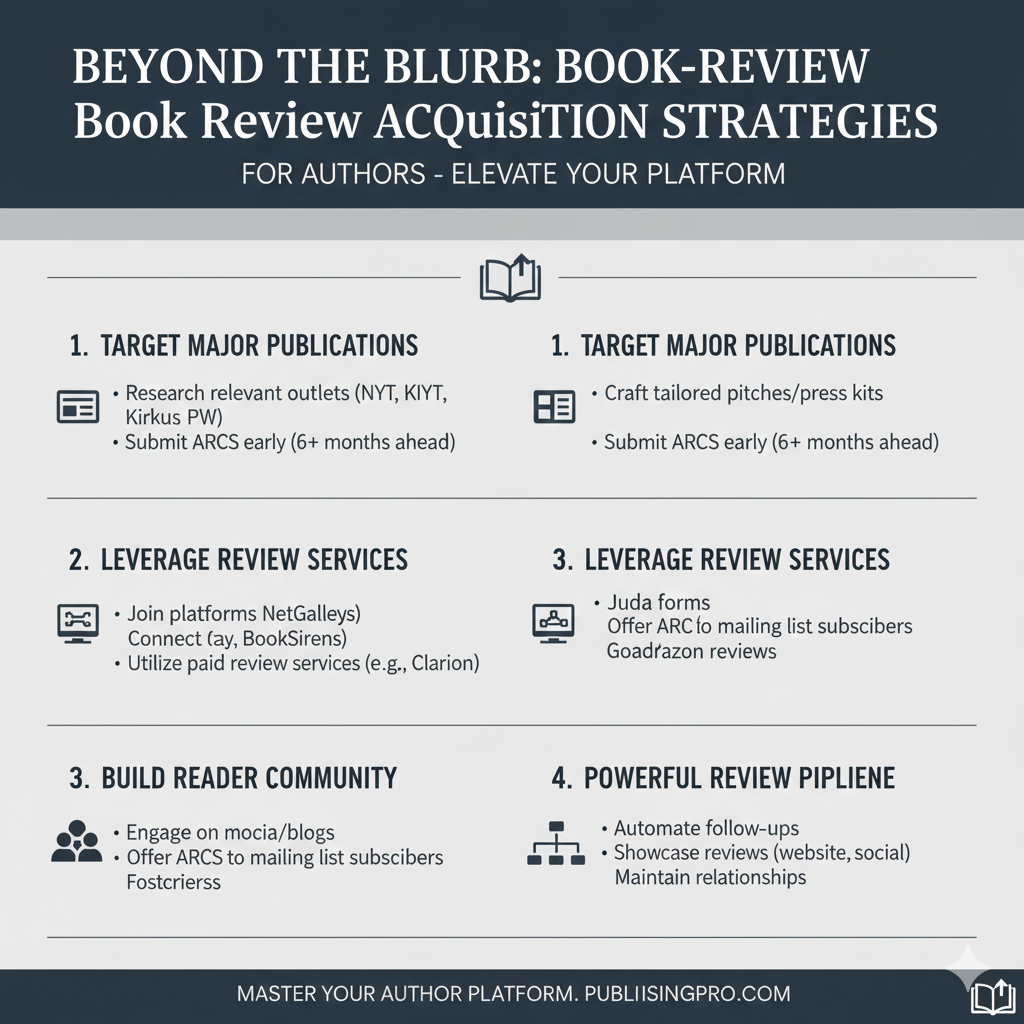
This guide will walk you through the most effective Book Review Acquisition Strategies to elevate your author career.
Phase I: Laying the Foundation: Your Review-Ready Assets 🛠️
Before you send a single email, you must ensure your materials are impeccable.
Professional reviewers are busy, and a sloppy submission is an immediate rejection.
Your primary asset is your Advanced Reader Copy (ARC) or galley.
This must be as close to the final version as possible, free of typos and formatting errors.
The second crucial asset is a professional Media Kit or Press Release.
This document is your book’s resume, providing all the necessary information in one easy-to-digest package.
It should include your author bio, high-resolution headshots, book cover image, a concise synopsis, and key selling points.
Learn the essentials of creating a compelling package with this guide on How to Create an Author Media Kit.
Remember to include all necessary metadata, such as ISBN, publication date, and genre, in your press materials.
Phase II: The Big Leagues: Targeting Professional Reviewers 🎯
The most coveted reviews come from the major trade publications: Kirkus Reviews, Publishers Weekly (PW), Booklist, and Library Journal.
These reviews are critical because they are read by booksellers and librarians who make purchasing decisions.
The key to success here is timing and adherence to strict guidelines.
You must submit your book three to five months before your publication date.
This lead time is non-negotiable for their editorial calendars.
Each publication has its own submission process, which must be followed to the letter.
For instance, Kirkus Reviews has separate guidelines for traditionally published and self-published authors (via their Kirkus Indie program).
Always consult the official sources, such as the Kirkus Reviews Publisher Submission Guidelines, to ensure compliance.
In addition to the trade reviews, target literary magazines and niche journals that focus on your specific genre or subject matter.
A positive review in a respected niche journal can be more valuable than a brief mention in a general publication.
Resources like the Poets & Writers Book Review Outlets database can help you find these specialized venues.
Phase III: Strategic Platforms: NetGalley and Edelweiss 🌐
These two platforms are indispensable for connecting your ARC with a vast network of professional readers.
They act as digital distribution hubs for galleys, making it easy for reviewers, librarians, booksellers, and educators to request and download your book.
NetGalley is often favored by book bloggers and media reviewers.
Edelweiss is the industry standard for booksellers and librarians.
Listing your book on both platforms significantly increases your visibility to key industry professionals.
While there is a cost associated with these services, the return on investment in terms of professional review acquisition is often substantial.
| Platform | Primary Audience | Key Benefit |
|---|---|---|
| NetGalley | Book Bloggers, Media, Reviewers | Broad reach to active online reviewers and influencers. |
| Edelweiss | Booksellers, Librarians, Industry Professionals | Direct access to key decision-makers for retail and library orders. |
| Paid Services | Authors seeking guaranteed professional feedback. | Guaranteed review from a trusted source, regardless of editorial selection. |
Phase IV: Personalized Pitching: The Art of the Ask 📧
Beyond the major platforms, direct outreach to individual book bloggers, podcasters, and niche reviewers is a powerful strategy.
This requires a highly personalized and professional approach.
Do your homework: read the reviewer’s blog, listen to their podcast, and reference a specific book they have reviewed that is similar to yours.
Your pitch email should be concise, respectful of their time, and clearly explain why your book is a perfect fit for their audience.
Never send a generic, mass-produced email.
The pitch should be in the body of the email, with no attachments, and include a link to your media kit or a digital galley.
For a masterclass in crafting the perfect request, review this advice on How To Write An Email That Will Win You A Book Review.
A polite follow-up email a few weeks after the initial pitch is acceptable, but never badger a reviewer.
Respect their decision if they decline or do not respond.
The goal is to build a long-term relationship, not just secure a single review.
Conclusion: The Long Game of Author Craft 🏆
Acquiring high-impact book reviews is a marathon, not a sprint.
It requires planning, professionalism, and persistence.
Every positive review you secure is an investment in your Author Career Longevity and the success of your future books.
By implementing these Book Review Acquisition Strategies, you move beyond hoping for reviews to actively and strategically securing them.
Be professional, be early, and be persistent.
Your author platform will thank you for it.
Start your review outreach as soon as your manuscript is finalized, not after the book is published.
Do not underestimate the power of a personalized pitch; it is the difference between the trash bin and the review pile.
Focus on quality over quantity—one professional review is worth a hundred unverified reader ratings.
Happy strategizing! 💡