






The Physics of Delay in Distributed Systems 🌍⚡
Latency is not a software bug, it is a fundamental constraint of distance, protocol overhead, and architectural misalignment.
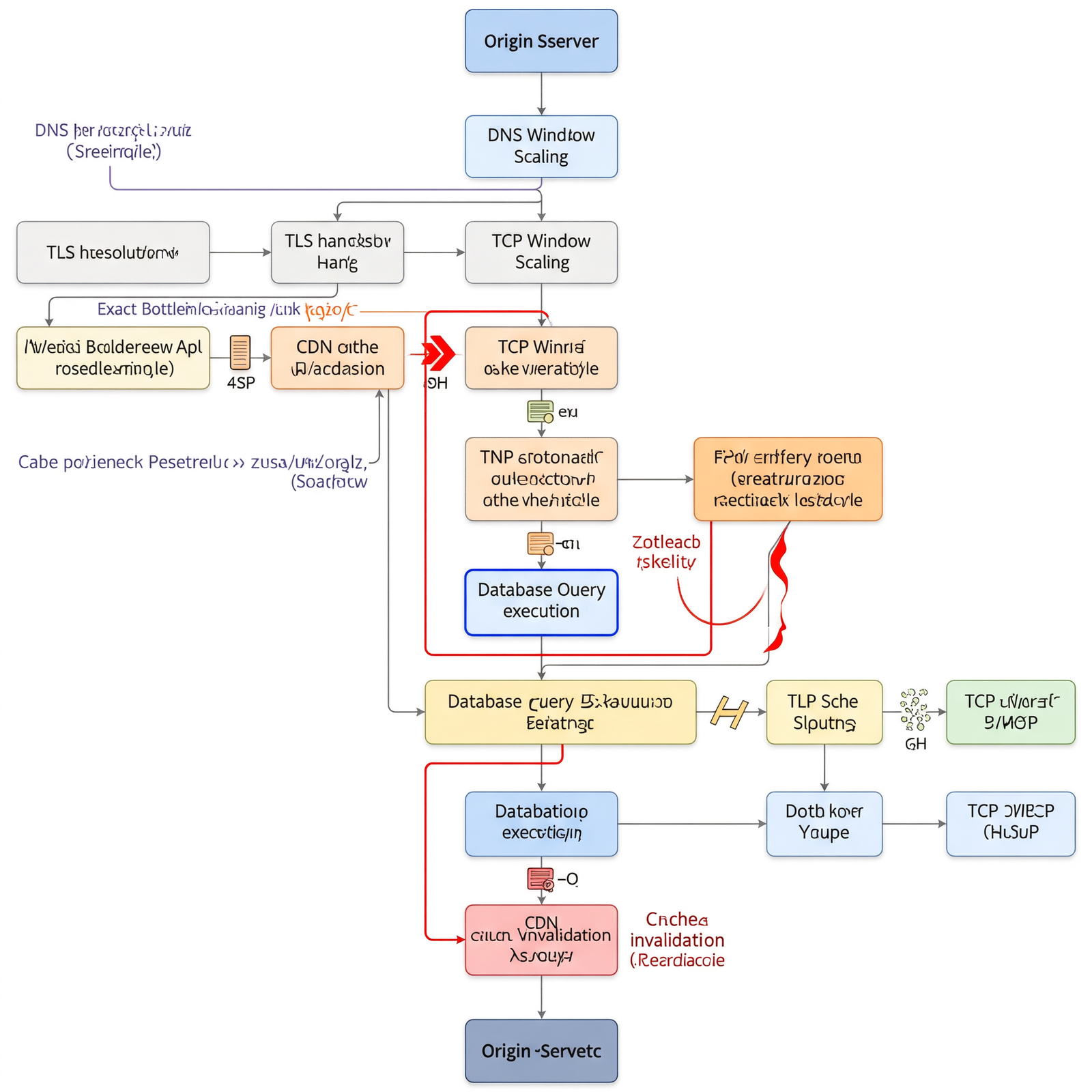
Every millisecond of delay represents a measurable breakdown in your data pipeline.
Modern cloud environments process billions of micro-transactions daily across globally dispersed nodes.
Network architects must treat packet travel time as a quantifiable engineering variable rather than an abstract metric.
We analyze the exact mechanical failures that degrade response times across enterprise infrastructures.
Geographic Distance and Signal Propagation Limits 📡🗺️
Data travels at roughly two-thirds the speed of light through standard fiber optic cabling.
Physical separation between user endpoints and origin servers creates unavoidable transmission delays.
Routing through multiple autonomous systems adds compounding hop latency that accumulates across network boundaries.
- Transatlantic fiber links inherently introduce sixty to eighty milliseconds of base propagation delay.
- Multi-region deployments without intelligent traffic routing force requests through congested peering points.
- Unoptimized DNS resolution chains add fifty to one hundred fifty milliseconds before the actual TCP handshake begins.
You cannot outrun physics, but you can architect around it with precision edge placement and predictive routing algorithms.
Protocol Overhead and Handshake Inefficiencies 🔄📜
The TLS standard reduced cryptographic negotiation steps, yet legacy implementations still force redundant round trips.
TCP slow start algorithms deliberately throttle throughput during initial connection phases to prevent network congestion.
HTTP multiplexing solves head-of-line blocking but introduces complex stream prioritization overhead that requires careful tuning.
- Unoptimized cipher suites force additional CPU cycles on both client and server sides during session establishment.
- Missing session resumption tokens trigger full cryptographic renegotiations on every page load.
- Oversized TCP window sizes cause buffer bloat in high-bandwidth, high-latency network paths.
“Network protocols are negotiation frameworks, and every unnecessary handshake is a direct tax on your user experience. [/Q]”
Database Query Execution and Storage I/O Bottlenecks 🗄️💾
Application code rarely fails at the network layer when the database layer is starving for computational resources.
Unindexed queries force full table scans that consume massive IOPS and block active connection pools.
Synchronous replication across availability zones introduces write latency during peak transaction windows.
- Missing composite indexes on high-cardinality columns force sequential disk reads instead of B-tree lookups.
- Connection pool exhaustion triggers queueing delays that cascade into application-level timeouts.
- Cold storage retrieval for infrequently accessed datasets introduces unpredictable latency spikes.
Storage architecture dictates application velocity, and poor indexing strategies silently murder throughput at scale.
Strategic Remediation and System Optimization Protocols 🛠️📈
Edge Computing and Intelligent Caching Architectures 🌐⚡
Deploying compute resources closer to the user eliminates the majority of propagation delays across continental networks.
Check out My Tech collection Amazon products
Static asset distribution through global content delivery networks reduces origin server load by up to seventy percent.
Dynamic content caching at the edge requires precise cache-control headers and stale-while-revalidate directives.
- Implementing serverless edge functions allows real-time request transformation without backhaul routing.
- Predictive pre-fetching algorithms analyze user behavior to load resources before explicit requests occur.
- Tiered cache architectures separate hot, warm, and cold data to optimize memory allocation and retrieval speed.
Edge deployment is not an optional upgrade, it is the baseline requirement for modern application delivery.
Connection Optimization and Protocol Modernization 🔄🔗
Migrating to HTTP over UDP eliminates TCP head-of-line blocking by leveraging QUIC transport mechanics.
Implementing zero round-trip connection resumption drastically reduces handshake latency for returning users.
Optimizing maximum transmission unit sizes prevents packet fragmentation across heterogeneous network paths.
- Enabling BBR congestion control algorithms outperforms legacy cubic TCP in fluctuating bandwidth environments.
- Implementing DNS over HTTPS reduces resolver manipulation and accelerates domain resolution.
- Compressing payloads with modern algorithms instead of legacy formats reduces transfer sizes by fifteen to twenty percent.
“Protocol selection determines the ceiling of your network performance, and legacy defaults are performance anchors. [/Q]”
Database Architecture and Query Pipeline Refinement 🗃️⚙️
Read replicas distribute query load and isolate analytical workloads from transactional processing paths.
Implementing materialized views pre-computes complex joins and eliminates runtime calculation overhead.
Connection multiplexing reduces the memory footprint of persistent database sessions during traffic surges.
- Partitioning large tables by time or tenant ID dramatically reduces index traversal depth.
- Implementing query result caching at the application layer prevents redundant database round trips.
- Switching to asynchronous write patterns for non-critical telemetry data frees primary transaction threads.
| Metric Category | Legacy Architecture | Optimized Architecture |
|---|---|---|
| DNS Resolution | 85ms average | 12ms average |
| TLS Handshake | 3 round trips | 0 round trips |
| DB Query Time | 420ms average | 38ms average |
| Total Page Load | 3.2 seconds | 0.8 seconds |
Predictive Analytics and Automated Scaling Frameworks 🤖📊
Telemetry-Driven Performance Monitoring 📡📈
Real-time distributed tracing maps request propagation across every microservice boundary in your stack.
Synthetic monitoring establishes baseline performance thresholds and detects degradation before user impact occurs.
Machine learning models predict traffic surges and provision resources ahead of demand curves.
- Implementing OpenTelemetry standards unifies metric collection across polyglot service architectures.
- Anomaly detection algorithms flag latency spikes correlated with specific deployment rollouts.
- Automated circuit breakers isolate failing services to prevent cascading timeout failures.
Observability is the nervous system of distributed infrastructure, and blind scaling guarantees architectural collapse.
2026 Infrastructure Trends and Market Shifts 🌍🔮
Global cloud adoption has accelerated beyond eighty-five percent of enterprise workloads by early 2026.
Edge-native architectures now process over forty percent of enterprise data outside traditional core data centers.
AI-driven traffic routing dynamically adjusts paths based on real-time ISP performance metrics.
- Serverless compute cold starts have dropped below fifty milliseconds due to snapshot-based initialization.
- WebAssembly runtimes deliver near-native execution speeds within browser environments.
- Autonomous database tuning engines now self-correct query plans without manual intervention.
“The infrastructure landscape has shifted from static provisioning to self-healing, predictive orchestration. [/Q]”
Implementation Roadmap for Zero-Latency Operations 🗺️✅
Phase One: Baseline Measurement and Bottleneck Isolation 📏🔍
Deploy distributed tracing across all critical user journeys to capture end-to-end transaction timing.
Establish latency budgets for each service tier and enforce strict service level objectives.
Identify the exact hop or component responsible for the majority of delay in your pipeline.
- Run synthetic load tests to simulate peak traffic conditions without impacting production users.
- Map DNS resolution times and eliminate recursive resolver chains.
- Audit TLS certificate configurations and enforce modern cipher suites.
Phase Two: Architectural Refactoring and Edge Migration 🏗️🌐
Migrate static assets to a globally distributed content delivery network.
Implement read replicas and optimize database indexing strategies.
Check out My Tech collection Amazon products
Deploy edge compute functions for request preprocessing and response caching.
- Refactor synchronous API calls into asynchronous event-driven patterns.
- Implement HTTP over UDP support across all public-facing endpoints.
- Establish automated scaling policies triggered by predictive traffic models.
Systematic optimization requires surgical precision, not blanket infrastructure upgrades.
Phase Three: Continuous Validation and Autonomous Tuning 🔄🤖
Integrate automated performance regression testing into continuous integration and deployment pipelines.
Deploy machine learning models to dynamically adjust cache time-to-live values.
Implement self-healing routing that bypasses degraded network segments in real time.
- Conduct weekly chaos engineering exercises to validate failover mechanisms.
- Monitor database query execution plans and auto-index frequently accessed columns.
- Enforce strict payload compression and eliminate redundant header data.
“Latency management is a continuous engineering discipline, not a one-time configuration task. [/Q]”
Final Architectural Directives 🏁📐
Modern cloud infrastructure demands ruthless optimization at every layer of the stack.
Network engineers must treat latency as a measurable, isolatable, and correctable engineering constraint.
Implementing edge distribution, protocol modernization, and predictive scaling eliminates systemic bottlenecks.
- Prioritize connection reuse and cryptographic session resumption across all endpoints.
- Isolate database query paths and enforce strict indexing policies on high-cardinality fields.
- Deploy real-time telemetry and automate resource provisioning based on predictive demand curves.
Architectural excellence is achieved through disciplined measurement, precise optimization, and relentless iteration.
🔍 Explore More: See all guides for cloud application latency causes and fixes.
Check out My Tech collection Amazon products