



The Architectural Reality of API Throttling
Modern distributed systems operate on finite computational resources that require precise allocation strategies. 📌
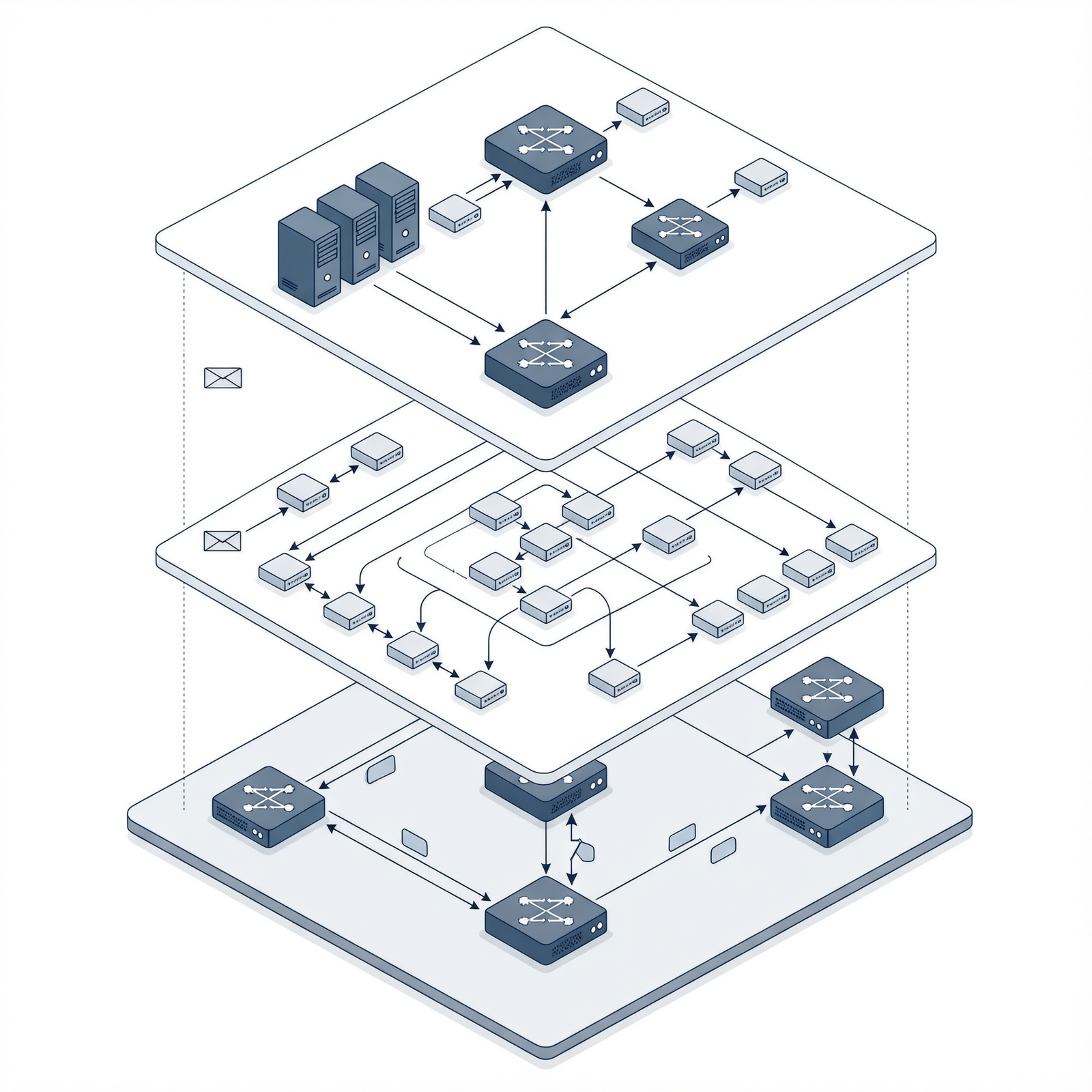
Every external endpoint enforces strict concurrency boundaries to protect underlying database clusters from cascading failures.
Engineers who ignore these constraints inevitably trigger service degradation across their entire digital asset network.
The fundamental mechanism relies on algorithmic gatekeeping that evaluates request velocity against predefined capacity thresholds.
Token Bucket and Leaky Bucket Mechanics
Token bucket algorithms function as precise mathematical regulators that refill at a constant interval.
Each incoming request consumes exactly one token from the available pool.
Systems immediately reject traffic when the reservoir empties completely.
Leaky bucket implementations operate differently by queuing requests in a fixed-size buffer.
The buffer drains at a steady rate regardless of sudden traffic spikes.
Both methodologies prevent backend exhaustion while maintaining predictable throughput metrics.
Distributed State and Edge Caching
Centralized rate counters create single points of failure across global infrastructure deployments.
Modern architectures distribute counting logic across geographically dispersed edge nodes.
Redis clusters synchronize state changes using lightweight consensus protocols.
Edge caching intercepts redundant queries before they ever reach the origin server.
Static asset delivery reduces origin load by approximately forty percent according to 2026 infrastructure benchmarks.
Strategic Backoff and Retry Logic
Immediate retry attempts after a rejection guarantee rapid account suspension.
Intelligent systems implement mathematical delay curves that expand exponentially.
Exponential Backoff with Jitter
Standard exponential backoff multiplies the delay interval by two after each failure.
Adding randomized jitter prevents synchronized retry storms from overwhelming recovery endpoints.
Jitter values typically range between zero and fifty percent of the calculated delay.
This randomization distributes reconnection attempts across a broader temporal window.
Systems achieve stable recovery without triggering secondary throttling events.
Circuit Breaker Implementation
Circuit breakers monitor failure rates across specific service endpoints.
The breaker transitions to an open state when error thresholds exceed acceptable limits.
Traffic routes to fallback services during the open phase.
The system periodically allows test requests to verify endpoint recovery.
Successful probes trigger a half-open state before full restoration.
This pattern isolates degraded components while preserving overall network availability.
Enterprise Scaling and Predictive Load Management
Reactive throttling management fails under unpredictable enterprise workloads.
Forward-looking architectures anticipate traffic surges using historical telemetry.
Check out My Tech collection Amazon products
Asynchronous Processing and Message Queues
Synchronous API calls block execution threads until responses return.
Message queues decouple request ingestion from downstream processing.
Workers consume payloads at a controlled pace that matches backend capacity.
Kafka and RabbitMQ implementations handle millions of events without data loss.
Queue depth monitoring provides early warning signals before rate limits activate.
Multi-Region Failover and Traffic Shaping
Single-region deployments concentrate all traffic on identical infrastructure constraints.
Global routing policies distribute requests across multiple geographic zones.
DNS-based load balancing directs users to the nearest available cluster.
Traffic shaping algorithms prioritize critical business operations over secondary functions.
Priority queues guarantee that authentication and payment flows bypass standard throttling queues.
Diagnostic Frameworks and Observability
Blind optimization attempts waste engineering resources and delay system stabilization.
Comprehensive telemetry reveals the exact bottleneck location within the request chain.
Real-Time Telemetry and Alerting
Distributed tracing captures millisecond-level latency across every microservice hop.
Prometheus scrapes metric endpoints at configurable intervals.
Grafana dashboards visualize throughput degradation patterns in real time.
Alerting rules trigger automated scaling scripts when request queues exceed safe thresholds.
2026 cloud monitoring standards mandate sub-second anomaly detection across all production environments.
Root-Cause Analysis Workflows
Engineers must correlate rate limit errors with specific user segments or API versions.
Log aggregation platforms index every request header and response payload.
Pattern recognition algorithms identify misconfigured clients that generate excessive traffic.
Automated remediation scripts temporarily block abusive IP ranges without manual intervention.
Continuous integration pipelines validate rate limit handling before deploying new code.
Future-Proofing Automated Asset Networks
Static rate configurations become obsolete as digital asset networks scale exponentially.
Adaptive systems recalibrate thresholds based on real-time capacity utilization.
AI-Driven Traffic Prediction
Machine learning models analyze seasonal traffic patterns and historical peak loads.
Predictive scaling provisions additional compute resources before demand materializes.
Neural networks classify legitimate user behavior from automated scraping attempts.
Dynamic quota allocation adjusts limits based on verified customer tier status.
Autonomous traffic routing reduces origin server strain by routing requests through optimized proxy layers.
Zero-Trust Rate Governance
Traditional perimeter defenses fail against sophisticated distributed request flooding.
Zero-trust architectures verify every request identity before granting access.
Cryptographic tokens validate client authenticity across all network boundaries.
Behavioral analytics detect anomalous request patterns that bypass standard rate counters.
Immutable audit logs provide forensic evidence for compliance reporting and legal defense.
“Resilient infrastructure requires proactive capacity planning rather than reactive error suppression.”
Implementation Roadmap for Production Systems
Successful deployment demands systematic validation across staging and production environments.
Load Testing and Chaos Engineering
Synthetic traffic generators simulate worst-case concurrency scenarios safely.
Chaos engineering intentionally injects failures to validate circuit breaker responses.
Stress testing reveals hidden bottlenecks before customer-facing degradation occurs.
Performance baselines establish measurable thresholds for future optimization cycles.
Continuous Optimization and Capacity Planning
Engineering teams review telemetry data during weekly architecture reviews.
Capacity planning models project infrastructure requirements six months into the future.
Automated provisioning scripts deploy additional nodes when utilization crosses seventy percent.
Cost optimization algorithms balance performance requirements against cloud expenditure constraints.
Strategic infrastructure investments yield compounding returns across multi-year operational cycles.
The Economic Impact of Throttling Mismanagement
Unmanaged API limits directly impact revenue generation and customer retention metrics.
Direct Financial Consequences
Service interruptions halt automated transaction processing and disrupt supply chain integrations.
Customer support teams absorb increased ticket volume during extended outages.
Engineering resources divert from feature development to emergency incident response.
2026 enterprise surveys indicate that unoptimized API traffic reduces platform profitability by eighteen percent annually.
Long-Term Brand Equity Erosion
Check out My Tech collection Amazon products
Repeated service degradation damages developer trust and partner ecosystem confidence.
Third-party integrators migrate to competitor platforms with superior reliability guarantees.
Public status page outages become permanent records in industry reputation databases.
Proactive rate governance transforms infrastructure constraints into competitive advantages.
Strategic automation ensures seamless user experiences regardless of underlying traffic volatility.
Final Architectural Directives
Systems architects must treat rate limiting as a core design requirement rather than an afterthought.
Standardizing Resilience Patterns
Development teams enforce uniform retry logic across all client libraries.
Centralized configuration management ensures consistent timeout values across environments.
Automated compliance checks reject pull requests that lack proper error handling.
Documentation standards mandate explicit rate limit references in all API specifications.
Cross-functional alignment guarantees that engineering and product teams share identical availability targets.
Scaling Beyond Conventional Limits
Enterprise networks eventually outgrow single-provider API quotas.
Multi-vendor routing strategies distribute requests across redundant service endpoints.
Protocol translation layers normalize responses from disparate backend systems.
Aggregation services merge fragmented data streams into unified client payloads.
Architectural abstraction shields downstream applications from upstream capacity constraints.
“Mastery over distributed systems demands relentless optimization and uncompromising technical discipline.”
Conclusion
Automated digital asset networks thrive only when engineers architect for failure from day one.
Intelligent rate governance transforms infrastructure bottlenecks into predictable operational variables.
Strategic backoff logic preserves system stability during unpredictable traffic surges.
Community Reference & Authority Resources:
Distributed telemetry provides the visibility required for continuous architectural refinement.
Forward-looking capacity planning secures long-term scalability and sustainable growth trajectories.
🔍 Explore More: See all guides for api rate limit exceeded solutions.
Check out My Tech collection Amazon products